


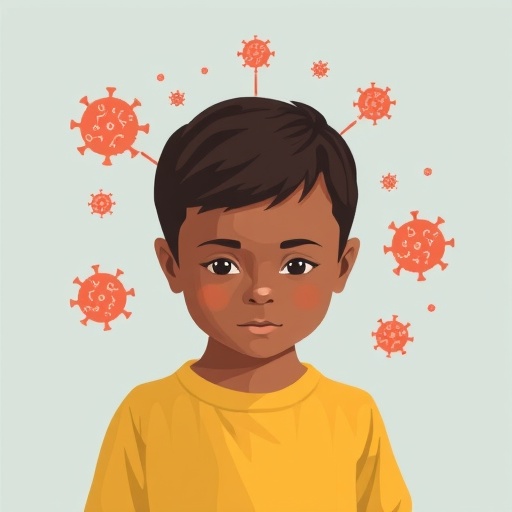
In a groundbreaking longitudinal study published in Pediatric Research, researchers have delved into the profound and multifaceted impacts of socioeconomic status (SES) on the psychological well-being and mental health support perception among children diagnosed with psychopathological conditions and their parents during the tumultuous era of the COVID-19 pandemic. This extensive three-year investigation offers one of the most comprehensive insights into how entrenched social determinants continue to shape mental health trajectories amid unprecedented global stressors, emphasizing the urgent need for tailored interventions and policy reforms.
The COVID-19 pandemic has undeniably exacerbated pre-existing inequities globally, with mental health repercussions surfacing prominently across demographics. Children with pre-existing psychopathologies form a particularly susceptible group, with their conditions potentially amplified due to disruptions in routine, schooling, socialization, and healthcare access. The study highlights the critical intricacies of how varying SES levels modulate perceived well-being and access to, or perception of, mental health support during these challenging times.
Conducted over three consecutive years, the research adopts a multifaceted methodological framework combining quantitative psychometric assessments with nuanced qualitative interviews. This hybrid approach allows for a robust interrogation of both objective mental health outcomes and subjective experiences reported by parents and their children. The longitudinal design uniquely captures evolution over time rather than static snapshots, providing temporal depth to the understanding of pandemic-related stress and support dynamics.
Central to the findings is the revelation that lower socioeconomic status significantly correlates with diminished perceptions of well-being and greater difficulties in obtaining or benefitting from mental health interventions. Families in economically disadvantaged strata reported heightened stress, anxiety, and depressive symptoms in their children, alongside escalating parental concerns related to their capacity to facilitate effective mental health support. This distress appears compounded by material shortages, limited digital access for telehealth, and fragmented social support structures.
Conversely, participants from higher SES brackets depicted relatively better psychological resilience throughout the pandemic. Although not immune to distress, these families generally experienced more stable access to professional mental health resources, supportive educational environments, and technological tools essential for remote therapeutic interventions. The data underscore that socioeconomic disparities deeply influence not only mental health outcomes but also the subjective interpretation and utilization of available mental health services.
Mechanistically, the study postulates several psychosocial pathways underpinning these SES-driven divergences. Chronic financial insecurity tends to amplify stress hormones and maladaptive coping mechanisms, which are especially detrimental during childhood neurodevelopment. Simultaneously, parental mental health serves as a key intermediary variable; parents under financial and emotional strain may inadvertently diminish the quality of emotional support they provide to their children, further exacerbating psychopathological symptoms.
Notably, the perception of mental health support, a crucial moderator variable, was found to be shaped by both systemic and individual factors. Systemically, under-resourced communities often experienced delays, understaffing, and reduced availability of specialized child mental health services, creating bottlenecks for early intervention. Individually, stigmatization around mental health issues—often more pronounced in lower SES groups—served as an additional barrier against seeking or accepting care, thereby perpetuating adverse outcomes.
The research also highlights the evolving role of digital mental health platforms during the pandemic, which offered a double-edged sword. While telepsychiatry and online counseling expanded service reach, families lacking reliable internet access or digital literacy experienced exclusion, potentially intensifying existing inequities. This digital divide, closely aligned with SES, emerged as a significant hurdle, challenging healthcare providers to innovate more inclusive technological approaches.
From a neurodevelopmental perspective, the article discusses the implications of prolonged psychological stress during sensitive periods in childhood, emphasizing the heightened risk for exacerbated symptomatology and developmental delays among lower SES cohorts. The interactions between environmental deprivation, stress exposure, and psychopathology set the stage for chronic mental health conditions that may persist well beyond the pandemic epoch.
Policy implications of this research are profound. The authors advocate for multi-layered strategies targeting socioeconomic determinants—ranging from enhanced funding for community mental health centers, expanded social safety nets, to culturally sensitive outreach programs. Emphasizing early identification and intervention, these measures aim to alleviate both the psychological and material hardships that disproportionately afflict underprivileged families, thus promoting equitable mental health recovery trajectories.
Furthermore, the study underscores the pivotal role of schools as frontline mental health facilitators that bridge healthcare gaps, especially in financially disadvantaged communities. Recommendations include integrating comprehensive mental health curricula, training educators in psychological first aid, and fostering partnerships with mental health professionals to create supportive, stigma-free environments conducive to child well-being.
Another critical takeaway is the necessity to support parental mental health as an integral component of child psychopathology management. Strengthening parental coping skills, providing targeted parental counseling, and alleviating socioeconomic stressors through policy reform can amplify positive mental health outcomes for children reliant on parental networks for emotional stability.
In conclusion, this seminal research illuminates the complex web interlinking socioeconomic status, mental health support perception, and psychological outcomes among children with psychopathology during COVID-19. It galvanizes attention towards persistent structural inequities that demand concerted action from healthcare systems, policymakers, educators, and communities alike to foster resilient futures for vulnerable populations amidst prolonged global disruption.
The ripple effects of these insights resonate far beyond pandemic contexts, highlighting enduring social determinants of health that shape mental wellness across the lifespan. Future research building on these findings promises to inform more personalized, equity-focused mental health frameworks capable of mitigating disparities and optimizing care delivery across diverse socioeconomic landscapes worldwide.
Cite Scienmag News
Glenn Wilkins. (May 29, 2026). Socioeconomic Status Shapes Child Mental Health During COVID. Scienmag. https://scienmag.com/socioeconomic-status-shapes-child-mental-health-during-covid/
Glenn Wilkins. "Socioeconomic Status Shapes Child Mental Health During COVID." Scienmag, 29 May 2026, https://scienmag.com/socioeconomic-status-shapes-child-mental-health-during-covid/. Accessed 4 September 2026.
Glenn Wilkins. "Socioeconomic Status Shapes Child Mental Health During COVID." Scienmag. May 29, 2026. https://scienmag.com/socioeconomic-status-shapes-child-mental-health-during-covid/


