


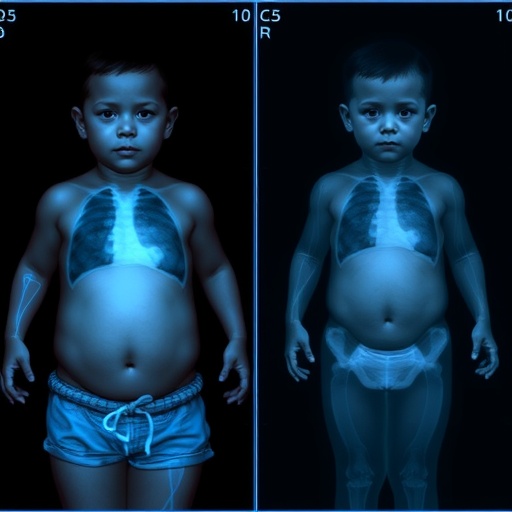
A bedside technology that maps how air, fluid and blood move through the lungs may be poised to become a more important tool in pediatric intensive care. A review published in Pediatric Research examines the expanding clinical role of electrical impedance tomography, or EIT, in children and highlights why the technique is attracting attention as clinicians search for safer, continuous ways to monitor critically ill patients.
EIT is a non-invasive imaging method that does not use ionizing radiation. Instead, a flexible belt containing multiple electrodes is placed around the patient’s chest. Small, harmless electrical currents are introduced through the electrodes, while the system measures the resulting voltage patterns. Because air, blood and biological tissues conduct electricity differently, changes in electrical impedance can be reconstructed into a functional image showing how the lungs are ventilated over time.
Unlike conventional chest imaging, which usually provides a static picture, EIT can deliver real-time information at the bedside. This distinction is especially important in pediatric medicine, where a child’s condition can change rapidly and repeated exposure to radiation, transport to an imaging department or prolonged interruption of intensive care may carry additional risks. EIT can potentially follow breathing patterns continuously while a child remains connected to essential support, including mechanical ventilation.
The review by Tang, Ren, Cheung and colleagues explores how this technology may help clinicians understand regional lung function in infants and children. Rather than viewing the lungs as a single organ, EIT can reveal whether ventilation is distributed evenly or concentrated in particular regions. This information may help identify poorly aerated areas, overdistension, collapse or changes associated with body position, airway obstruction and respiratory disease.
One of the most closely watched applications is the management of mechanical ventilation. Ventilators are lifesaving, but excessive pressure or volume can injure fragile lung tissue, while insufficient support may allow parts of the lung to collapse. EIT could provide a continuous feedback signal during adjustments to positive end-expiratory pressure, tidal volume and other ventilator settings. By showing how the lungs respond region by region, the technique may support more individualized treatment instead of relying solely on airway pressure, oxygen levels and intermittent imaging.
EIT may also be useful during procedures and transitions in care. In children with acute respiratory distress, clinicians could monitor changes in ventilation while repositioning the patient, performing airway interventions or reducing ventilator assistance. The technology may help identify whether a deterioration reflects worsening lung collapse, altered airway function or a shift in regional ventilation. In neonatal and pediatric intensive care, where small changes can have major consequences, this continuous perspective could complement blood-gas analysis, ultrasound, radiography and clinical examination.
The review emphasizes that EIT is not a replacement for established diagnostic tools. Its images are functional reconstructions rather than detailed anatomical scans, and their interpretation depends on electrode placement, chest shape, movement and the quality of the collected signals. Pediatric patients present particular technical challenges because infants and young children have smaller torsos, changing body proportions and often unpredictable movement. Fluid accumulation, dressings, tubes and lines can further complicate electrode positioning and signal analysis.
Despite these limitations, the growing body of pediatric research suggests that EIT has significant potential across several clinical settings. It may support the evaluation of ventilation in premature infants, children with acute lung injury, patients recovering from surgery and those requiring prolonged respiratory support. Investigators are also exploring how impedance changes might contribute to monitoring perfusion, fluid shifts and cardiac-related signals, although these applications require careful validation before they can become routine clinical practice.
The authors identify important evidence gaps that must be addressed before EIT can move from promising technology to standardized pediatric care. Studies are still needed to determine how EIT-guided decisions affect outcomes such as ventilator duration, oxygen exposure, complications and survival. Researchers must also establish age-specific reference ranges, agree on consistent electrode configurations and develop reliable methods for interpreting data across different devices. Automated analysis and artificial intelligence could eventually help clinicians recognize clinically meaningful patterns, but such systems will require large, diverse and carefully annotated pediatric datasets.
Practical barriers remain equally important. EIT equipment must be easy to apply, comfortable for small patients and compatible with the crowded environment of an intensive care unit. Clinicians need training to understand both the technology and its limitations, while hospitals require protocols for quality control, data storage and integration with existing monitoring systems. The review concludes that continued collaboration among engineers, intensivists, neonatologists, radiologists and researchers will be essential. With stronger evidence and greater standardization, EIT could become a valuable window into the changing physiology of critically ill children—offering clinicians a radiation-free, real-time view of the lungs when every breath matters.
Cite Scienmag News
Harold Sullivan. (August 1, 2026). Electrical Impedance Tomography Shows Promise for Pediatric Clinical Care. Scienmag. https://scienmag.com/electrical-impedance-tomography-shows-promise-for-pediatric-clinical-care/
Harold Sullivan. "Electrical Impedance Tomography Shows Promise for Pediatric Clinical Care." Scienmag, 1 August 2026, https://scienmag.com/electrical-impedance-tomography-shows-promise-for-pediatric-clinical-care/. Accessed 3 September 2026.
Harold Sullivan. "Electrical Impedance Tomography Shows Promise for Pediatric Clinical Care." Scienmag. August 1, 2026. https://scienmag.com/electrical-impedance-tomography-shows-promise-for-pediatric-clinical-care/


