


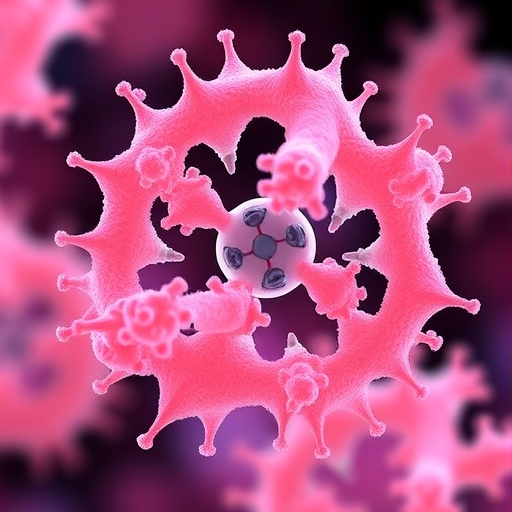
In a groundbreaking feat of molecular biology, researchers from Tokyo University of Science and Niigata University have unveiled the structural and functional secrets of a novel β-1,2-glucan binding protein involved in bacterial sugar transport. This discovery, centered on the solute-binding protein Chy400_4166 from the phototrophic bacterium Chloroflexus aurantiacus, sheds critical light on the complex mechanisms bacteria use to import and exploit β-1,2-glucans—glucose-based polysaccharides with profound biological significance. Their work, recently published in The FEBS Journal, promises to deepen our understanding of microbial sugar transport and open new avenues in biotechnology, agriculture, and medicine.
Sugars often receive simplistic treatment as mere energy sources, but β-1,2-glucans reveal the far more nuanced roles carbohydrates can play. These polysaccharides, with recurring glucose units linked by β-1,2 glycosidic bonds, are pivotal in mediating inter-organismal interactions. Their presence spans diverse bacterial and plant species, where they contribute to survival strategies, host infections, and mutually beneficial symbioses. For instance, Brucella abortus, a zoonotic pathogen, employs cyclic β-1,2-glucans to subvert host immune defenses, facilitating bacterial persistence inside immune cells. Meanwhile, Xanthomonas species manipulate similar glucans to colonize and infect plants like Arabidopsis thaliana and Nicotiana benthamiana, highlighting the versatile roles of these molecules.
Despite burgeoning interest in the enzymology of β-1,2-glucan metabolism, the specific pathways enabling their transport across bacterial membranes have remained stubbornly obscure. Transport is a critical bottleneck; without efficient import/export, extracellular β-1,2-glucans cannot serve as viable nutrient sources or signaling molecules. Limited existing data portray these bacterial transport systems as heterogenous, implying extensive undiscovered diversity and raising the tantalizing possibility of novel molecular architectures.
The team led by Associate Professor Masahiro Nakajima and Professor Hidetaka Torigoe capitalized on this knowledge gap by focusing their investigation on Chy400_4166, a putative solute-binding protein within an ABC transporter operon in C. aurantiacus. ABC transporters are ATP-driven molecular machines that ferry specific substrates across membranes with high affinity and selectivity. Chy400_4166’s proximity to β-1,2-glucan-associated genes suggested a role in glucan binding or recognition, making it a prime candidate for structural and functional characterization.
Initial biochemical assays employed gel shift electrophoresis to confirm Chy400_4166’s ability to bind β-1,2-glucans. Building upon this, isothermal titration calorimetry (ITC) quantified binding affinities for a range of linear and cyclic β-1,2-glucan substrates, revealing not only selectivity but also fine-tuned thermodynamic properties indicative of a highly specialized interaction. These quantitative assays set the stage for the central breakthrough: atomic-resolution crystal structures determined via X-ray crystallography, providing exquisite detail of the protein-saccharide interface.
The crystalline snapshots illuminated a compelling binding mode, with Chy400_4166 engaging ten consecutive glucose units in β-1,2 linkage to establish a shared core interface. Notably, a single glucose unit, designated as unit G, was firmly anchored by conserved amino acids, underscoring its importance as a structural lynchpin. This binding modality contrasts sharply with previously characterized β-1,2-glucan binding proteins, such as the one from Listeria innocua, which target terminal sugar units. Instead, Chy400_4166’s affinity centers on an internal segment of longer glucan chains, optimizing interactions with cyclic forms of β-1,2-glucans that predominate in vivo.
The protein’s architecture reveals a remarkable degree of conformational flexibility, especially in key residues capable of adopting multiple positions to accommodate glucans of varying ring sizes. This adaptability likely underlies the protein’s ability to bind diverse β-1,2-glucan substrates efficiently, a feature that might be evolutionarily tuned to environmental variability. Dr. Nakajima emphasized these findings as emblematic of the unexpected functional diversity among β-1,2-glucan binding proteins, suggesting a rich landscape of molecular adaptations in microbial sugar transport.
These insights carry significant implications beyond fundamental microbiology. Since cyclic β-1,2-glucans represent virulence factors for various pathogens, proteins like Chy400_4166 could be exploited as molecular targets to disrupt pathogenic infection cycles. The competitive administration of cyclic β-1,2-glucans to susceptible plants might effectively block microbial colonization, offering a promising strategy for biological crop protection. Such an approach would reduce reliance on synthetic pesticides, aligning with sustainable agriculture initiatives.
Furthermore, cyclic β-1,2-glucans possess unique structural features allowing them to encapsulate other molecules within their rings. The elucidated transport system may thus serve as a conceptual framework for engineering novel drug delivery vehicles, leveraging glucan encapsulation to shuttle therapeutics with precision. This biochemical toolkit also holds promise for environmental biotechnology applications and food science, where controlled transport and modification of such polysaccharides can enhance bioproduct development.
The study’s comprehensive integration of thermodynamics, structural biology, and microbial ecology exemplifies how multidisciplinary approaches can unravel the complexities of molecular transport systems. As researchers continue to map the diversity of ABC transporters and their substrate-binding partners, new layers of bacterial adaptation and survival strategies are expected to emerge, broadening our grasp of microbial life and its manipulation.
Associate Professor Nakajima concluded by underscoring the broader goal of illuminating glycans—biomolecules often overshadowed by nucleic acids and proteins. The discovery of this novel β-1,2-glucan transport system marks a pivotal step toward appreciating the ecological ubiquity and biological importance of these sugars, opening fertile ground for future research and practical innovation.
This pioneering work exemplifies the power of combining structural and thermodynamic analyses to decode the nuanced molecular interplay governing bacterial physiology. As more β-1,2-glucan-associated proteins are characterized, we are poised to uncover novel molecular mechanisms, therapeutic opportunities, and biotechnological applications that leverage the subtle but critical roles of these complex carbohydrates.
The full research can be accessed via DOI 10.1111/febs.70576, published May 10, 2026, marking a vibrant addition to the expanding vista of glycobiology and microbial transport systems.
News Publication Date: 10-May-2026
Web References: http://dx.doi.org/10.1111/febs.70576
References: Kazuya Kato, Tatsuya Kaneko, Rintaro Hirayama, Nobukiyo Tanaka, Hiroyuki Nakai, Hidetaka Torigoe, and Masahiro Nakajima, The FEBS Journal, 2026.
Cite Scienmag News
Drew Townsend. (May 29, 2026). New Study Uncovers How Bacteria Seize a Rare Sugar Molecule. Scienmag. https://scienmag.com/new-study-uncovers-how-bacteria-seize-a-rare-sugar-molecule/
Drew Townsend. "New Study Uncovers How Bacteria Seize a Rare Sugar Molecule." Scienmag, 29 May 2026, https://scienmag.com/new-study-uncovers-how-bacteria-seize-a-rare-sugar-molecule/. Accessed 4 September 2026.
Drew Townsend. "New Study Uncovers How Bacteria Seize a Rare Sugar Molecule." Scienmag. May 29, 2026. https://scienmag.com/new-study-uncovers-how-bacteria-seize-a-rare-sugar-molecule/


