


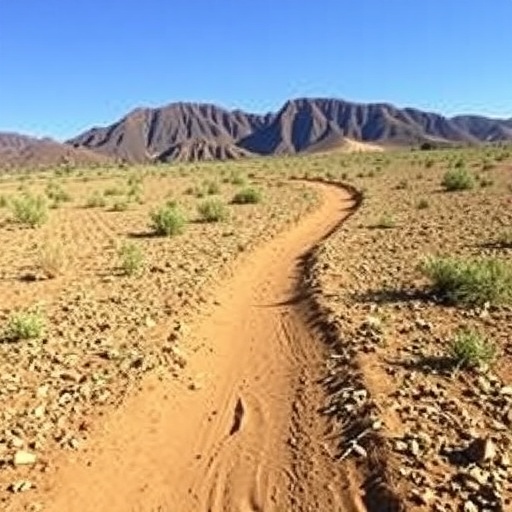
Soil moisture plays a pivotal role within the Earth system, influencing a myriad of processes including evapotranspiration, surface energy balances, vegetation dynamics, and broader climate feedback mechanisms. Despite its critical importance, accurately simulating soil moisture—particularly under arid and semi-arid conditions—has persistently challenged land-surface models. A common and recurring issue has been the tendency of these models to simulate near-surface soils as wetter than what empirical observations indicate. This discrepancy not only undermines the models’ realism but also hampers their ability to reliably replicate drought phenomena and complex land–atmosphere interactions that are essential for climate predictions and water resource assessments.
Addressing this profound modeling challenge, a team of researchers at the Institute of Atmospheric Physics within the Chinese Academy of Sciences has innovatively incorporated a soil vapor transport mechanism into the widely used Community Land Model version 5 (CLM5). Their groundbreaking study, recently published in the esteemed journal Atmospheric and Oceanic Science Letters, introduces a process that had previously been overlooked or simplified in many land-surface models: the upward movement of water vapor through soil pores under drought conditions. This advancement marks a significant stride toward rectifying the limitations of conventional liquid water-centric soil moisture representation.
Conventional land-surface models largely rely on liquid water movement to simulate soil moisture transport. However, in extremely dry scenarios, the upward flux of liquid water diminishes drastically or ceases completely due to the lack of hydraulic connectivity within the soil matrix. This cessation leads to a model-predicted lag in the drying of near-surface soil layers, causing persistent wet biases that deviate markedly from field observations. Such biases, in return, affect the simulation of critical hydrological processes such as surface evaporation rates, plant water stress, and drought development signals. This issue is particularly prominent in arid and semi-arid ecosystems where soil moisture dynamics are governed by complex interactions between water vapor and liquid phases.
To resolve this discrepancy, the research team introduced an additional physical pathway into CLM5—soil vapor transport—acknowledging that water vapor, unlike liquid water, can diffuse through pore spaces even when water films become discontinuous. This vapor-phase transport allows soil moisture to continue migrating upwards, even when liquid flow is minimal or non-existent. By embedding this mechanism into the land-surface model, the researchers achieved a more realistic graph of soil drying that aligns closely with empirical observations obtained from field measurements conducted at the US-SRM site during 2007. The model’s enhanced capabilities show a marked improvement in replicating half-hourly soil moisture fluctuations at multiple depths, reflecting the dynamic drying patterns characteristic of dryland soils.
The inclusion of soil vapor transport fundamentally changes the modeling landscape by filling a longstanding gap in drought-related land surface dynamics. Dr. Xia Zhang, the corresponding author, emphasizes that while liquid water movement stagnates in parched soils, the transport of vapor continues to play a vital role. Recognizing and characterizing this vapor flux provides a key to unlocking the nuanced interactions that dictate drought onset and progression. This shift in perspective challenges prevailing assumptions and encourages a reevaluation of current model structures that marginalize vapor-phase processes.
Importantly, the implications of integrating soil vapor transport extend beyond just moisture content simulations. The revised model demonstrates significant enhancements in the simulation of latent heat flux—a crucial component of surface energy exchange. Under dry conditions, the updated model predicts stronger daytime evapotranspiration rates, reflecting an improved representation of soil-vegetation-atmosphere coupling. Moreover, the incorporation of vapor transport reduces the incidence of excessive nocturnal condensation that had previously confounded latent heat flux estimates in traditional models. These refinements foster a more accurate depiction of the diurnal energy cycle and moisture fluxes in arid environments.
The study further reinforces that soil vapor transport is far from a marginal or negligible process, particularly in dry environments where it serves as a critical pathway influencing not only moisture dynamics but also thermal and energy exchanges. By capturing these subtleties, the enhanced CLM5 model shows promise in mitigating the prevalent wet bias that has long plagued simulations focused on arid and semi-arid regions. This advance aligns with broader efforts to improve drought prediction and understanding of land–atmosphere feedbacks under water-limited conditions.
Such model improvements are urgently needed as dryland processes increasingly intersect with concerns about climate variability and future climate change impacts. Accurate soil moisture representation under drought conditions is essential to forecast shifts in regional hydrology, vegetation productivity, and the frequency and severity of droughts. The improved modeling framework presented in this study offers a practical pathway to augment the fidelity of Earth system models, bridging crucial gaps in their capacity to simulate critical soil and atmospheric processes.
Incorporating vapor transport processes not only advances drought representation but also enhances our understanding of soil-plant-atmosphere water exchange mechanisms. This represents a paradigm shift that encourages the Earth science community to refine existing physical parameterizations and to consider the vapor phase as a dynamic component with substantial impacts on observed climate and environmental patterns. Integrating these complex but essential processes into next-generation land-surface models will enable more reliable simulations, which are fundamental for informed decision-making regarding climate adaptation and sustainable land management.
Looking forward, the research sets a foundation for further explorations into how vapor transport interacts with other soil and atmospheric processes across various climatic zones. The refinement of soil moisture transport schemes could also provide insights into coupled biogeochemical processes and their feedback loops. As models continue to evolve, the inclusion of such physically grounded mechanisms will be crucial to correctly projecting water availability, ecosystem responses, and climate feedbacks at both regional and global scales.
Ultimately, this research represents a critical breakthrough in land-surface modeling by affirming the importance of soil vapor flux as a key physical mechanism governing soil moisture dynamics under dry conditions. It opens new avenues for improving drought forecasts and enhances the capability of climate models to realistically simulate interactions between the land surface and the atmosphere. This progress is timely and significant, underscoring the intricacies of dryland environments and the necessity to encapsulate these complexities in models for a deeper understanding of our changing climate.
Keywords
Soil moisture, soil vapor transport, drought simulation, land-surface models, evapotranspiration, latent heat flux, dryland ecosystems, Community Land Model (CLM5), water-limited conditions, land–atmosphere interactions, climate modeling, arid and semi-arid regions
Cite Scienmag News
Bethany Barker. (May 28, 2026). Enhancing Soil Moisture Modeling in Drylands Through Soil Vapor Transport. Scienmag. https://scienmag.com/enhancing-soil-moisture-modeling-in-drylands-through-soil-vapor-transport/
Bethany Barker. "Enhancing Soil Moisture Modeling in Drylands Through Soil Vapor Transport." Scienmag, 28 May 2026, https://scienmag.com/enhancing-soil-moisture-modeling-in-drylands-through-soil-vapor-transport/. Accessed 3 September 2026.
Bethany Barker. "Enhancing Soil Moisture Modeling in Drylands Through Soil Vapor Transport." Scienmag. May 28, 2026. https://scienmag.com/enhancing-soil-moisture-modeling-in-drylands-through-soil-vapor-transport/


