


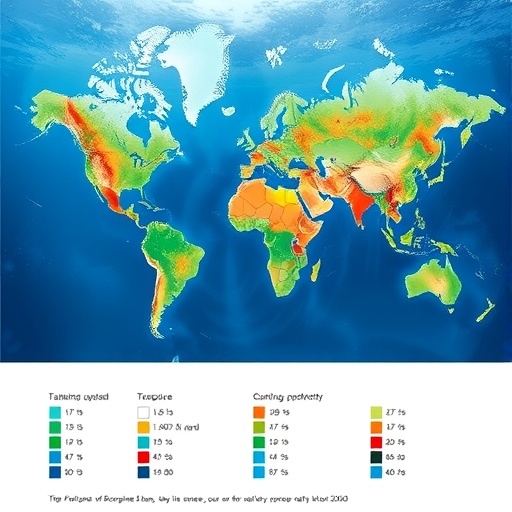
In an era where the mysteries of our oceans continuously beckon scientific inquiry, a groundbreaking study by Hamed G. Saeedi has illuminated the profound gaps and primary drivers underpinning global marine animal biodiversity from the surface waters down to the darkest abyss. Published in Nature Communications in 2026, this comprehensive analysis delves deeply into the vertical stratification of marine life, unraveling patterns of diversity that shape marine ecosystems across all depths. This pioneering work not only revises long-standing assumptions about biological richness in the ocean but also paves the way for informed conservation strategies amid accelerating environmental change.
Marine biodiversity, the variety and variability of life forms residing in the ocean, is a crucial pillar underpinning ecosystem resilience, biogeochemical cycles, and the services oceans provide to humanity. However, quantifying this biodiversity remains notoriously challenging due to the sheer expanse and inaccessibility of vast oceanic zones, especially at greater depths. Saeedi’s study harnesses an unprecedented global dataset combining organismal records, environmental parameters, and innovative modeling approaches to map biodiversity gradients spanning from the photic surface waters typical of coral reefs and pelagic zones to the hadal depths exceeding 6,000 meters.
One of the most striking revelations from this research is the identification of significant biodiversity gaps at intermediate depths, approximately between 200 to 1,000 meters, where sampling deficiencies and ecological complexities obscure true species richness. This mesopelagic zone, often termed the ocean’s twilight realm, had been historically underrepresented in biodiversity assessments. Saeedi’s integration of high-resolution environmental proxies with species occurrence data intimates that this midwater region harbors considerable, previously undocumented diversity, underscoring the urgency of focused exploration efforts utilizing emerging technologies like autonomous underwater vehicles and advanced eDNA sampling.
The study further elucidates the drivers influencing marine biodiversity distributions along depth gradients. Environmental factors such as temperature, oxygen availability, nutrient flux, and primary productivity interplay dynamically, dictating habitat suitability and species assemblages. Notably, the research highlights the critical role of oxygen minimum zones (OMZs), widespread low-oxygen areas, in structuring biological communities. These OMZs act as ecological filters, imposing physiological constraints that select for specialized adaptations, thus fostering unique biodiversity hotspots rather than mere biodiversity declines, challenging conventional wisdom.
Saeedi’s findings also contest the notion of a simple monotonic decrease in species richness with increasing depth, a longstanding paradigm in marine ecology. Instead, the work reveals a more complex, non-linear biodiversity profile, with distinct peaks at certain depths shaped by habitat heterogeneity and resource availability. For example, shallow coastal and continental slope areas show elevated diversity linked to habitat complexity and nutrient input, while specific abyssal plains display surprising pockets of endemism and richness fueled by chemosynthetic ecosystems around hydrothermal vents and cold seeps.
The global scale approach of this research distinguishes it from prior localized studies. By synthesizing diverse datasets across all ocean basins, from the Arctic to the tropics and down to abyssal depths, the study presents a holistic picture of the marine biodiversity landscape. This synthesis is pivotal for identifying geographic and depth-based biodiversity “gaps,” regions where data paucity masks true ecological patterns. Such comprehensive baselining is instrumental in the current context of rapid anthropogenic pressures including climate change, overfishing, and habitat degradation, which disproportionately affect understudied deep-sea ecosystems.
Technological advances play a foundational role in enabling such integrative research. The study leverages machine learning algorithms to predict species distributions by correlating known occurrences with environmental variables, overcoming logistic limitations of direct sampling. Additionally, the inclusion of environmental DNA (eDNA) methodologies provides sensitive detection of elusive or rare species, offering a non-invasive window into cryptic communities inhabiting challenging depths. This fusion of classical taxonomy with modern computational and molecular tools represents the vanguard of marine biodiversity science.
Importantly, Saeedi’s analysis underscores that biodiversity patterns are not merely biogeographic phenomena but are tightly coupled with ecological functions and evolutionary processes. For instance, zones of high diversity often correspond with areas of intense biotic interactions such as predation, symbiosis, or competition, which in turn shape community structure and ecosystem stability. Understanding these drivers is critical for predicting how marine biodiversity might respond to changing environmental baselines, especially as ocean warming and deoxygenation proceed unabated.
The implications of the study extend far beyond academic curiosity. With the ocean representing the largest ecosystem on Earth, harboring myriad species that underpin fisheries, carbon cycling, and cultural values, gaps in biodiversity knowledge translate into risks for sustainable management. Saeedi’s work advocates for targeted efforts to fill these gaps, emphasizing deep ocean observatories, expanded international collaboration, and open-access global biodiversity databases. Enhancing data coverage will improve ecological modeling accuracy, risk assessments, and conservation prioritization in the face of escalating human impacts.
Moreover, the paper draws attention to the uneven geographic distribution of biodiversity data, reflecting disparities in research funding and capacity globally. Tropical and polar regions, in particular, remain under-sampled at depth despite their ecological and evolutionary significance. The author calls for capacity-building initiatives and equitable scientific partnerships to democratize ocean exploration and data generation. This inclusive approach is vital to grasp the full spectrum of marine biodiversity and ensure that conservation efforts are globally representative and effective.
Climate change emerges as a backdrop intensifying the urgency of this research. Rising ocean temperatures and acidification disproportionately affect midwater and abyssal communities through altered metabolic rates, shifting species ranges, and disrupted food webs. Saeedi’s identification of biodiversity hotspots vulnerable to such stressors provides a blueprint for monitoring and mitigating impacts. The metabolic theory of ecology featured in the study suggests that smaller, ephemeral species may proliferate under warming conditions, potentially destabilizing established food chains and ecosystem functions.
The methodological rigor and interdisciplinary nature of this study allow it to serve as a foundational reference for emerging marine policies, including proposals for deep-sea mining regulations, marine protected area designation, and international biodiversity treaties under the United Nations Convention on Biological Diversity (CBD). By detailing the spatial patterns and ecological drivers of marine life from surface waters to the abyss, the research equips policymakers with the scientific evidence needed to safeguard planetary health comprehensively.
Looking ahead, the study emphasizes the potential of integrating remote sensing data, autonomous sensing platforms, and citizen science initiatives to further capture dynamic biodiversity shifts over time. Long-term monitoring programs anchored in the baseline established by Saeedi will be essential to detect early warning signs of ecosystem degradation or resilience. These concerted efforts promise not only to refine our understanding of life in the ocean’s depths but also to inspire broader public engagement with ocean conservation.
In conclusion, this seminal work by Hamed G. Saeedi constitutes a transformative advancement in marine biodiversity research. By bridging knowledge gaps across vertical and horizontal oceanic dimensions and unveiling the multifaceted environmental drivers of species richness, it challenges and enriches our perception of marine ecosystems. The study is a clarion call for intensified exploration, collaborative science, and proactive stewardship to preserve the ocean’s irreplaceable biological heritage in an era of unprecedented change.
Cite Scienmag News
Margaret Porter. (May 27, 2026). Global Marine Biodiversity: Gaps and Key Drivers Revealed. Scienmag. https://scienmag.com/global-marine-biodiversity-gaps-and-key-drivers-revealed/
Margaret Porter. "Global Marine Biodiversity: Gaps and Key Drivers Revealed." Scienmag, 27 May 2026, https://scienmag.com/global-marine-biodiversity-gaps-and-key-drivers-revealed/. Accessed 5 September 2026.
Margaret Porter. "Global Marine Biodiversity: Gaps and Key Drivers Revealed." Scienmag. May 27, 2026. https://scienmag.com/global-marine-biodiversity-gaps-and-key-drivers-revealed/


