


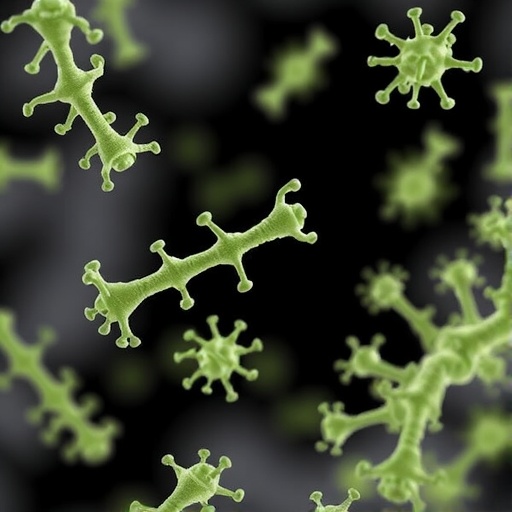
In a groundbreaking development that promises to deepen our understanding of bacterial-phage interactions, a team of researchers has successfully isolated novel bacteriophages from a resistant strain of Dorea longicatena. This discovery, detailed in a 2026 publication in npj Viruses, unveils previously unknown genes linked to phage resistance mechanisms. The implications of this study extend far beyond microbiology, holding potential to revolutionize therapeutic approaches to antibiotic-resistant infections and reshape strategies in microbiome management.
Dorea longicatena is a species of anaerobic bacteria commonly found in the human gut, playing a dual role in health and disease. Although typically regarded as a commensal organism, certain strains have demonstrated resistance to bacteriophage infection, a process traditionally exploited to regulate microbial populations. By isolating phages capable of infecting these resistant strains, the research provides a critical vantage point from which to dissect the molecular underpinnings of bacterial defense systems.
Central to this inquiry was the nuanced methodology employed to isolate and characterize bacteriophages from Dorea longicatena. The team utilized advanced enrichment cultures and metagenomic sequencing techniques designed to capture a diverse phage population. This approach allowed the identification of phages that can circumvent bacterial immunity, highlighting an evolutionary arms race characterized by sophisticated genetic adaptations on both sides.
The isolated phages exhibited unique genetic signatures, distinct from known phage families, suggesting an uncharted diversity within the gut virome. Genomic analysis revealed gene clusters potentially involved in overcoming bacterial resistance, including genes encoding novel anti-restriction and anti-CRISPR proteins. These proteins presumably function by neutralizing bacterial defense mechanisms that would otherwise degrade invading phage DNA.
Detailed examination of the bacterial host uncovered resistance mechanisms embedded within the Dorea longicatena genome. Notably, genes encoding restriction-modification systems and CRISPR-Cas arrays showed signs of recent adaptive evolution, indicating active selection pressure from phage predation. The interplay between these systems and phage counter-defense genes provides a compelling example of microbial co-evolution.
Understanding the molecular dialogue between Dorea longicatena and its phages expands our grasp of gut microbiome dynamics. Given the crucial role of bacterial populations in maintaining host health, insights into phage resistance can illuminate how bacterial communities stabilize or shift under environmental and therapeutic pressures. This knowledge could inform the design of phage-based interventions intended to manipulate gut bacteria without triggering unintended resistance.
The study’s findings carry profound implications for clinical microbiology, particularly concerning antibiotic resistance. Phage therapy, the use of bacteriophages to target pathogenic bacteria, has gained renewed interest as a viable alternative to conventional antibiotics. However, the rise of phage-resistant bacterial strains poses a significant challenge. By identifying the genetic basis of resistance, this research aids the development of more effective phage cocktails tailored to circumvent bacterial defenses.
Moreover, the intricate genetic adaptations observed reflect a broader ecological phenomenon in microbial populations. Phages act as selective agents, continuously shaping bacterial genomes through mechanisms such as horizontal gene transfer and selection for resistant variants. The novel genes cataloged in this study may also represent reservoirs of functional genetic elements that could be harnessed in synthetic biology and gene editing applications.
The interplay between phage and bacterial immunity extends to the regulatory networks governing gene expression. This study identifies regulatory genes that modulate resistance pathways in response to phage infection, suggesting a dynamic and responsive bacterial defense strategy. Such gene regulation complexity indicates that resistance is not a fixed trait but rather a modifiable phenotype subject to environmental stimuli.
In addition to molecular insights, the isolation of novel phages provides critical resources for future experimental platforms. These phages serve as model systems to probe infection mechanisms, host specificity, and co-evolutionary dynamics. Their characterization enriches the phage catalog available for therapeutic development and microbiome engineering, demonstrating the value of exploring understudied bacterial hosts.
The research also underscores the importance of integrating multi-omic approaches—combining genomics, transcriptomics, and proteomics—to decipher the complexities of phage-host interactions. Such comprehensive analyses enable the identification of functional networks and pathways engaged during infection and resistance, offering a holistic view that transcends single-gene studies.
Beyond human health, these findings have significant ecological ramifications. Phages influence microbial ecology not only in gut environments but also in soil, marine, and other natural ecosystems. The study’s methodology and conceptual advances lay a foundation for exploring phage resistance across diverse microbial communities, enriching our understanding of microbial biodiversity and ecosystem stability.
The novel phage isolation from a resistant Dorea longicatena strain thus represents a paradigm shift in the study of bacteriophage biology. With detailed insights into resistance-associated genes, the research opens new avenues for combating bacterial infections and harnessing phages for beneficial purposes. It epitomizes the synergy between cutting-edge technology and fundamental microbiology in tackling pressing biomedical challenges.
Future research inspired by this study will likely focus on the functional characterization of identified resistance genes, exploring their mechanisms in vitro and in vivo. Such efforts will be crucial for translating these discoveries into tangible medical and biotechnological applications, including tailored phage therapy regimes and microbiome modulation strategies.
In summation, Wang, Li, Gondowardojo, and colleagues’ work propels the field toward a deeper, mechanistic comprehension of phage resistance in gut bacteria. Their identification of novel phages and resistance genes within Dorea longicatena serves as a beacon for future investigations targeting the complex interplay governing microbial survival and adaptation. This pioneering research stands as a testament to the power of exploring the microbial dark matter expanding within us.
Cite Scienmag News
Juliet Wilcox. (May 26, 2026). New Phages Uncover Resistance Genes in Dorea. Scienmag. https://scienmag.com/new-phages-uncover-resistance-genes-in-dorea/
Juliet Wilcox. "New Phages Uncover Resistance Genes in Dorea." Scienmag, 26 May 2026, https://scienmag.com/new-phages-uncover-resistance-genes-in-dorea/. Accessed 3 September 2026.
Juliet Wilcox. "New Phages Uncover Resistance Genes in Dorea." Scienmag. May 26, 2026. https://scienmag.com/new-phages-uncover-resistance-genes-in-dorea/


