

Tuesday, July 28, 2026
Science
No Result
View All Result
  • Login
  • HOME
  • SCIENCE NEWS
  • CONTACT US
  • HOME
  • SCIENCE NEWS
  • CONTACT US
No Result
View All Result
Scienmag
No Result
View All Result
Home Science News Medicine

Temporal Changes in Hyaluronan Levels in Preterm Human Breast Milk

July 28, 2026
in Medicine, Pediatry
Reading Time: 2 mins read
0
Temporal Changes in Hyaluronan Levels in Preterm Human Breast Milk

Temporal Changes in Hyaluronan Levels in Preterm Human Breast Milk

65
SHARES
587
VIEWS
Share on FacebookShare on Twitter
ADVERTISEMENT

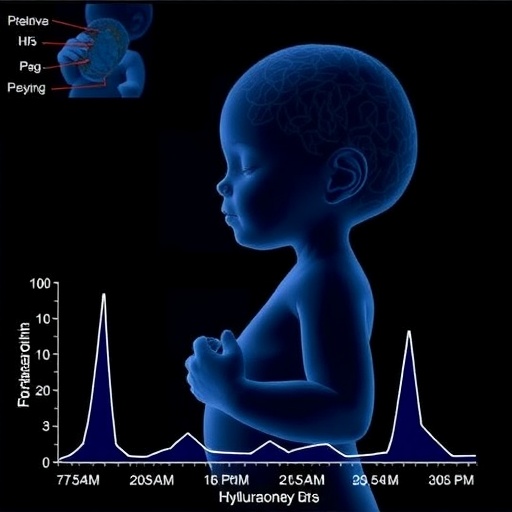
Preterm infants arrive with unique vulnerabilities, and the first nourishment they receive is more than calories—it’s a time-sensitive biological instruction manual. In a new study, researchers track how a specific sugar molecule in human milk changes over time, using hyaluronan (HA) as a molecular signal of maternal–infant adaptation. The findings point to dynamic biochemical choreography in preterm milk, with potential implications for gut development and immune balance.

Hyaluronan is a long-chain glycosaminoglycan found throughout the body and known to influence tissue hydration, cell migration, and inflammatory signaling. In the infant gut, where the microbiome and epithelial barriers are still forming, HA may act as a structural and regulatory molecule. “Temporal changes” matter because the early days of lactation could provide distinct biological cues as preterm infants transition from immediate stabilization to longer-term growth.

To investigate, the team collected preterm human milk samples across defined time windows and quantified HA concentrations. Rather than treating milk composition as static, the study frames it as a moving target shaped by developmental stage and lactation timing. This approach helps distinguish baseline HA abundance from time-linked shifts that could correlate with maturation of the infant digestive tract.

The researchers report measurable variation in HA levels over the sampling period, suggesting that preterm milk is not a single formula but a progressive biochemical environment. Such variation could reflect evolving maternal physiology, changes in mammary gland activity, or feedback from the demands of preterm feeding. The pattern also raises the possibility that HA supply could contribute to how the infant gut handles inflammation and barrier formation during early life.

These dynamics may be particularly relevant for preterm populations, which face elevated risks of necrotizing enterocolitis, infection, and impaired growth. Mechanistically, HA can interact with cell-surface receptors involved in inflammatory tone and repair processes. If HA availability declines or increases over specific windows, the timing could matter as much as the dose.

The study’s design emphasizes precision in measuring HA and interpreting concentration trends rather than only comparing milk from different mothers. That analytical lens strengthens the case for a timeline-dependent nutrition strategy. It also sets the groundwork for future work linking measured HA profiles to clinical endpoints such as stool characteristics, gut barrier markers, or immune signaling patterns.

For clinicians and researchers, the broader message is that “human milk quality” may need to be reconsidered in terms of temporal molecular composition. Viral-style, the story is simple: preterm milk evolves, and HA may be one of the keys to understanding how.

Subject of Research: Temporal changes in hyaluronan concentrations in preterm human milk

Article Title: Temporal changes in hyaluronan concentrations in preterm human milk.

Article References: Lien, J., DeShea, L., Eckert, J. et al. Temporal changes in hyaluronan concentrations in preterm human milk. J Perinatol (2026). https://doi.org/10.1038/s41372-026-02835-2

Image Credits: AI Generated

DOI: 10.1038/s41372-026-02835-2

Keywords:

Tags: biochemical changes in preterm lactationdynamic breast milk compositionglycosaminoglycan in breast milkimmune regulation in preterm infantsimplications for preterm infant nutritioninfant gut developmentlactation timing and molecular signalsmaternal-infant adaptationmicrobiome development in preterm infantsPreterm human milk hyaluronan levelsstructural role of hyaluronan in infant tissuestemporal analysis of human milk
Share26Tweet16
Previous Post

Century-Long Data Shows Complex Ice-Cover Trends in the Laurentian Great Lakes

Next Post

Cigarette Smoke Exposure Alters Gut Microbiome and Damages Short-Chain Fatty Acid Metabolism in Rats

Related Posts

Innate immune recovery lags nutrition after severe acute malnutrition in children
Medicine

Innate immune recovery lags nutrition after severe acute malnutrition in children

July 28, 2026
Children’s Hospital Colorado Helps Set National Standards for Sickle Cell Neurocare
Medicine

Children’s Hospital Colorado Helps Set National Standards for Sickle Cell Neurocare

July 28, 2026
Entangled Migration Between Two Sites Driven by Boracycle Rearrangement
Medicine

Entangled Migration Between Two Sites Driven by Boracycle Rearrangement

July 28, 2026
Low-Burden AI Identifies Cognitive Decline Early Across Countries Using Real-World Surveys
Medicine

Low-Burden AI Identifies Cognitive Decline Early Across Countries Using Real-World Surveys

July 28, 2026
Remdesivir improves outcomes in adult kidney transplant recipients with COVID-19
Medicine

Remdesivir improves outcomes in adult kidney transplant recipients with COVID-19

July 28, 2026
Methylglyoxal and acrolein disrupt arginine balance, causing hyperglycemia in male zebrafish
Medicine

Methylglyoxal and acrolein disrupt arginine balance, causing hyperglycemia in male zebrafish

July 28, 2026
Next Post
Cigarette Smoke Exposure Alters Gut Microbiome and Damages Short-Chain Fatty Acid Metabolism in Rats

Cigarette Smoke Exposure Alters Gut Microbiome and Damages Short-Chain Fatty Acid Metabolism in Rats

  • Mothers who receive childcare support from maternal grandparents show more

    Mothers who receive childcare support from maternal grandparents show more parental warmth, finds NTU Singapore study

    27656 shares
    Share 11059 Tweet 6912
  • University of Seville Breaks 120-Year-Old Mystery, Revises a Key Einstein Concept

    1061 shares
    Share 424 Tweet 265
  • Bee body mass, pathogens and local climate influence heat tolerance

    682 shares
    Share 273 Tweet 171
  • Researchers record first-ever images and data of a shark experiencing a boat strike

    546 shares
    Share 218 Tweet 137
  • Groundbreaking Clinical Trial Reveals Lubiprostone Enhances Kidney Function

    531 shares
    Share 212 Tweet 133
Science

Embark on a thrilling journey of discovery with Scienmag.com—your ultimate source for cutting-edge breakthroughs. Immerse yourself in a world where curiosity knows no limits and tomorrow’s possibilities become today’s reality!

RECENT NEWS

  • National Academy of Inventors and USPTO launch five-year initiative to boost U.S. innovation
  • Molecule Enables High-Precision Quantum Sensing
  • Global North-South Income Gap Widens Sharply, New Analysis Finds
  • Study Finds Targeted School Closures Can Strengthen Pandemic Response

Categories

  • Agriculture
  • Anthropology
  • Archaeology
  • Athmospheric
  • Biology
  • Biotechnology
  • Blog
  • Bussines
  • Cancer
  • Chemistry
  • Climate
  • Earth Science
  • Editorial Policy
  • Marine
  • Mathematics
  • Medicine
  • Pediatry
  • Policy
  • Psychology & Psychiatry
  • Science Education
  • Social Science
  • Space
  • Technology and Engineering

Subscribe to Blog via Email

Enter your email address to subscribe to this blog and receive notifications of new posts by email.

Join 5,146 other subscribers

© 2025 Scienmag - Science Magazine

Welcome Back!

Login to your account below

Forgotten Password?

Retrieve your password

Please enter your username or email address to reset your password.

Log In
No Result
View All Result
  • HOME
  • SCIENCE NEWS
  • CONTACT US

© 2025 Scienmag - Science Magazine

Discover more from Science

Subscribe now to keep reading and get access to the full archive.

Continue reading
