


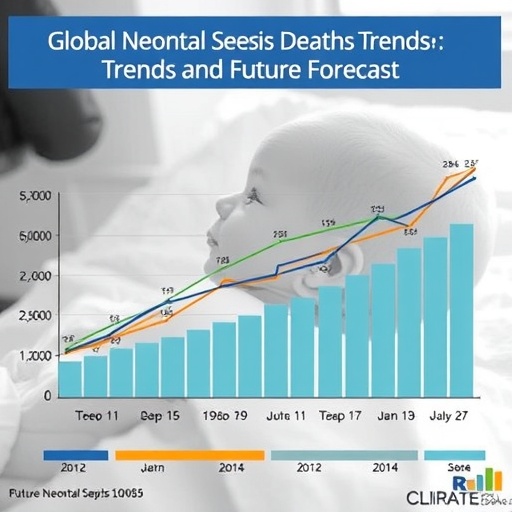
In a pivotal study published in the Journal of Perinatology on May 26, 2026, a comprehensive global analysis mapped the evolving landscape of neonatal sepsis mortality across 194 countries from 2000 to 2021 and projected future trends up to 2050. This extensive investigation, spearheaded by Kim and colleagues, shines a revealing light on one of the most critical yet persistently under-addressed causes of neonatal death worldwide. Neonatal sepsis—a life-threatening bloodstream infection in newborns—remains a formidable challenge to global health, and this study provides an unprecedented temporal and geographical perspective on its mortality burden.
Neonatal sepsis is notoriously difficult to diagnose and treat due to nonspecific symptoms in early life and the rapid progression from infection to systemic organ failure. Despite advances in neonatal care and antimicrobial therapies, sepsis continues to claim the lives of hundreds of thousands of newborns annually. Previous research efforts have mainly offered fragmented regional data or single-country analyses, leaving a gap in understanding the broad, dynamic patterns that unfold on a global scale. Kim et al. address this crucial gap by leveraging decades of mortality data to characterize temporal trends and project future mortality risks using rigorous modeling techniques.
The dataset underpinning this work encompasses detailed mortality records aggregated from diverse sources including national health registries, hospital records, and global health databases. By employing a sophisticated Bayesian hierarchical modeling framework, the researchers accounted for data variability and underreporting inherent in many low-resource settings. This approach enabled reliable estimation of neonatal sepsis mortality rates, even in countries where surveillance infrastructure remains limited. The integration of temporal trends with predictive modeling further allowed the team to generate forecasts extending through mid-century, charting potential trajectories under current intervention scenarios.
Results from this study reveal a complex global portrait of neonatal sepsis mortality decline interspersed with worrying disparities. While high-income countries displayed significant decreases in neonatal sepsis deaths over the two decades studied—attributed to improvements in perinatal care, infection control protocols, and rapid antibiotic access—several low- and middle-income regions showed stagnation or even rising mortality rates. Sub-Saharan Africa and parts of South Asia, in particular, suffered elevated neonatal sepsis mortality that, if unmitigated, threatens to reverse gains made in infant survival.
The spatial distribution of mortality rates, as delineated in the accompanying figure, shows profound heterogeneity. Some nations achieved steep annualized reductions exceeding 5%, reflecting robust health system strengthening and preventative measures. Conversely, many countries maintain neonatal sepsis mortality rates above 10 per 1,000 live births—a striking indicator of ongoing vulnerability. These findings underscore the urgent necessity of tailored interventions attuned to specific country contexts rather than one-size-fits-all strategies.
The study’s predictive simulations extend this urgency to mid-century outcomes. Should current healthcare delivery paradigms remain unchanged, neonatal sepsis mortality is projected to remain alarmingly high in most regions outside the developed world. Projections suggest that without targeted public health action, approximately 40% of neonatal deaths globally could still be attributable to sepsis by 2050. This forecast poses a significant challenge to reaching Sustainable Development Goal 3.2, which aims to end preventable neonatal deaths worldwide.
Importantly, Kim et al. highlight the critical role of early diagnosis and prompt, appropriate antibiotic treatment in reducing mortality. Advancements in rapid diagnostic methods—including molecular pathogen detection and host biomarker profiling—are identified as potential game changers, particularly in settings where blood culture facilities are inadequate. The study advocates for intensified investment in diagnostic technology dissemination, alongside strengthening supply chains for essential antimicrobials to prevent delays in treatment initiation.
Beyond biomedical interventions, the analysis also recognizes the impact of socioeconomic determinants on neonatal sepsis outcomes. Poor maternal health, limited access to skilled birth attendance, inadequate neonatal resuscitation capabilities, and environmental factors such as poor sanitation exacerbate susceptibility to infection and worsen prognoses. The authors call for a multi-sectoral approach integrating health system reforms with social policies aimed at improving maternal and newborn wellbeing.
A striking feature of this study is its methodological innovation in integrating extensive real-world mortality data with projection modeling. By meticulously adjusting for regional data disparities and employing robust statistical algorithms, the research overcomes long-standing barriers in accurately estimating neonatal sepsis mortality burden. This methodological template offers a new standard for future epidemiological studies of neonatal conditions and infectious diseases generally.
The research also encourages policymakers to view neonatal sepsis not merely as a clinical issue but as a critical public health priority warranting dedicated resources and policy frameworks. Existing neonatal health programs must incorporate sepsis prevention and management components explicitly, supported by national guidelines and training programs for healthcare workers. The integration of infection control measures within maternal and newborn health services stands out as a cost-effective approach to curbing mortality rates.
In addition to direct health implications, neonatal sepsis mortality influences broader population health outcomes by contributing significantly to neonatal and infant mortality rates. Reducing sepsis-related deaths would substantially enhance child survival metrics and improve population resilience, especially in vulnerable settings disproportionately burdened by poverty and health inequities. These wider effects should motivate increased donor support and international collaborative efforts toward elimination strategies.
Crucially, this research sets the stage for further inquiries into neonatal sepsis pathophysiology, resistance mechanisms, and the interplay of viral and bacterial co-infections in the neonatal period. Understanding such nuances could drive next-generation therapeutic innovations and vaccine development tailored for newborn immune systems. The study’s longitudinal data also allow exploration of temporal shifts in predominant pathogens causing neonatal sepsis, information vital for adaptive clinical protocols.
The detailed mapping of neonatal sepsis mortality trends carried out by Kim et al. is a clarion call reminding the global health community that while remarkable progress has been achieved, the fight against neonatal sepsis is far from over. Investments in technology, healthcare infrastructure, and system-wide reforms are urgently required to prevent millions of children from succumbing to these preventable infections across the next decades. This work’s profound insights and projections provide an actionable blueprint for galvanizing coordinated global responses.
As the world strives toward equity in neonatal health outcomes, this research empowers stakeholders with essential epidemiological evidence to target resources effectively. Enhanced surveillance, timely diagnostics, and tailored treatment pathways will be pivotal in transforming neonatal sepsis from a leading cause of death to a rare and manageable condition worldwide. The findings underscore that the path to ending neonatal deaths is not only a moral imperative but a technically achievable goal requiring sustained commitment.
Looking ahead, the integration of artificial intelligence and machine learning into neonatal health surveillance promises to further refine mortality estimations and enable real-time predictive analytics. These technological advancements can propel early warning systems and optimize clinical decision-making, enhancing the precision of neonatal sepsis management. Coupling such innovations with global health strategies informed by comprehensive analyses like this one offers an unprecedented opportunity to rewrite the narrative of neonatal survival globally.
Ultimately, Kim et al.’s study is a landmark contribution highlighting the temporal dynamics and geographic disparities of neonatal sepsis mortality while mapping a critical pathway toward mitigation. Their work invites the global community to harness this knowledge and mobilize urgently to prevent millions of newborn deaths, ensuring every child has the chance to survive and thrive in their earliest days of life.
Cite Scienmag News
Harold Sullivan. (May 26, 2026). Global Neonatal Sepsis Deaths: Trends and Future Forecast. Scienmag. https://scienmag.com/global-neonatal-sepsis-deaths-trends-and-future-forecast/
Harold Sullivan. "Global Neonatal Sepsis Deaths: Trends and Future Forecast." Scienmag, 26 May 2026, https://scienmag.com/global-neonatal-sepsis-deaths-trends-and-future-forecast/. Accessed 4 September 2026.
Harold Sullivan. "Global Neonatal Sepsis Deaths: Trends and Future Forecast." Scienmag. May 26, 2026. https://scienmag.com/global-neonatal-sepsis-deaths-trends-and-future-forecast/


