


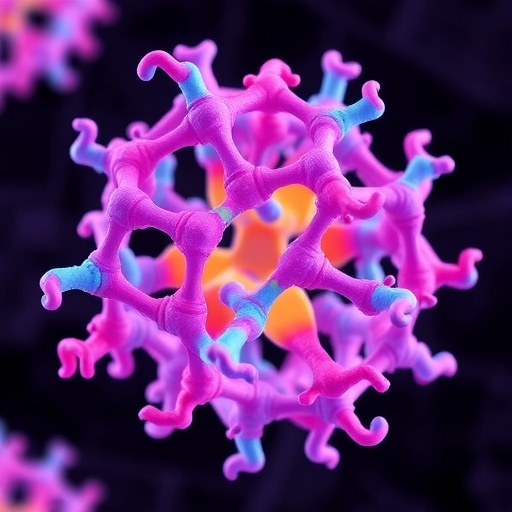
University of Cincinnati structural biologists have achieved a groundbreaking milestone in molecular biology by visualizing the intricate structure of a pivotal cell protein for the first time. This achievement, stemming from research conducted within the College of Medicine, unlocks critical insights into the regulation of the ADAM17 enzyme, a key player in human tissue development and immune response. Utilizing cutting-edge cryogenic electron microscopy (cryo-EM) housed in UC’s renowned Center for Advanced Structural Biology, the team elucidated how iRhom1, a regulator protein, binds to ADAM17, unveiling molecular details that have long eluded scientists.
The study represents a major leap forward from prior research that visualized the interaction between ADAM17 and a related regulator, iRhom2, just last year. By capturing the first-ever images of the iRhom1-ADAM17 complex, the investigators not only confirmed the structural similarities between iRhom1 and iRhom2 but also illuminated how these pseudoproteins act as molecular relays. These relays transmit intracellular signals seamlessly across the cell membrane, orchestrating the activation of ADAM17 at the cell surface — a process critical for ectodomain shedding, whereby dependent enzymes cleave and release extracellular proteins to modulate cell-to-cell communication.
The ADAM17 protease’s function is vital in maintaining human health, particularly in controlling inflammatory responses. Dysregulation of this enzyme is linked to numerous pathological states, including chronic inflammation, cancer progression, and neurodegenerative diseases. Understanding the mechanistic basis of ADAM17 regulation has therefore been a longstanding quest, as it represents an attractive target for therapeutic intervention. The structural revelations of iRhom1’s interaction with ADAM17 offer invaluable clues into how cells fine-tune enzymatic activity amidst the dynamic signaling milieu within the body.
According to Tom Seegar, PhD, an assistant professor of Molecular and Cellular Biosciences and the study’s corresponding author, the rapid activation of ADAM17 in response to intracellular changes has been an enigma for decades. “Our visualization of the iRhom1-ADAM17 complex provides a molecular framework explaining how signals are transferred across the membrane—a process fundamental to the enzyme’s regulation. This discovery fills a critical gap in our understanding,” he remarked. The study’s co-first authors, Joe Maciag, PhD, and Joe Ungvary, contributed significantly to these insights through meticulous experimentation and analysis.
The detailed structural analysis revealed that despite iRhom1 and iRhom2 having near-identical conformations and signaling responses, their biological functions diverge. This functional divergence is hypothesized to result from subtle variations in their amino acid sequences, which confer unique substrate recognition and cleavage profiles. This nuanced understanding has crystallized a unified model for ADAM17 activation, highlighting the sophisticated interplay between protein structure and cellular function.
Intriguingly, iRhom proteins themselves are emerging as promising drug targets. Given their role as essential cofactors that confer specificity upon ADAM17, modulating their activity could enable fine control over pathological enzyme activation without completely abolishing ADAM17 function. This novel therapeutic avenue offers hope for treating chronic inflammatory diseases that currently lack targeted interventions.
The investigation also extended to clinical implications. The team examined a particular iRhom1 mutation identified in a cardiomyopathy patient, uncovering that this variant renders the protein incapable of proper folding. This misfolding leads to a complete loss of its regulatory function, effectively silencing ADAM17 activity at the cell surface. This profound defect contrasts with phenotypes observed in animal models, suggesting significant species-specific differences in iRhom1 biology that may impact disease manifestation and treatment responses in humans.
Ungvary emphasized the importance of these findings: “Seeing that this human variant destroys iRhom1’s structure offers new perspectives on how cardiac disorders linked to iRhom dysfunction might arise.” Meanwhile, Seegar highlighted the broader significance of distinguishing between human and animal model biology, stating, “Our work is among the first to pinpoint how iRhom1 mutations exert divergent effects in humans, which is crucial for developing relevant therapies.”
This research involved a multidisciplinary team of contributors, both at the University of Cincinnati and from external institutions, pooling expertise in structural biology, molecular biosciences, and computational analysis. The technical rigor and collaborative nature of the study exemplify the forefront of modern biomedical research, where unraveling the complexity of cellular mechanisms drives translational opportunities.
The implications of this breakthrough stretch far beyond the laboratory. They pave the way for next-generation interventions that can manipulate cell signaling and enzymatic activity with precision, potentially transforming the treatment landscape for inflammatory, degenerative, and proliferative diseases. The researchers envisage that ongoing studies will delve deeper into how iRhom proteins decide substrate specificity and orchestrate diverse biological functions despite their structural similarities—questions that have stirred curiosity in the field for over three decades.
Furthermore, cryo-EM technology emerges as a transformative tool, enabling researchers to visualize membrane protein complexes at near-atomic resolution in their native conformations without crystallization. The success of this approach in elucidating the iRhom1-ADAM17 complex underscores the vital role of advanced microscopy in decoding the molecular underpinnings of health and disease.
In sum, the University of Cincinnati team’s pioneering work not only demystifies long-standing questions about ADAM17 activation but also charts new directions for biomedical research and therapeutic development. Their findings, published in the reputable journal Cell Reports, stand to influence the scientific community profoundly and inspire innovative strategies against some of the most challenging medical conditions.
Cite Scienmag News
Drew Townsend. (May 22, 2026). University of Cincinnati Structural Biologists Achieve World First in Visualizing Crucial Cell Protein. Scienmag. https://scienmag.com/university-of-cincinnati-structural-biologists-achieve-world-first-in-visualizing-crucial-cell-protein/
Drew Townsend. "University of Cincinnati Structural Biologists Achieve World First in Visualizing Crucial Cell Protein." Scienmag, 22 May 2026, https://scienmag.com/university-of-cincinnati-structural-biologists-achieve-world-first-in-visualizing-crucial-cell-protein/. Accessed 3 September 2026.
Drew Townsend. "University of Cincinnati Structural Biologists Achieve World First in Visualizing Crucial Cell Protein." Scienmag. May 22, 2026. https://scienmag.com/university-of-cincinnati-structural-biologists-achieve-world-first-in-visualizing-crucial-cell-protein/


