


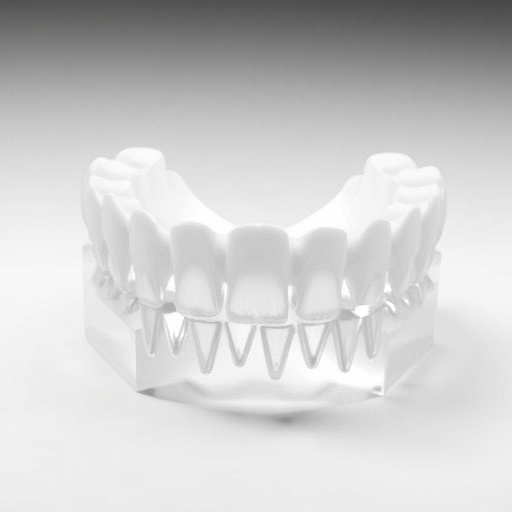
In the ever-evolving world of digital dentistry, the precision of dental restorations is paramount for functional success and patient satisfaction. Crowns, which are commonly used to restore damaged teeth, must adhere flawlessly to the prepared tooth to prevent complications such as microleakage, secondary caries, and periodontal disease. Advances in 3D printing technologies have ushered in a new era for prosthodontics, enabling the production of customized crowns with remarkable efficiency. However, the interplay of various printing parameters on the accuracy and fit of resin-based ceramic crowns remains a critical area of inquiry that demands attention for optimizing clinical outcomes.
A pioneering study conducted by researchers at The Fourth Military Medical University in China offers vital insights into how print angle and layer thickness, two fundamental 3D printing parameters, influence the dimensional fidelity and adaptation of resin-based ceramic crowns fabricated via digital light processing (DLP). The team’s meticulous approach involved designing a mandibular first molar crown and systematically printing it at nine distinct angles, spanning from 90° to 270°, coupled with two different layer thicknesses of 50 and 100 micrometers. This methodical variation allowed for a comprehensive assessment of the resultant crowns against their digital blueprints and prepared tooth models.
Measurement of crown trueness—the degree to which the printed crown conforms to its intended digital model—was central to the study. Employing advanced metrological techniques, the researchers found that crowns fabricated at moderate print angles between 150° and 180° demonstrated superior accuracy and optimal internal fit when produced with a 50-μm layer thickness. Conversely, crowns printed with a thicker 100-μm layer displayed a more concentrated distribution of deviations, indicating higher repeatability across multiple prints albeit with slightly reduced absolute accuracy. Such findings highlight a critical trade-off between fine detail resolution and manufacturing reproducibility in dental 3D printing.
Delving deeper, the study revealed notable spatial heterogeneity in dimensional deviations across the inner surfaces of the crowns. Marginal areas, critical for preventing microleakage, exhibited inward shrinkage tendencies, likely attributable to resin polymerization stresses and light curing gradients inherent to DLP technology. In contrast, occlusal surfaces displayed outward bulging, a phenomenon that could be attributed to layer stacking and resin flow dynamics. These nuanced deformation patterns illuminate why crowns that appear acceptable in gross morphology may require intraoral adjustments to achieve snug seating during clinical application.
Understanding these spatial variation trends has profound clinical implications, as maladaptation in marginal zones can precipitate plaque accumulation and secondary pathology. By identifying that moderate print angles promote uniform accuracy and that thinner layers enhance internal fit, the research provides a foundation for standardized printing protocols. This standardization could reduce chairside adjustment times and improve the longevity of restorations by ensuring consistent marginal seal and occlusal conformity.
Furthermore, the study underscores the balancing act between accuracy and repeatability. While 50-μm layers yield crowns with the highest trueness, the slightly less precise yet more reproducible 100-μm layers may be preferred when batch consistency is prioritized over the finest detail, such as in mass production scenarios. This trade-off is particularly relevant for dental laboratories and clinics seeking scalable solutions without compromising clinical acceptability.
The implications extend beyond mere parameter tuning, contributing to the broader understanding of resin-based ceramic behavior under photopolymerization conditions unique to DLP printing. The complex interplay between light exposure angle, layer thickness, and resin chemistry orchestrates the microstructural evolution of the crown, dictating its final dimensional stability and mechanical properties. These findings invite further exploration into resin formulations and adaptive curing strategies to mitigate deformation while preserving throughput.
Clinicians and dental technicians armed with this knowledge can tailor their 3D printing workflows to harness the benefits of digital dentistry more fully. Optimizing print orientation and layer resolution not only elevates restoration quality but also streamlines post-processing steps, reducing costly remakes and enhancing patient experience. In essence, the study bridges the gap between emerging manufacturing technologies and clinical excellence, paving the way for widespread adoption of resin-based ceramic crowns in routine dental care.
Looking ahead, ongoing research into print parameter optimization promises to refine multi-material and functionally graded restorations, integrating esthetics and biomechanics seamlessly. As materials science intersects with additive manufacturing, next-generation dental prosthetics will likely surpass current limitations in fit, durability, and customization, revolutionizing restorative dentistry.
This research marks a significant leap in digital prosthodontics, advocating print angles between 150° and 180° coupled with 50-μm layer thickness as the optimal approach for balancing accuracy and clinical fit in resin-based ceramic crowns. Such parameters harness the precision potential of DLP 3D printing while addressing the inherent material and process challenges, ultimately supporting superior patient outcomes through advanced digital workflows.
References: DOI 10.1016/j.dtrs.2025.100004
Keywords
Chemical engineering, Polymer chemistry, Health and medicine, Dentistry, Prosthetics
Cite Scienmag News
Denise Maddox. (May 22, 2026). Simple Adjustment in 3D Printing Enhances Fit of Dental Crowns. Scienmag. https://scienmag.com/simple-adjustment-in-3d-printing-enhances-fit-of-dental-crowns/
Denise Maddox. "Simple Adjustment in 3D Printing Enhances Fit of Dental Crowns." Scienmag, 22 May 2026, https://scienmag.com/simple-adjustment-in-3d-printing-enhances-fit-of-dental-crowns/. Accessed 3 September 2026.
Denise Maddox. "Simple Adjustment in 3D Printing Enhances Fit of Dental Crowns." Scienmag. May 22, 2026. https://scienmag.com/simple-adjustment-in-3d-printing-enhances-fit-of-dental-crowns/


