


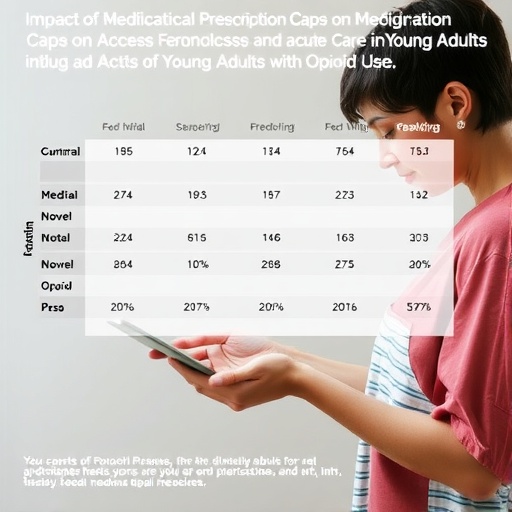
A recent cohort study published in JAMA Health Forum offers critical insights into the impact of Medicaid prescription caps on young adults grappling with opioid use disorder (OUD). By rigorously examining prescription patterns alongside healthcare utilization, the study elucidates how limitations on medication coverage can inadvertently influence acute care demands among this vulnerable population. These findings are pivotal amid ongoing public health efforts to address the opioid epidemic and refine policy frameworks governing medication access.
Medicaid prescription caps, which restrict the number of prescriptions a beneficiary can fill within a specified period, have been implemented in some states as a cost-containment strategy. However, their implications for chronic disease management, especially in the context of substance use disorders, have been insufficiently understood. This study utilized a longitudinal cohort design to explore how these caps affect medication adherence and subsequent healthcare outcomes among young adults diagnosed with OUD.
Data analysis revealed a significant association between Medicaid prescription caps and reduced overall prescription medication use. Young adults subject to these limitations exhibited diminished access to essential pharmacotherapies, which are critical components of evidence-based treatment for opioid use disorder. The diminished medication accessibility raises concerns about the continuity and efficacy of treatment protocols tailored to this demographic.
Moreover, the study identified a concurrent increase in the frequency of acute care episodes among young adults who encountered prescription caps. This correlation suggests that restricted medication access may precipitate destabilization in OUD management, leading to heightened emergency interventions and hospitalizations. From a systems perspective, the resultant strain on acute healthcare services underscores the counterproductive nature of such cost-saving policies.
The researchers attribute these outcomes to the barriers imposed by prescription caps, which may disrupt pharmacotherapy regimens such as the use of buprenorphine or methadone. These medications are integral to opioid agonist therapy, which has robust evidence supporting its role in reducing opioid cravings, preventing relapse, and lowering mortality rates. Interruptions in access can thus exacerbate withdrawal symptoms and increase the risk of overdose or other medical emergencies.
In exploring the broader implications, this research advocates for a nuanced reassessment of Medicaid policies concerning prescription limits. While cost control is an undeniably important goal, the unintended consequences for populations with complex healthcare needs, such as those with OUD, demand policy recalibration. Enhancing medication access could potentially improve clinical outcomes while simultaneously reducing avoidable acute care utilization.
The findings also highlight a critical gap in healthcare equity, as young adults reliant on Medicaid represent a socioeconomically marginalized group already facing systemic barriers to comprehensive addiction treatment. By imposing prescription caps, policies may inadvertently perpetuate disparities in healthcare provision, undermining national efforts toward opioid epidemic mitigation.
As opioid-related morbidity and mortality remain a pressing public health crisis, ensuring uninterrupted treatment access becomes paramount. This study contributes vital evidence supporting the integration of flexible, patient-centered prescription policies that accommodate the unique pharmacological needs of individuals with OUD, especially within Medicaid populations.
The study’s methodological approach, utilizing a cohort design, strengthens its validity by enabling temporal associations between prescription caps and outcomes to be observed. By following individuals over time, the research accounts for confounding variables and provides a more accurate depiction of the consequences of policy-imposed medication restrictions.
Future research directions suggested by this study include examining the differential impact of prescription caps across various demographic subgroups and exploring intervention strategies that mitigate the negative effects of such caps. Additionally, policy evaluation studies that implement cap modifications and monitor resultant clinical and economic outcomes could provide actionable insights.
Healthcare providers, policymakers, and public health advocates may find the evidence presented here integral to refining existing frameworks for medication access under Medicaid. The study urges a shift towards policies that prioritize therapeutic continuity and balanced resource allocation to optimize outcomes for young adults navigating opioid use disorder.
In summary, this research emphasizes the crucial intersection of health policy, clinical care, and population health in the fight against opioid addiction. By demonstrating the adverse repercussions of Medicaid prescription caps on medication adherence and acute care usage, the study calls for informed policy reforms that support sustainable, equitable treatment strategies.
News Publication Date: Not provided.
Web References: Not provided.
References: (doi:10.1001/jamahealthforum.2026.1187)
Cite Scienmag News
Ophelia Keating. (May 22, 2026). Impact of Medicaid Prescription Caps on Medication Access and Acute Care in Young Adults with Opioid Use. Scienmag. https://scienmag.com/impact-of-medicaid-prescription-caps-on-medication-access-and-acute-care-in-young-adults-with-opioid-use/
Ophelia Keating. "Impact of Medicaid Prescription Caps on Medication Access and Acute Care in Young Adults with Opioid Use." Scienmag, 22 May 2026, https://scienmag.com/impact-of-medicaid-prescription-caps-on-medication-access-and-acute-care-in-young-adults-with-opioid-use/. Accessed 6 September 2026.
Ophelia Keating. "Impact of Medicaid Prescription Caps on Medication Access and Acute Care in Young Adults with Opioid Use." Scienmag. May 22, 2026. https://scienmag.com/impact-of-medicaid-prescription-caps-on-medication-access-and-acute-care-in-young-adults-with-opioid-use/


