


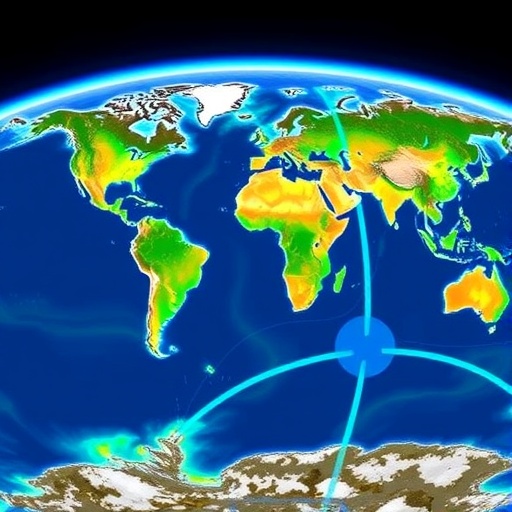
Beneath the tranquil surface of Earth’s vast oceans lies a critical measure of our planet’s health—its heat content. The ocean acts as the largest reservoir for excess heat trapped by greenhouse gases, absorbing over 90% of the additional energy warming the Earth system. Monitoring this heat content, particularly in the upper 2,000 meters of the ocean, has become an indispensable task for climate scientists seeking to understand not just the trajectory of climate change but also the powerful implications it holds for sea level rise, weather extremes, and ecosystem disruptions. The linchpin in this endeavor is the Global Ocean Observing System (GOOS), a highly coordinated network of ocean measurements that has been providing almost global coverage of subsurface temperatures since around 2005.
Recent research published in Nature Climate Change has cast a stark spotlight on GOOS and revealed an alarming vulnerability: any degradation in this system—whether due to policy shifts, funding cuts, or economic pressures—would severely undermine our ability to accurately monitor ocean heat content changes. This revelation underscores the system’s critical dependence on continued international collaboration and sustained financial and political commitments. Put plainly, our understanding of the ocean’s evolving heat budget hangs in a delicate balance, one that requires bold actions from governments worldwide to maintain and enhance this ocean observing framework.
The ocean’s role in storing heat is paramount. Without it, the atmosphere would warm far more rapidly, and the devastating impacts of climate change would intensify at a much faster pace. But because ocean warming is not homogenous, it requires precise instruments spread across the globe to capture the subtle and spatially complex changes in subsurface temperatures. The Argo program—part of GOOS—is a shining example, consisting of autonomous drifting floats that dive into the ocean, recording temperature, salinity, and other oceanographic data before surfacing to transmit information. Now, after over 18 years of operation, Argo and complementary observation platforms form a unique and irreplaceable dataset.
What Zhu, Cheng, Trenberth, and colleagues have demonstrated is how reductions in the number of active sensors—whether by scaling back deployments or by the loss of platforms—would amplify uncertainties in ocean heat content estimates. Their study presents simulations illustrating the dramatic degradation in data quality if the current ocean observing configuration is compromised, leading to less precise quantification of ocean energy uptake. In turn, this uncertainty hampers climate model validation, policy assessments, and projections critical to international climate action.
The interdependence of technology, policy, and science is clearer than ever. While technological advances have made autonomous ocean floats more effective and cost-efficient, these benefits risk being nullified if nations withdraw funding or fail to uphold international agreements that underpin GOOS operations. The study argues that robust ocean heat content monitoring is not the responsibility of individual states alone but rather a shared global endeavor. This transcends borders because the ocean’s energy dynamics influence weather, climate, and economies worldwide.
An equally pressing concern is the current geopolitical climate that threatens the cooperative frameworks enabling data sharing and joint observation missions. Ocean monitoring requires not only the deployment of physical assets but also the seamless exchange of information among international agencies and scientists. Any barriers—be they political or economic—could restrict the free flow of data and thus obstruct the comprehensive assessment of how our climate is rapidly changing.
Moreover, the continuity of the ocean observing system is indispensable for capturing long-term trends, detecting abrupt shifts, and understanding the complex feedback loops within climate systems. Short-term cuts or interruptions in data streams may appear trivial, but even brief gaps can introduce significant biases in trend analyses and hamper early warning capabilities for emerging ocean phenomena such as marine heatwaves or shifts in circulation patterns.
The implications reach well beyond academic circles. Governments rely on ocean heat data to craft adaptation and mitigation strategies, inform coastal defense planning, and understand potential impacts on fisheries and global food security. Without high-quality, consistent observations, decision-makers face the challenge of acting with incomplete or uncertain information at a time when swift and decisive responses are vitally needed.
Further complicating the situation is the uneven distribution of capabilities and resources among nations. While some countries contribute robustly to ocean monitoring, others—particularly those in developing regions—may lack the infrastructure or expertise to participate fully. This imbalance must be addressed within the framework of GOOS, underscoring the call for sustained international coordination that supports capacity building and equitable data access globally.
The dynamic nature of the ocean environment also demands continuous adaptation and upgrades to observation technology. Emerging tools, such as gliders and autonomous underwater vehicles, can complement existing systems and fill observational gaps, but these innovations require ongoing funding, training, and integration within the broader network. The scientific community and policy-makers must therefore view the ocean observing system as an evolving entity rather than a static asset.
The authors emphasize that the societal value of maintaining a resilient and comprehensive ocean observing system far outweighs the investments required. Ensuring the robustness of this system aligns directly with global commitments to monitor and limit climate change impacts under frameworks like the Paris Agreement. The ocean’s heat content is more than a mere metric; it is a critical indicator of the planet’s vital signs.
Highlighting the scale of the challenge yet the clarity of the solution, this research serves as a rallying cry for the international community. The stakes are immense: the ocean’s role as a climate moderator is unassailable, but it is also fragile in the face of underinvestment and political neglect. Only through sustained, coordinated efforts can we safeguard the ocean observing systems that underpin not just climate science but global environmental security.
Looking forward, a reinvigorated commitment to ocean observation is essential. Expanding the spatial and temporal coverage, incorporating new technologies, and ensuring open data standards will maximize the utility of the observing system. Likewise, integrating ocean heat monitoring into national climate strategies and global reporting mechanisms will reinforce its importance.
With climate change accelerating, the ocean observational network becomes not a luxury but a necessity. The findings of Zhu and colleagues starkly reveal the catastrophic consequences of allowing this backbone of environmental science to crumble. The ocean’s hidden reserves of heat store the signatures of our collective impact, and only through meticulous and continuous monitoring can we hope to manage the climate crises unfolding before us.
In summation, this study throws down the gauntlet to policymakers around the world: the continued effectiveness of global climate monitoring and, by extension, our capacity to anticipate and respond to climate change, critically depends on an unbroken commitment to the Global Ocean Observing System. This system is not merely a repository of data but a vital global public good—imperative, irreplaceable, and in urgent need of custodianship.
Cite Scienmag News
Violet Maxwell. (May 22, 2026). Ocean Observing System Crucial for Global Heat Monitoring. Scienmag. https://scienmag.com/ocean-observing-system-crucial-for-global-heat-monitoring/
Violet Maxwell. "Ocean Observing System Crucial for Global Heat Monitoring." Scienmag, 22 May 2026, https://scienmag.com/ocean-observing-system-crucial-for-global-heat-monitoring/. Accessed 4 September 2026.
Violet Maxwell. "Ocean Observing System Crucial for Global Heat Monitoring." Scienmag. May 22, 2026. https://scienmag.com/ocean-observing-system-crucial-for-global-heat-monitoring/


