


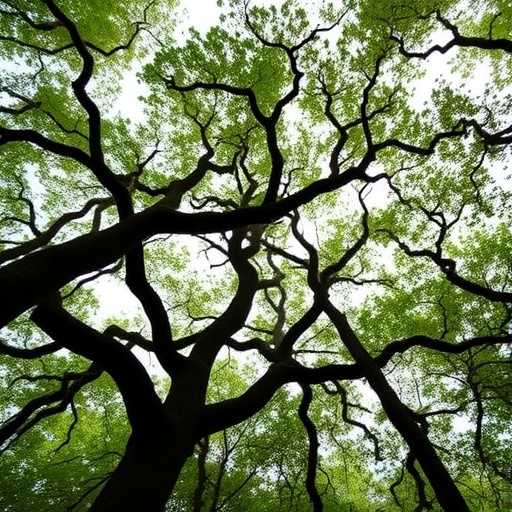
As the global climate crisis deepens, the demand for sustainable forest management practices that reconcile timber production with the preservation of ecological functions is more urgent than ever. Forests play a crucial role in regulating local and global climates, supporting biodiversity, and providing ecosystem services essential to human well-being. Recognizing these multifaceted values, foresters and ecologists are increasingly questioning traditional forest management paradigms, particularly the widely used rotation forestry systems that rely heavily on clear-cutting large swathes of forest at regular intervals. These conventional approaches, while economically efficient, often disrupt forest microclimates, reduce biodiversity, and undermine forest resilience against climatic stressors.
A promising alternative gaining traction is continuous-cover forestry (CCF), a method inspired by natural forest dynamics. This approach emphasizes selective tree harvesting that creates small-scale, spatially discrete canopy disturbances, such as gaps measuring only a few hundred square meters, rather than extensive clear-cut areas. By maintaining a continuous canopy cover, CCF helps preserve the forest’s cool, humid microclimate, which is critical for many forest-dependent species and ecological processes. This management style supports a more naturalistic successional trajectory, balancing timber production with conservation goals.
Yet, implementing continuous-cover forestry in oak-dominated ecosystems presents unique challenges, primarily because sessile oak (Quercus petraea) and related species exhibit specific light requirements and regeneration patterns. Unlike shade-tolerant species, oaks demand ample light to regenerate effectively. However, overly large openings in the canopy may favor the rapid growth of competing woody and herbaceous plants, potentially suppressing young oak saplings. Thus, identifying the optimal gap size and shape that promote oak establishment while minimizing competitive pressures is a critical question for foresters aiming to transition to CCF.
A groundbreaking study by the Forest Ecology Research Group at the HUN-REN Centre for Ecological Research seeks to address these challenges through rigorous experimental investigation. Conducted in the sessile oak–hornbeam forests of Hungary’s Pilis Mountains, this research forms part of the broader Pilis Gap Experiment, which explores how manipulated canopy gaps influence microclimate, vegetation dynamics, and tree regeneration processes. The research team, working in concert with forest practitioners from Pilis Park Forestry Company, tested the effects of gap size and geometry, comparing circular and elongated openings of varying dimensions.
The experimental results reveal nuanced interactions between gap characteristics and forest regeneration outcomes. Large circular gaps initially provide the most favorable abiotic conditions—enhanced light availability and increased soil moisture—that stimulate vigorous oak sapling growth. When competing vegetation is carefully managed through tending, oak saplings in these large gaps demonstrate rapid development, reflecting the surfeit of resources. However, the very qualities that favor oak growth also promote the proliferation of competitive species such as hornbeam (Carpinus betulus), dogwood (Cornus sanguinea), and bramble (Rubus fruticosus agg.).
This intense competition quickly diminishes the advantages conferred by the large circular gaps as dense shrub layers inhibit oak seedlings’ access to light and moisture. Consequently, while large circular gaps can initiate oak regeneration, sustaining this regeneration demands intensive and ongoing vegetation control, which may be labor-intensive and economically taxing. This finding highlights the trade-offs between optimizing growth conditions and management effort inherent in canopy gap design.
Interestingly, the study identifies elongated gaps as a more balanced alternative. These gaps provide high light availability comparable to circular gaps of equal area, but they induce a more moderate increase in soil moisture. This moderation limits the spread of competitive understory species, reducing the necessity for intensive maintenance. Among elongated gap treatments, smaller-sized openings showed even less competition pressure due to their more constrained light regime, further easing management burdens.
Despite the slower initial growth rates observed in oaks regenerating within small elongated gaps, the researchers argue that such early growth differences are relatively minor within the context of oaks’ extended lifespans. Sessile oaks typically reach harvest maturity after over a century; thus, initial growth velocity may be less critical than long-term survival and site establishment. The controlled pioneering environment within these smaller elongated gaps facilitates steady progression without succumbing to aggressive competitors.
The study also underscores that these small elongated gaps may require adaptive management strategies. After five to six years, as oak saplings grow and their light-demand increases, the limited light environment in the initially smaller gaps may no longer suffice. The authors suggest that carefully planned gap enlargement at this stage could sustain favorable growth conditions while maintaining the benefits of continuous forest cover. Such dynamic management interventions would reflect a more nuanced, long-term perspective on forest regeneration.
Beyond microclimatic and competitive considerations, small elongated gaps offer an overlooked advantage: they enhance seed dispersal and acorn settlement from adjacent mature oak trees. The elongated form likely facilitates seed rain penetration deeper into the gap center, ensuring more uniform regeneration across the gap and potentially supporting greater genetic diversity within regenerating cohorts. This spatial configuration could thus improve the success rate and resilience of natural oak recruitment.
Overall, these findings provide compelling evidence that carefully designed canopy gap geometries can simultaneously promote natural oak regeneration and maintain continuous canopy cover, a cornerstone objective of continuous-cover forestry. By integrating experimental evidence with practical forester experience, the research offers actionable guidelines to optimize forest disturbance patterns, balancing ecological function with economic viability. The authors emphasize that this approach aligns with a broader vision of forest management fostering mixed-species stands rather than near-monocultures typical of traditional rotation forestry.
In embracing species-diverse forest compositions, management can harness complementary ecological interactions that bolster forest resilience, reduce pest outbreaks, and stabilize economic returns under variable climatic conditions. The Pilis Gap Experiment thus contributes valuable insights into the mechanistic underpinnings of forest dynamics and the practical pathways to sustainable forestry in the face of climate change and evolving societal expectations.
Flóra Tinya, lead author and research fellow at the Forest Ecology Research Group, encapsulates the study’s broader significance: transitioning from well-established rotation forestry systems to innovative continuous-cover approaches requires not just conceptual shifts but also rigorous, science-based evidence to guide practice. This work exemplifies the synergy between fundamental ecological research and applied forestry, supporting a future in which forests remain vibrant, productive, and resilient across generations.
By demonstrating that elongated, small-scale canopy gaps offer an optimal balance between abiotic conditions and management effort, this research charts a promising course for forest managers worldwide seeking to reconcile timber production with biodiversity conservation and climate adaptation. Its implications resonate far beyond the Pilis Mountains, offering a model for restoring naturalistic forest structures in temperate regions and beyond.
Cite Scienmag News
Margaret Porter. (May 18, 2026). Elongated Canopy Gaps Enhance Natural Regeneration of Oak Forests, Study Finds. Scienmag. https://scienmag.com/elongated-canopy-gaps-enhance-natural-regeneration-of-oak-forests-study-finds/
Margaret Porter. "Elongated Canopy Gaps Enhance Natural Regeneration of Oak Forests, Study Finds." Scienmag, 18 May 2026, https://scienmag.com/elongated-canopy-gaps-enhance-natural-regeneration-of-oak-forests-study-finds/. Accessed 4 September 2026.
Margaret Porter. "Elongated Canopy Gaps Enhance Natural Regeneration of Oak Forests, Study Finds." Scienmag. May 18, 2026. https://scienmag.com/elongated-canopy-gaps-enhance-natural-regeneration-of-oak-forests-study-finds/


