


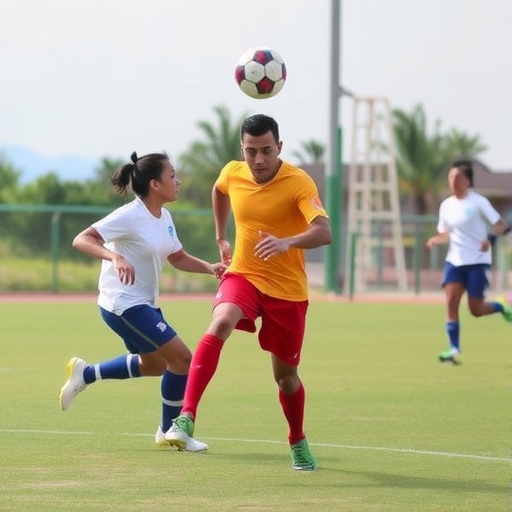
In a groundbreaking case-control study recently published in JAMA Neurology, researchers have unveiled compelling evidence suggesting that even routine amateur-level soccer heading may induce acute alterations in neural integrity, as indicated by measurable increases in blood biomarkers associated with neural damage. This study, led by Dr. Marsh Konigs and colleagues, challenges the conventional perception of soccer heading as a benign aspect of the sport by revealing dose-dependent effects on subtle but potentially critical neural injury markers.
The investigation centered around the quantification of blood biomarkers known to reflect neural damage, providing a biochemical window into the brain’s immediate response following exposure to repetitive head impacts in soccer. The findings demonstrated not only an association but also a dose-response relationship—whereby the frequency of heading correlated positively with the magnitude of acute biomarker elevation. This nuanced insight brings heightened scientific rigor to the dialogue on the neurological safety of heading at the community and amateur sporting levels.
Neurological biomarkers analyzed in the study included established proteins such as neurofilament light chain (NfL) and tau, which are sensitive indicators of axonal injury and neuronal damage. The elevations observed in these biomarkers post-heading suggest that even subconcussive trauma, which often goes unnoticed in clinical assessments, could be initiating cellular and molecular cascades indicative of brain injury. These acute biomarker changes may portend longer-term neurodegenerative processes if sustained or recurrent.
The study’s methodological innovation lay in its case-control design, which allowed for controlled comparisons between individuals exposed to varying heading frequencies and matched controls without heading exposure. This structure provided a robust framework to identify causal links rather than mere correlations, which historically have plagued sports neurology research. It also enhanced the study’s capacity to discern the acute temporal dynamics of biomarker fluctuations following heading events.
Importantly, the findings pose critical questions regarding the current guidelines and training practices for amateur soccer players, many of whom undergo repetitive heading drills without protective measures or neurological monitoring. The documented dose-response curves indicate that cumulative heading exposure, even at non-professional levels, warrants vigilance and possible reconsideration of coaching strategies and safety regulations to mitigate neurobiological risks.
This research contributes to a growing corpus of evidence that suggests the brain’s vulnerability extends beyond concussions detectable by clinical symptoms. Subclinical changes, reflected in biomarkers detectable merely hours after heading episodes, underscore the need for more sensitive diagnostic tools in sports medicine. By integrating biochemical markers into routine evaluations, clinicians might better identify athletes at risk for progressive neural injury.
Beyond the clinical implications, these findings hold substantial public health significance given the widespread participation in amateur soccer worldwide. The accessibility of heading in soccer means large populations may unknowingly be subjected to neural stressors with potential cumulative consequences. This elevates the urgency for dissemination of these results among coaches, athletes, parents, and sports governing bodies.
The lead investigator, Dr. Marsh Konigs, emphasized that while the study does not establish long-term clinical outcomes, it provides a crucial early warning about the brain’s acute biochemical response to heading. Future longitudinal research is imperative to ascertain whether these acute biomarker perturbations translate into lasting neurocognitive deficits or structural brain changes, shaping the trajectory of brain health in athletes.
In the realm of neuroscience, the examination of blood-based neural biomarkers represents a pioneering avenue for elucidating the brain’s response to mechanical insults. Currently, non-invasive tools like blood assays complement neuroimaging and neuropsychological testing, offering a cost-effective and scalable approach to monitoring brain integrity after sports-related head impacts.
As this study propels the conversation forward, it highlights a pivotal intersection between neurology, sports medicine, and public health policy. The intricate biological response to heading evidenced here prompts a reevaluation of traditional assumptions about sub-concussive head impacts and urges sustained interdisciplinary collaborations to safeguard athlete health.
Given these revelatory findings, it is incumbent on academic institutions, sports organizations, and healthcare providers to collaboratively formulate evidence-based interventions that can minimize neural injury risk, optimize athlete safety, and guide informed decision-making in youth and amateur soccer training regimes. The balance between preserving the developmental and recreational benefits of soccer and protecting neurological health must be carefully negotiated.
In summary, the study published in JAMA Neurology rigorously documents that soccer heading at an amateur level is not a trivial activity from a neurological standpoint. The dose-responsive elevations in blood biomarkers of neural injury mandate heightened awareness, further investigation, and potential policy reforms aimed at preventing subtle but significant brain damage in soccer players worldwide.
News Publication Date: [Not provided]
Web References: [Not provided]
References: (doi:10.1001/jamaneurol.2026.1224)
Cite Scienmag News
Cassandra Pierce. (May 18, 2026). Amateur Soccer Heading Linked to Sharp Increases in Blood p-Tau217 and S100B Levels. Scienmag. https://scienmag.com/amateur-soccer-heading-linked-to-sharp-increases-in-blood-p-tau217-and-s100b-levels/
Cassandra Pierce. "Amateur Soccer Heading Linked to Sharp Increases in Blood p-Tau217 and S100B Levels." Scienmag, 18 May 2026, https://scienmag.com/amateur-soccer-heading-linked-to-sharp-increases-in-blood-p-tau217-and-s100b-levels/. Accessed 3 September 2026.
Cassandra Pierce. "Amateur Soccer Heading Linked to Sharp Increases in Blood p-Tau217 and S100B Levels." Scienmag. May 18, 2026. https://scienmag.com/amateur-soccer-heading-linked-to-sharp-increases-in-blood-p-tau217-and-s100b-levels/


