


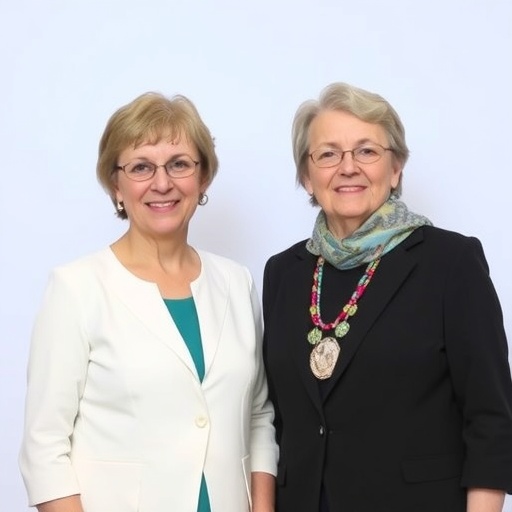
Pompeu Fabra University recently bestowed its highest academic honor, the title of Doctor Honoris Causa, upon two distinguished figures in European research: Helga Nowotny and Maria Leptin. Both women have played pivotal roles in shaping a European research landscape marked by independence, rigorous scientific standards, and societal engagement. The conferral of this distinction underscores not only their individual scientific achievements but also the broader institutional and philosophical values they represent.
At the heart of the ceremony, presided over by UPF Rector Laia de Nadal, was a poignant recognition of the inseparability of science and society. Nadal highlighted the precarious position knowledge currently faces amidst a global rise in anti-intellectual sentiment, framing the awards as a beacon of resilience and hope. The rector stressed the complementary contributions of both honorees: Nowotny’s groundbreaking interdisciplinary scholarship and Leptin’s steadfast commitment to fundamental biological research, each embodying unique facets of scientific excellence crucial to societal advancement.
Helga Nowotny, a sociologist of knowledge and former president of the European Research Council (ERC), is renowned for her interdisciplinary methodology and critical insights into the social dynamics of science and technology. Her career exemplifies an unwavering dedication to bridging humanities, social sciences, and technical disciplines. With extensive tenure at prestigious institutions such as ETH Zurich and Columbia University, Nowotny has become a leading voice on the governance of science, innovation, and digital transformation, emphasizing the necessity of democratic cultures in scientific practice.
Maria Leptin, a developmental biologist and the current president of the ERC, has shaped the understanding of morphogenesis—the fundamental biological mechanisms that enable an organism to develop its correct form and function. Her academic journey, which spans institutes across Europe and North America including the Max Planck Institute and the University of Cologne, has been characterized by a pursuit of fundamental research coupled with a robust advocacy for scientific autonomy. Under her leadership, the ERC has consolidated its reputation as a premier funding body upholding independence and excellence in research.
The celebration was enriched by profoundly reflective speeches from both honorees, articulating a vision of research that harmoniously combines excellence with social responsibility. Nowotny articulated science as a collective endeavor that transcends disciplinary borders, asserting that ignoring social sciences and humanities would render any understanding incomplete. She also candidly addressed gender disparities in science, highlighting progress made under her ERC tenure but emphasizing that full equality remains a distant goal.
Leptin embraced the accolade not just as personal recognition but as validation of a European research ethos characterized by openness, rigor, and societal responsiveness. She lauded UPF’s mission statement, which intertwines academic rigor with pluralism and innovation, framing the university as a microcosm of the ideal research institution. Her remarks echoed a foundational principle: that intellectual and scientific excellence must be coupled with awareness and engagement with the broader world.
The laudations delivered by Jan Eeckhout and Carla Lancelotti, ICREA research professors at UPF, reflected on the transformative impact both Nowotny and Leptin have made beyond their immediate research spheres. The laudators emphasized the creation and international prominence of the ERC as a milestone in institutional innovation, crediting its emergence and success largely to these two women’s leadership. They underscored the ERC’s foundational values of scientific independence, long-term vision, and an embrace of uncertainty as essential drivers of Europe’s scientific and economic progress.
Several themes emerged strongly from the tributes: diversity, openness, stability versus uncertainty, and the fostering of a long-term commitment to research. Particularly poignant was the acknowledgment of the exceptional nature of the honorees’ achievements as women in science and leadership, which remains an uncommon feat even in Europe’s progressive academic environment.
The ceremony itself was a fusion of artistic and intellectual celebration. Musical performances by the Quartet Brossa and soprano Marta Valero, including works by composers Valerie Coleman, Alma Mahler, and Beethoven, provided a resonant soundtrack to the occasion. Adding a visual dimension, live painter Quim Moya rendered portraits of Nowotny and Leptin during the event, culminating in a dynamic tribute to their enduring legacies.
Helga Nowotny’s academic trajectory is a testament to a lifelong intellectual curiosity and dedication to interdisciplinarity. Her work critically examines how societies manage and live with uncertainty, particularly in technological and digital domains. She has been at the forefront of debates concerning trust in science, the societal implications of algorithms, and the intersection of scientific knowledge with democratic values. Her numerous publications contribute significantly to scholarly discourse on innovation and the social sciences of science and technology studies.
Maria Leptin’s distinguished research on developmental biology, marked by investigations into cellular and molecular mechanisms governing organismal form, has been integral to advancing the field. Beyond research, her tenure at leading European biological institutions and her advocacy for fundamental research and scientific freedom have reinforced the ERC’s stature. She emphasizes the importance of autonomy in scientific inquiry, shielding researchers from political or economic pressures and fostering environments conducive to risk-taking and innovation.
The European Research Council itself stands as a unique institution within the global research ecosystem. Established in 2007, the ERC’s mandate is to fund frontier research based purely on scientific excellence, free from political or industrial influence. It offers a spectrum of grants tailored to different stages of researchers’ careers and project risks. The ERC’s success in fostering groundbreaking scientific advances owes much to leaders like Nowotny and Leptin, who have championed its principles and navigated its growth into a symbol of European scientific leadership.
Pompeu Fabra University, situated at the forefront of European research, has been a prolific recipient of ERC funding, reflecting its commitment to fostering pioneering science. With 75 ERC grants totaling nearly €111 million between 2008 and 2025, UPF exemplifies how strategic investment in excellence and innovation translates into tangible leadership in research.
The conferment of Doctor Honoris Causa upon Helga Nowotny and Maria Leptin not only honors their vast contributions but also reiterates a vital narrative: science flourishes most robustly when excellence, independence, interdisciplinarity, and public engagement coalesce. Their careers reflect the ongoing journey toward a more inclusive, rigorous, and socially attuned research culture—a model for European science and beyond.
News Publication Date: Not specified in the provided content.
Web References:
- European Research Council: https://erc.europa.eu/homepage
- Institute for Genetics at the University of Cologne: https://genetik.uni-koeln.de/en/
- ETH Zurich: https://ethz.ch/en.html
- UPFinder for Helga Nowotny and Maria Leptin:
- Helga Nowotny: https://upfinder.upf.edu/discovery/search?query=creator,contains,nowotny,%20helga,AND&tab=Everything&search_scope=MyInst_and_CI&vid=34CSUC_UPF:VU1&mode=advanced&offset=0
- Maria Leptin: https://upfinder.upf.edu/discovery/search?query=creator,contains,leptin,%20maria,AND&tab=Everything&search_scope=MyInst_and_CI&vid=34CSUC_UPF:VU1&mode=advanced&offset=0
Cite Scienmag News
Courtney Benton. (May 8, 2026). UPF Honors Helga Nowotny and Maria Leptin with Doctor Honoris Causa Titles for Pioneering Contributions to European Research Model. Scienmag. https://scienmag.com/upf-honors-helga-nowotny-and-maria-leptin-with-doctor-honoris-causa-titles-for-pioneering-contributions-to-european-research-model/
Courtney Benton. "UPF Honors Helga Nowotny and Maria Leptin with Doctor Honoris Causa Titles for Pioneering Contributions to European Research Model." Scienmag, 8 May 2026, https://scienmag.com/upf-honors-helga-nowotny-and-maria-leptin-with-doctor-honoris-causa-titles-for-pioneering-contributions-to-european-research-model/. Accessed 3 September 2026.
Courtney Benton. "UPF Honors Helga Nowotny and Maria Leptin with Doctor Honoris Causa Titles for Pioneering Contributions to European Research Model." Scienmag. May 8, 2026. https://scienmag.com/upf-honors-helga-nowotny-and-maria-leptin-with-doctor-honoris-causa-titles-for-pioneering-contributions-to-european-research-model/


