


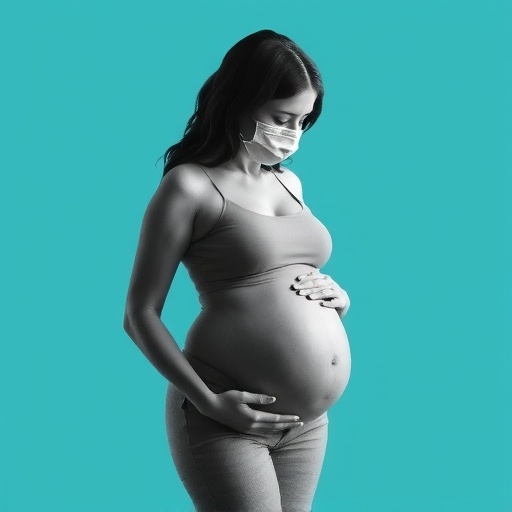
The emotional landscape of pregnancy is complex and heightened, influencing every decision expectant mothers make, especially those involving health interventions. A groundbreaking international study has unveiled a potent, often overlooked psychological factor shaping vaccine hesitancy and acceptance during pregnancy: the vividness of mental imagery that women experience when contemplating vaccinations. This research, conducted in Perth, Western Australia, offers unprecedented insights into how deeply ingrained mental images—both positive and negative—bear upon whether and when pregnant women choose to undergo vaccination.
The study’s scientific inquiry centered around more than 400 pregnant participants recruited from a maternity hospital setting. Researchers implemented an observational design, capturing real-time self-reported data on mental imagery related to three key vaccines: for whooping cough, influenza, and COVID-19. Each participant was asked not only to convey their perceived risk of contracting these diseases but also to describe any spontaneous mental images evoked by both the diseases themselves and the vaccinations offered as protection. This approach bridges cognitive psychology with immunization behavior, providing a nuanced closer look at the mental processes driving health choices during pregnancy.
Crucially, the study differentiated between the emotional tone of these mental images. Negative images commonly involved distressing scenarios such as harm or side effects attributed to vaccines. Positive imagery, in contrast, included hopeful and protective visuals, such as imagining antibodies acting as a shield passed from mother to fetus via the umbilical cord. These contrasting mental narratives revealed predictive relationships with vaccine hesitancy and actual vaccine uptake patterns. Women experiencing negative imagery generally exhibited greater reluctance to accept vaccines, especially for whooping cough and influenza, if they were yet to be vaccinated, highlighting the emotive underpinning of vaccine decisions.
What emerges from this research is a layered understanding that mental imagery operates independently of broad attitudinal assessments. Even after controlling for general pro- or anti-vaccination sentiments, the unique influence of these emotional mental representations persisted. This finding underscores that vaccine decision-making is not merely a rational weighing of risks and benefits but also a cognitive-emotional experience in which vivid, spontaneous images function as implicit heuristics or affective cues guiding behavior. This opens an avenue for public health messaging to harness cognitive psychology tools aimed at reshaping these mental images towards positivity.
When the researchers matched mental imagery profiles with actual vaccination records obtained from official immunization databases post-delivery, a compelling pattern was noted. Pregnant women who conjured positive, protective mental images were significantly more likely to have received the whooping cough vaccine, and furthermore, they tended to receive it earlier in their pregnancy. This temporal correlation suggests that positive mental imagery may not only encourage vaccine uptake but may also influence the timeliness—a critical factor for maximizing maternal and neonatal protection.
The uptake rates among the cohort reflected real-world challenges in maternal immunization. Whooping cough vaccination reached an encouraging coverage rate of 82.1%, yet influenza vaccination lagged at 60.1%, with COVID-19 vaccination alarmingly low at only 7.2%. These discrepancies highlight multifaceted barriers beyond vaccine access, pointing toward psychological influences that this innovative research addresses head-on. The potential to intervene at the level of mental imagery provides a promising new vector to counteract suboptimal vaccine adoption during pregnancy.
Leading author Dr. Julie Ji, from the University of Plymouth and the University of Western Australia, encapsulated the study’s significance. She emphasized that pregnancy constitutes a unique psychologically sensitive period where health decisions carry amplified emotional weight, demanding an approach that goes beyond addressing rational concerns alone. “Our findings spotlight mental imagery as a tangible psychological mechanism influencing both feelings toward vaccines and tangible vaccination behavior during pregnancy,” she noted, advocating for targeted interventions rooted in cognitive-emotional frameworks.
This study is situated within a broader scientific dialogue concerning the cognitive, emotional, and motivational potency of mental imagery. Researchers at the University of Plymouth have been at the forefront of demonstrating how vividly imagined mental scenes can make both recollections and predictions feel strikingly real, with substantial power to modulate emotions, beliefs, and consequently behaviors. Applying this cognitive science perspective to vaccine hesitancy is not only novel but portends practical applications informed by decades of mental health research exploring imagery’s therapeutic modulation.
The interdisciplinary nature of the research team—spanning psychology, midwifery, infectious diseases, pediatrics, and social sciences—was instrumental in facilitating a holistic exploration that marries laboratory psychological constructs with clinical and population-level data. Their collaborative synergy enabled the collection of verified vaccination records, ensuring behavioral outcomes were precisely measured rather than relying on self-report alone. This methodological rigor enhances the reliability of the study’s conclusions, differentiating it from prior work predicated solely on attitudinal or survey data.
Funding was provided by prominent organizations including the Telethon Channel 7 Western Australia Child Research Fund, underscoring the project’s alignment with broader public health goals aimed at optimizing child and maternal health outcomes through enhanced vaccine uptake. The translational potential of these findings is vast, situating mental imagery not just as a theoretical construct but as a modifiable psychological target for interventions like visualization exercises or guided imagery embedded within antenatal care protocols.
Looking ahead, the research team is exploring actionable strategies to harness positive mental imagery in ways that facilitate informed, confident vaccination decisions among pregnant women. Such strategies might include narrative-based communications, virtual reality simulations, or counseling techniques designed to evoke and reinforce protective mental scenes. This represents an exciting frontier in vaccine advocacy, moving beyond information dissemination into the realm of the emotional-cognitive psyche where decision-making mechanisms truly unfold.
The implications of this research extend beyond pregnancy to broader vaccination campaigns and public health initiatives. Understanding how mental images influence vaccine hesitancy offers a fresh psychological lens through which to reframe interventions, potentially increasing their resonance and effectiveness. In an era where vaccine misinformation and emotional resistance threaten global health, leveraging the science of mental imagery could become a key innovation in promoting vaccine confidence at individual and community scales.
Ultimately, these findings compel a reconceptualization of vaccine hesitancy during pregnancy from a purely informational deficit to a nuanced psychological phenomenon. Future research and clinical practice would benefit from integrating mental imagery-focused assessments and interventions, providing pregnant women with emotional tools that not only inform but inspire protective actions. This pioneering work stands as a testament to the power of interdisciplinary research and cognitive science in shaping the future of preventive medicine and maternal-child health.
Cite Scienmag News
Harold Sullivan. (May 8, 2026). Pregnant Women’s Mental Images Influence Vaccine Hesitancy and Uptake, New Study Finds. Scienmag. https://scienmag.com/pregnant-womens-mental-images-influence-vaccine-hesitancy-and-uptake-new-study-finds/
Harold Sullivan. "Pregnant Women’s Mental Images Influence Vaccine Hesitancy and Uptake, New Study Finds." Scienmag, 8 May 2026, https://scienmag.com/pregnant-womens-mental-images-influence-vaccine-hesitancy-and-uptake-new-study-finds/. Accessed 4 September 2026.
Harold Sullivan. "Pregnant Women’s Mental Images Influence Vaccine Hesitancy and Uptake, New Study Finds." Scienmag. May 8, 2026. https://scienmag.com/pregnant-womens-mental-images-influence-vaccine-hesitancy-and-uptake-new-study-finds/


