


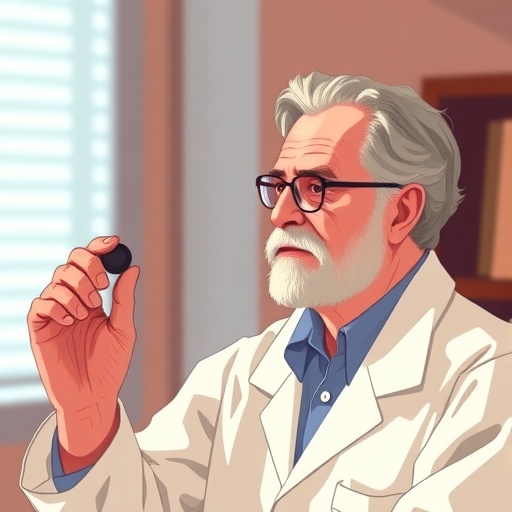
In the early 20th century, Albert Einstein revolutionized physics with his groundbreaking theory of relativity, challenging long-held scientific paradigms. However, as his career advanced, Einstein became a vocal critic of quantum mechanics—a field that would come to dominate and propel scientific innovation for the next century. This transformation from revolutionary to gatekeeper is not unique to Einstein, as recent research reveals. Scientists at the University of Pittsburgh and the University of Chicago have conducted a massive study analyzing the careers of over 12.5 million researchers, exposing a phenomenon they term the “nostalgia effect.” Their findings demonstrate that as scientists age, their creative output tends to shift from disruptive innovation—radically new ideas that upend existing knowledge—to novelties that recombine and build upon established concepts.
This nostalgia effect, rooted in cognitive and social dynamics, has widespread implications for the scientific enterprise. The research, published in the prestigious journal Science, leverages advanced data and statistical methodologies to quantify how the age of a scientist shapes the nature of their contributions. The study tracks each scientist’s citation history, revealing that older researchers increasingly cite older literature and produce work that connects prior knowledge rather than challenging it. For every additional year in a scientist’s career, the average age of the references they cite increases by roughly one month, indicating a progressive anchoring in the historical canon.
Lingfei Wu, assistant professor at Pitt’s School of Computing and Information and senior author of the study, remarks that these patterns underscore a fundamental linkage between memory and innovation. As researchers accumulate experience and knowledge, they develop entrenched cognitive maps of their fields, which shape their perception of what constitutes valuable inquiry. This cognitive anchoring encourages novel recombination rather than disruptive branching, an adaptive and deeply human characteristic that sustains scientific continuity.
The longstanding hypothesis that scientific progress advances “one funeral at a time,” originally proposed by physicist Max Planck in 1950, posits that innovation surges primarily upon the exit of established scholars, allowing younger, less encumbered minds to introduce radical ideas. Yet, prior evidence on this adage has been mixed, often neglecting the distinct modalities of creativity—disruptive versus novel—that coexist in scientific work. The current study refines this discourse by delineating disruptive papers as those cited without referencing older work in their fields and novel papers as those citing older research in novel combinations, thereby providing a nuanced taxonomy of scientific creativity.
By employing network theory and computational analysis techniques, Wu’s team constructed citation networks spanning decades and thousands of disciplines. This comprehensive mapping illuminated how the academic influence of aging scientists extends beyond their publications through mentorship and the peer review process. Older researchers tend to guide and incentivize younger colleagues to engage with older, foundational literature. This transmission perpetuates the nostalgia effect via academic hierarchies, reinforcing the persistence of traditional views and potentially constraining the influx of disruptive ideas.
Interestingly, the study also highlights the persistence of formative influences encountered at the start of a scientific career. The research demonstrates that scientists most frequently cite a paper published around the time they began their own publishing trajectory, often within two years before their first publication. This early scholarly environment imprints a lasting intellectual framework, which continues to orient their research decisions decades later.
The implications of these findings extend beyond individual careers and touch the national and global scales. Countries like China and India, characterized by a younger research workforce, exhibit a higher frequency of disruptive publications compared to nations with older scientific communities such as the United States. This disparity positions the nostalgia effect as a pivotal factor in international scientific competitiveness, underscoring the strategic value of nurturing and integrating youthful talent within research ecosystems.
Wu advocates for policies that lower barriers to scientific participation for young researchers, such as facilitating immigration and exchange programs. The inherent advantage of younger scientists lies in their relative freedom from entrenched knowledge frameworks, enabling them to explore unconventional perspectives and challenge prevailing paradigms. Encouraging a diverse, global research community can thus catalyze transformative innovation while maintaining the institutional memory that older scientists preserve.
To balance continuity with renewal, the study calls for fostering “intergenerational, flat collaborations” that bridge experience and fresh insight. The collective endeavor of science requires the preservation of foundational knowledge alongside the injection of new ideas that contest and expand it. Recognizing and valuing the distinct creative contributions of scientists across career stages can cultivate a more dynamic and resilient scientific enterprise.
The research also provides a counterpoint to narratives that diminish creativity in later career stages. Wu emphasizes that aging scientists do not become inherently less inventive; rather, their creativity alters form, shifting towards integrating and recombining accumulated knowledge. This type of intellectual synthesis is vital for advancing complex fields, ensuring that innovation does not occur in fragmentation but within a coherent scientific tapestry.
As science grapples with evolving career trajectories influenced by extended training and modifications to retirement policies, understanding the interplay between age, creativity, and knowledge transmission becomes increasingly critical. The “aging core” of scientific research—characterized by senior researchers steering the agenda—may inadvertently constrain exploratory breakthroughs unless offset by strategic inclusion of younger researchers and openness to international talent.
By illuminating the sociocognitive mechanisms underpinning scientific creativity across the human lifespan, this landmark study encourages a re-examination of academic structures and incentives. It underscores the necessity for a vibrant balance, where the wisdom and experience of seasoned scientists coexist harmoniously with the disruptive energy and novel vision of emerging scholars. Such synergy promises not only sustained scientific advancement but also the preservation of vibrant intellectual ecosystems capable of addressing the profound challenges of our age.
News Publication Date: 7-May-2026
Web References:
- Original research article: https://doi.org/10.1126/science.ady8732
References:
- Wu, L., Lin, Y., Evans, J., & Cui, H. (2026). Aging and the narrowing of scientific innovation. Science. DOI: 10.1126/science.ady8732
Cite Scienmag News
Beatrice Stafford. (May 7, 2026). The ‘Nostalgia Effect’: How Aging Scientists Shift Toward Less Disruptive Research. Scienmag. https://scienmag.com/the-nostalgia-effect-how-aging-scientists-shift-toward-less-disruptive-research/
Beatrice Stafford. "The ‘Nostalgia Effect’: How Aging Scientists Shift Toward Less Disruptive Research." Scienmag, 7 May 2026, https://scienmag.com/the-nostalgia-effect-how-aging-scientists-shift-toward-less-disruptive-research/. Accessed 3 September 2026.
Beatrice Stafford. "The ‘Nostalgia Effect’: How Aging Scientists Shift Toward Less Disruptive Research." Scienmag. May 7, 2026. https://scienmag.com/the-nostalgia-effect-how-aging-scientists-shift-toward-less-disruptive-research/


