


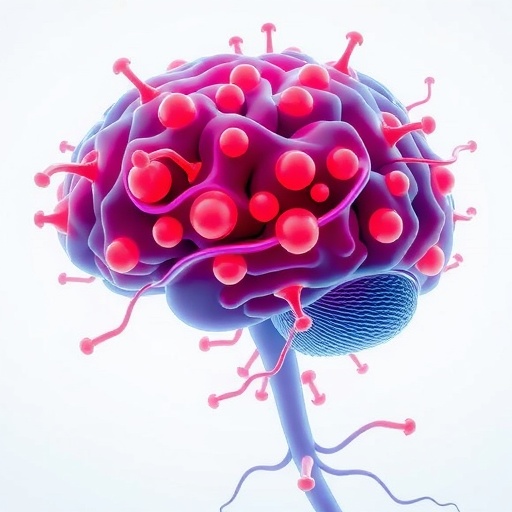
A groundbreaking leap in cancer immunotherapy has emerged from the labs of Saviuk, Turubanova, De Brée, and their colleagues, who have pioneered an innovative approach using ferroptosis-armed dendritic cell vaccines to combat gliomas. Published in Nature Communications in 2026, their research represents a novel crossroad between regulated cell death pathways and advanced vaccine technology, marking a potentially transformative step in treating one of the deadliest brain tumors known to modern medicine. This approach promises to unlock new immunological defenses, turning the body’s own immune cells into potent weapons against glioma malignancies.
Gliomas, which constitute the majority of malignant brain tumors, have long posed an insurmountable challenge due to their aggressive nature and the brain’s immune-privileged environment. Traditional therapies such as surgery, radiation, and chemotherapy often fail to eradicate these tumors fully, leading to poor prognosis and survival rates. The study delves into harnessing dendritic cells, the quintessential antigen-presenting sentinels of the immune system, armed uniquely with ferroptosis-related cues, to trigger a robust and sustained anti-glioma immune response.
Ferroptosis, a distinct form of regulated cell death characterized by iron-dependent lipid peroxidation, has gained significant attention for its biological and therapeutic implications. Unlike apoptosis or necroptosis, ferroptosis involves catastrophic oxidative damage leading to cellular demise, often evading the traditional immune dampening associated with other cell death modalities. Saviuk and team integrate this unique cell death mechanism with dendritic cell vaccine technology, effectively priming the immune system to recognize and attack glioma cells more efficiently.
At the mechanistic heart of this novel vaccine is the induction of ferroptotic conditions within dendritic cells ex vivo, which primes these cells to present tumor antigens in a more immunogenic context. The ferroptotic process facilitates the release of damage-associated molecular patterns (DAMPs) alongside oxidized lipid species that act as potent adjuvants. These molecules enhance dendritic cell maturation and migration to lymph nodes, where they stimulate T cells with heightened specificity and activity against glioma cells.
Intriguingly, the vaccine’s efficacy pivots on a finely-tuned balance of iron metabolism and oxidative stress within dendritic cells. The researchers elucidate how iron accumulation triggers lipid peroxidation cascades that amplify antigen presentation machinery and cytokine secretion. This biochemical reprogramming not only enhances T cell priming but also appears to modulate the tumor microenvironment, reducing immunosuppressive barriers that often handicap immune infiltration into glioma tissue.
Preclinical models underscore the vaccine’s profound impact on survival and tumor regression. In murine glioma models, treatment with ferroptosis-armed dendritic cell vaccines led to significant tumor shrinkage compared to controls and even compared to dendritic cell vaccines prepared without ferroptotic induction. Encouragingly, the immune memory generated by this approach suggested long-term protection against glioma recurrence, a critical challenge in current therapeutic regimens.
The researchers highlight the vaccine’s ability to activate CD8+ cytotoxic T lymphocytes and natural killer (NK) cells, both crucial players in anti-tumor immunity. They provide evidence of increased infiltration of these effector cells into glioma lesions, coupled with reduced markers of T cell exhaustion, illustrating a rejuvenated immune milieu. Moreover, the ferroptotic cues appeared to stimulate the secretion of pro-inflammatory cytokines such as IFN-γ and TNF-α, which further amplify immune-mediated tumor clearance.
One of the paramount advantages of this study lies in its translational potential. The ex vivo generation of ferroptotic dendritic cells from patient-derived monocytes offers a platform amenable to customization and safety profiling. Importantly, the study reports that this vaccine strategy induces minimal toxicity in normal brain tissue and peripheral organs, a vital consideration for clinical application, given the delicate nature of central nervous system therapies.
The team delves deeper into the signaling pathways engaged during ferroptotic dendritic cell activation. They reveal the involvement of key regulators such as glutathione peroxidase 4 (GPX4), which modulates lipid peroxidation levels, and nuclear factor erythroid 2-related factor 2 (NRF2), which orchestrates antioxidant responses. Strategic manipulation of these pathways enabled the fine-tuning of the dendritic cells’ immunogenic phenotype, maximizing anti-tumor efficacy without precipitating premature cell death.
Further, the interplay between ferroptosis-induced reactive oxygen species (ROS) and antigen presentation dynamics was characterized through sophisticated imaging and proteomics. These methodologies exposed novel oxidative post-translational modifications in major histocompatibility complex (MHC) molecules, potentially enhancing their stability and presentation capabilities. This mechanistic insight enriches our understanding of how ferroptosis modulates adaptive immunity beyond conventional paradigms.
The implications of these findings extend beyond glioma therapy alone. By leveraging ferroptosis as an immunological adjuvant, this strategy could be adapted for other solid tumors that exhibit resistance to current immunotherapies. The concept of ‘ferroptotic immunogenic cell death’ opens new avenues in vaccine design, suggesting that the immunogenic quality of cell death modalities can be harnessed and engineered for therapeutic gain systematically.
Critically, the research also addresses the potential challenges and limitations. The intricacies of iron metabolism and redox homeostasis require precise control to avoid unintended cytotoxicity. Furthermore, glioma heterogeneity may necessitate combinatorial approaches integrating ferroptosis-armed vaccines with checkpoint inhibitors or metabolic modulators to overcome tumor immune evasion comprehensively. Ongoing investigations aim to optimize dosing schedules and administration routes to maximize patient benefit.
Collectively, the work by Saviuk, Turubanova, De Brée, and their team represents a landmark convergence of ferroptosis biology and dendritic cell immunotherapy, providing a fresh arsenal in the battle against glioma. The study’s success underscores the power of marrying cutting-edge biochemical insights with immunological engineering to reshape the cancer treatment landscape.
As clinical translation efforts begin, expectations are high that ferroptosis-armed dendritic cell vaccines will join an elite cadre of next-generation immunotherapies, potentially transforming outcomes for patients afflicted by glioma and beyond. This innovation invigorates the hope for durable, effective, and personalized brain cancer treatment strategies that harness the full potential of the immune system’s natural defenses.
The emerging frontier revealed through this research not only challenges existing treatment dogmas but also reinvigorates the scientific quest to decode and manipulate the diverse pathways of cell death for therapeutic innovation. In essence, ferroptosis is no longer just a biological curiosity but a weaponized tool in the fight against cancer, an emblem of the evolving synergy between molecular biology and immunotherapy that defines modern medicine.
Cite Scienmag News
Nathaniel Bowman. (May 7, 2026). Ferroptosis-Driven Dendritic Cell Vaccines Boost Glioma Immunotherapy. Scienmag. https://scienmag.com/ferroptosis-driven-dendritic-cell-vaccines-boost-glioma-immunotherapy/
Nathaniel Bowman. "Ferroptosis-Driven Dendritic Cell Vaccines Boost Glioma Immunotherapy." Scienmag, 7 May 2026, https://scienmag.com/ferroptosis-driven-dendritic-cell-vaccines-boost-glioma-immunotherapy/. Accessed 3 September 2026.
Nathaniel Bowman. "Ferroptosis-Driven Dendritic Cell Vaccines Boost Glioma Immunotherapy." Scienmag. May 7, 2026. https://scienmag.com/ferroptosis-driven-dendritic-cell-vaccines-boost-glioma-immunotherapy/


