


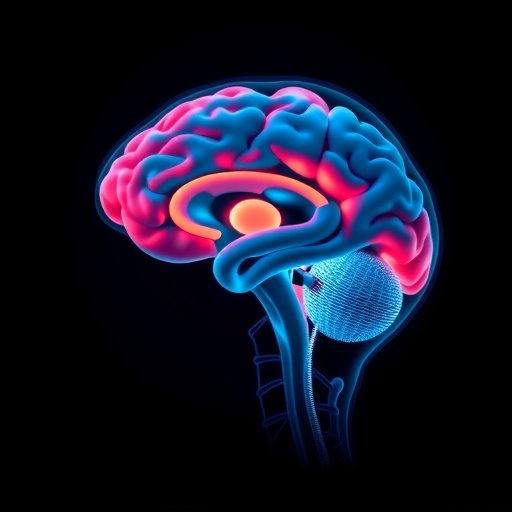
In a groundbreaking study set to redefine our understanding of memory formation, researchers have unveiled the critical role of the prefrontal cortex in orchestrating the organization of memories within the hippocampus. This discovery not only broadens the traditional view of the hippocampus as a mere storage and retrieval center but also illuminates the sophisticated neural interplay that underpins how memories are structured and accessed.
For decades, the hippocampus has been recognized as the brain’s primary hub for memory consolidation and spatial navigation. However, emerging evidence now places the prefrontal cortex, historically associated with higher cognitive functions such as decision-making and planning, center stage in the dynamic control of memory architecture. This revelation comes from the meticulous work of de Sousa et al., as detailed in their recent publication in Nature Neuroscience, which methodically deciphers the mechanistic pathways linking these two critical brain regions.
Employing cutting-edge neuroimaging and electrophysiological techniques, the researchers demonstrated that the prefrontal cortex exerts a top-down influence on hippocampal activity during memory encoding and retrieval. Neural circuits originating from the prefrontal cortex modulate hippocampal neuron firing patterns, effectively sculpting the temporal sequence and spatial context of episodic memories. This bidirectional communication ensures that memories are not just stored but are dynamically organized for efficient retrieval, a process essential for adaptive behavior and complex cognitive tasks.
One of the pivotal findings of this study involves the characterization of synaptic modulation mechanisms by which prefrontal signals alter hippocampal network dynamics. The team discovered that specific glutamatergic pathways emanate from the prefrontal cortex to the hippocampus, modulating synaptic plasticity in a way that fine-tunes the encoding of memory traces. This synaptic tuning supports the segregation of overlapping memories and enhances the fidelity of memory recall.
Moreover, the temporal precision of prefrontal-hippocampal interactions emerged as a critical factor for memory organization. The study revealed that coordinated oscillatory rhythms between these regions, particularly in the theta and gamma bands, facilitate the binding of disparate memory elements into a coherent narrative. Disruptions in these oscillatory couplings were found to impair memory coherence, highlighting the importance of rhythm synchronization in cognitive functioning.
This line of investigation was propelled by a combination of optogenetic manipulations and in vivo recordings in animal models performing complex memory tasks. By selectively activating or silencing prefrontal projections to the hippocampus, the scientists observed corresponding enhancements or deficits in the animals’ ability to organize and retrieve memories. These experiments underscore the causal relationship between prefrontal modulation and hippocampal memory structuring.
The implications of these findings extend beyond basic neuroscience, offering promising avenues for addressing memory-related disorders. Conditions such as Alzheimer’s disease and schizophrenia, which feature disrupted prefrontal-hippocampal connectivity, might be better understood and potentially treated by targeting this circuitry. Therapeutic strategies could aim to restore or mimic the modulatory signals that the prefrontal cortex provides, thereby improving memory organization and cognitive resilience.
Furthermore, the study poses intriguing questions about the hierarchical nature of cognitive processes. By demonstrating that memory organization is not a unilateral hippocampal function but a product of cortical orchestration, the research challenges simplistic locality-based models of brain function. Instead, it supports a more integrated perspective where executive control and memory storage operate in tandem through complex neural dialogues.
Another captivating aspect elucidated by the study is the role of memory prioritization. The prefrontal cortex appears to assign saliency to certain memories, influencing not only how they are stored but also which memories are more readily accessible. This prioritization mechanism is likely instrumental for adaptive learning and decision-making, enabling individuals to focus cognitive resources on relevant experiences.
Technologically, the research capitalized on innovations in multi-region brain recording, allowing simultaneous monitoring of large-scale neural ensembles. These methodological advances permitted the fine-grained analysis of interaction patterns that were previously obscured by spatial and temporal limitations, setting a new standard for investigating brain network dynamics in real time.
Importantly, the study also contributes to the ongoing discourse about episodic versus semantic memory systems. By clarifying the role of the prefrontal cortex in structuring episodic content within the hippocampus, it enriches our understanding of how factual knowledge and personal experiences are differentially processed and interlinked across cortical areas.
In terms of cognitive architecture, the findings suggest a model wherein the prefrontal cortex acts as a conductor, orchestrating the symphony of neural activity that encodes the rich tapestry of human memory. This conductor role involves selecting, sequencing, and integrating memory fragments into organized episodes that can be flexibly accessed according to behavioral demands.
From an evolutionary perspective, the development of such intricate prefrontal-hippocampal interactions may have been crucial for the emergence of advanced cognitive capacities in humans. The ability to organize memories effectively could underpin complex social behaviors, future planning, and the nuanced comprehension of cause-effect relationships.
Looking forward, the authors propose that future research should explore how these prefrontal modulation mechanisms operate during sleep, a state known to foster memory consolidation. Additionally, understanding how emotional and motivational contexts influence this cortical-hippocampal dialogue may yield richer insights into how memories are prioritized and retained.
Altogether, de Sousa and colleagues’ work opens a transformative window into the neural substrates of memory. By revealing the prefrontal cortex’s role in orchestrating hippocampal memory organization, this research not only advances our fundamental knowledge of brain function but also charts exciting paths toward clinical innovation. The intricate dance between these brain regions exemplifies the elegance of cognitive processing, inviting deeper exploration into the fabric of human memory.
Cite Scienmag News
Cassandra Pierce. (April 28, 2026). Prefrontal Cortex Regulates Hippocampal Memory Organization. Scienmag. https://scienmag.com/prefrontal-cortex-regulates-hippocampal-memory-organization/
Cassandra Pierce. "Prefrontal Cortex Regulates Hippocampal Memory Organization." Scienmag, 28 April 2026, https://scienmag.com/prefrontal-cortex-regulates-hippocampal-memory-organization/. Accessed 1 September 2026.
Cassandra Pierce. "Prefrontal Cortex Regulates Hippocampal Memory Organization." Scienmag. April 28, 2026. https://scienmag.com/prefrontal-cortex-regulates-hippocampal-memory-organization/


