


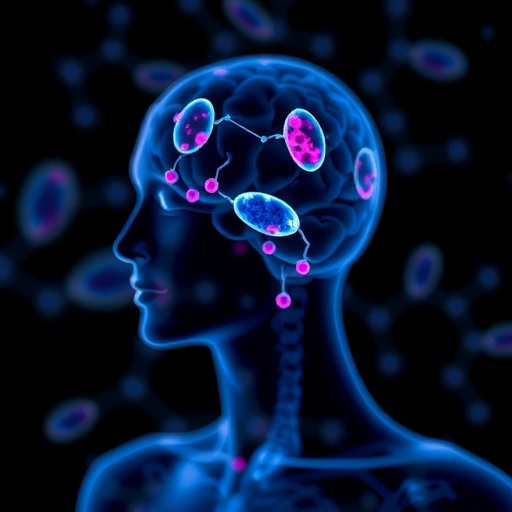
In a groundbreaking exploration into the biochemical underpinnings of mental health disorders, researchers have uncovered significant associations between serum metabolites and the prevalence of depression and anxiety within Hispanic populations. This study, rooted in the extensive data of the Hispanic Community Health Study/Study of Latinos (HCHS/SOL), illuminates the intricate metabolic pathways that may contribute to these increasingly common psychiatric conditions. By leveraging advanced metabolomic profiling and integrative data analysis, the research team has provided a nuanced understanding of how systemic biochemical changes manifest in mental health symptoms, potentially revolutionizing diagnostic and therapeutic approaches.
Depression and anxiety are pervasive mental health disorders contributing substantially to the global disease burden. The pathological complexity underlying these conditions has long challenged researchers, often due to their multifactorial etiologies encompassing genetic, environmental, and biochemical factors. This study marks a significant leap by focusing on serum metabolites — small molecules involved in metabolism — which act as direct signatures of physiological states and perturbations. Through quantifying and analyzing these molecular fingerprints, the investigators aimed to decode the metabolic alterations that accompany clinical manifestations of depression and anxiety.
The Hispanic Community Health Study/Study of Latinos offers a rich and diverse dataset, capturing a wide demographic segment often underrepresented in psychiatric research. By targeting this specific cohort, the study addresses crucial gaps in understanding ethnic-specific biomolecular patterns in mental health disorders. Such focused research recognizes the potential variation in metabolic signatures across populations, influenced by genetics, diet, lifestyle, and socio-environmental factors, thus tailoring future clinical strategies to demographic particularities.
Utilizing state-of-the-art mass spectrometry techniques, the researchers performed comprehensive metabolomic profiling on serum samples collected from thousands of participants. This high-resolution methodology enabled the detection and quantification of hundreds of metabolites, spanning amino acids, lipids, carbohydrates, and other small molecules. The sheer breadth of data allowed for robust statistical modeling to identify metabolic correlates specifically associated with clinical measures of depression and anxiety, as assessed by validated psychometric scales.
One of the central revelations of the study was the identification of distinct metabolic signatures corresponding to depressive and anxious symptomatology. For instance, alterations in amino acid metabolism, particularly involving tryptophan and its downstream kynurenine pathway metabolites, were strongly linked to depressive symptoms. This is consistent with the established neurobiological theories implicating serotonin synthesis dysregulation in depression. Modifications in lipid metabolism, notably involving phospholipids, were also correlated with anxiety, suggesting perturbations in cellular membrane composition and signal transduction pathways.
The complexity of the metabolomic profiles pointed to a network of interrelated metabolic changes rather than isolated alterations. This network perspective emphasizes the systemic nature of depression and anxiety, potentially mediated through inflammatory responses, oxidative stress, and energy metabolism dysregulation. For example, elevated markers indicative of oxidative stress and altered mitochondrial function were recurrent features across metabolite sets associated with both disorders, underscoring the role of cellular bioenergetics in mental health.
By correlating metabolomic data with extensive clinical and demographic variables, the study carefully accounted for confounders such as age, sex, body mass index, socioeconomic status, and comorbidities. This rigorous approach ensured that the identified associations are robust and reflective of genuine biochemical pathways involved in mental health pathology in the Hispanic population. Furthermore, the findings open pathways for developing metabolite-based biomarkers, potentially improving early diagnosis, monitoring disease progression, and tailoring individualized treatments.
Beyond diagnostic implications, the research hints at novel therapeutic targets. Metabolic pathways highlighted in the study offer promising intervention points. Modulation of tryptophan metabolism, antioxidant therapies aimed at mitigating oxidative stress, and lipid metabolism regulation could form the basis of adjunctive treatments. Given the metabolic flexibility and systemic nature of these disorders, such approaches might enhance the efficacy of existing pharmacological and psychotherapeutic interventions.
Importantly, this research reflects the growing convergence of psychiatry, metabolomics, and precision medicine. By integrating omics-based technologies with large-scale epidemiological data, investigators can unravel biological complexity beyond genomics alone. Metabolites represent dynamic biochemical states responsive to both genetic predispositions and environmental exposures, thus providing a real-time window into disease mechanisms and treatment responses.
The study also underscores the necessity of culturally and ethnically inclusive research in psychiatric sciences. Understanding the biological substrates of mental health disorders across diverse populations not only enhances scientific validity but also addresses health disparities. Personalized medicine in psychiatry must consider the unique biochemical milieus shaped by diverse genetic backgrounds and environmental interactions, ensuring equitable healthcare advances.
Moving forward, the authors advocate for longitudinal studies to track metabolite fluctuations over time and in response to therapeutic interventions. Such dynamic monitoring could unravel causal relationships and temporal sequences between metabolic dysregulation and psychiatric symptoms. Additionally, integrating metabolomic data with other omics layers—including genomics, proteomics, and microbiomics—could offer a holistic multi-dimensional insight into the pathophysiology of depression and anxiety.
Challenges remain, particularly in translating these complex biochemical patterns into clinical practice. Standardizing metabolomic workflows, validating biomarkers in independent cohorts, and elucidating molecular mechanisms at the cellular and neural circuit levels will be essential steps. Nevertheless, the profound implications of metabolite profiling reinforce its transformative potential in reshaping how depression and anxiety are diagnosed, understood, and treated.
This landmark research aligns with a global effort to reframe psychiatric disorders through a biological lens, moving beyond symptomatic categorization toward mechanistic precision. By spotlighting serum metabolites as key players in mental health, the study catalyzes a paradigm shift – one that merges comprehensive biochemical investigations with personalized clinical care, ultimately aiming to alleviate the substantial human burden of depression and anxiety in diverse communities.
As the field evolves, metabolomics stands at the forefront of unveiling hidden biological landscapes underlying complex mental health disorders. The meticulous work of Qiu, Zhang, Purushotham, and colleagues not only enriches our molecular understanding but also inspires hope for innovative, targeted therapies that can improve the lives of millions facing depression and anxiety worldwide.
Cite Scienmag News
Glenn Wilkins. (April 28, 2026). Serum Metabolites Linked to Depression, Anxiety in Latinos. Scienmag. https://scienmag.com/serum-metabolites-linked-to-depression-anxiety-in-latinos/
Glenn Wilkins. "Serum Metabolites Linked to Depression, Anxiety in Latinos." Scienmag, 28 April 2026, https://scienmag.com/serum-metabolites-linked-to-depression-anxiety-in-latinos/. Accessed 4 September 2026.
Glenn Wilkins. "Serum Metabolites Linked to Depression, Anxiety in Latinos." Scienmag. April 28, 2026. https://scienmag.com/serum-metabolites-linked-to-depression-anxiety-in-latinos/


