


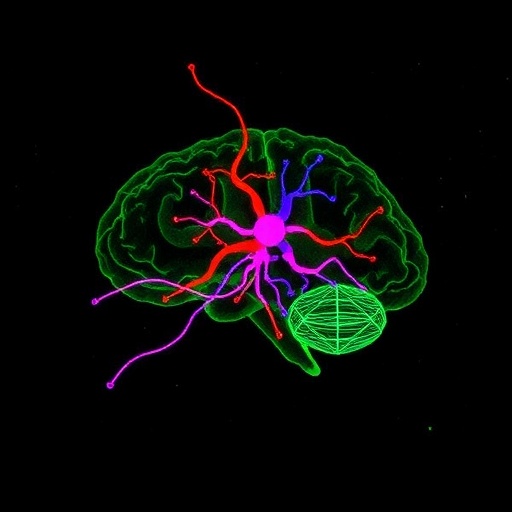
In the evolving landscape of neuroscience, one of the greatest challenges is deciphering the complex electrical symphony played by diverse neurons within the brain’s circuits. Traditional methods have allowed researchers to capture raw electrophysiological data, recording neuronal activity through probes inserted into brain tissue. However, interpreting this barrage of electrical signals has long remained a barrier, particularly when it comes to teasing apart the roles of distinct neuronal cell types and understanding how their unique interactions contribute to both normal brain function and the pathology of mental disorders.
A transformative leap in this field comes from a team of researchers at Boston University who have devised an innovative tool named PhysMAP, which promises to reshape how we visualize and interpret electrophysiological data. By leveraging sophisticated machine learning algorithms, PhysMAP disentangles the composite electrical signatures emitted by individual neurons based on their cell types, effectively giving voice to neuronal subpopulations previously masked by aggregate recordings. This pioneering approach not only advances neuroscience methodology but also opens new avenues for exploring the cellular underpinnings of complex psychiatric diseases.
The brain is composed of myriad cell types, each characterized by unique morphological, molecular, and functional features. Crucially, these cellular constituents carry out computations in collaborative networks, and perturbations at the level of specific cell types can precipitate disorders that are increasingly being reclassified as ‘circuitopathies’. These disorders—including schizophrenia, major depressive disorder, and certain forms of epilepsy—arise from dysfunctional interactions within neural circuits rather than merely from overall changes in neural activity. Understanding these fine-scale interactions requires tools that can pinpoint and track diverse neuron types within intact brain circuitry.
PhysMAP addresses this need by integrating multiple complementary features inherent in neuronal electrical activity, including firing patterns, waveform shapes, and temporal dynamics, into a comprehensive electrophysiological profile. The algorithm underwent rigorous training using seven open-source datasets that uniquely combined electrophysiological recordings with cell type identities determined via optotagging, a groundbreaking technique marrying molecular genetic tagging with light-based stimulation to link electrical activity to specific neuron types. This multimodal data formed an ideal substrate for teaching PhysMAP to recognize and categorize neurons based on their distinctive electrical footprints with high fidelity.
A key advantage of PhysMAP is its ability to generalize beyond the original optotagged datasets. Once trained, the algorithm can classify cell types in new electrophysiological recordings where labeling techniques are absent, thereby enabling broader application in experimental and clinical settings. This capability could revolutionize the analysis of in vivo recordings, offering unprecedented resolution in understanding neuronal circuit dynamics during health and disease without the need for invasive genetic manipulations.
Lead researcher Dr. Chandramouli Chandrasekaran highlights the paradigm shift that PhysMAP represents in psychiatric research. “Many psychiatric disorders do not stem from blanket changes in overall brain activity, but rather from specific disruptions in how particular neuron types interact within circuits. PhysMAP enables the visualization of these previously hidden layers of circuit dysfunction, providing a pathway toward targeted treatments,” he explains. The identification of vulnerable cell types such as parvalbumin-positive interneurons implicated in schizophrenia and certain epilepsy syndromes, or somatostatin-positive cells involved in mood disorders, exemplifies the potential therapeutic insights that PhysMAP can facilitate.
The origin of PhysMAP builds upon a predecessor tool called WaveMAP, which had already demonstrated feasibility in classifying cell types from the first human brain recordings employing Neuropixels probes—state-of-the-art devices with hundreds of recording sites per shank capable of capturing high-dimensional neuronal activity. PhysMAP enhances this foundation by incorporating a wider range of electrophysiological features and leveraging more sophisticated machine learning frameworks, thereby improving classification accuracy and expanding the repertoire of identifiable cell types relevant to neuropsychiatric conditions.
The researchers emphasize the critical role of open data sharing in the development of PhysMAP. By utilizing publicly available datasets generated through advanced optotagging technologies, the BU team not only sidestepped the time-consuming and ethically complex processes of generating new transgenic models or cell-type-specific recordings but also demonstrated how collaborative science accelerates technological innovation. This spirit of open science exemplifies a virtuous cycle where data transparency fosters methodological breakthroughs, which in turn yield deeper biological insights.
An outstanding feature of PhysMAP’s approach is its non-reliance on genetic manipulation in intact animal models, making it compatible with a wide range of experimental paradigms and species, potentially including human clinical research. This capacity to identify and monitor cell types in vivo during naturalistic behaviors or disease progression holds immense promise for translational neuroscience, particularly in devising interventions that target circuit dysfunction at the cellular level.
Moreover, PhysMAP stands to impact the evolving landscape of brain-computer interfaces and neuroprosthetics. Accurate identification and differentiation of cell types during electrophysiological recording could enable devices that are finely tuned to modulate precise neural populations, yielding improvements in therapeutic efficacy and minimizing side effects. By providing a richer, cell-type resolved map of brain activity, this technology could enhance the sophistication and specificity of neurotechnological applications.
The implications for drug development are equally profound. Psychiatric medications traditionally target broad neurotransmitter systems, often yielding incomplete efficacy and adverse effects. PhysMAP’s ability to illuminate cell-type specific circuit abnormalities offers a framework for discovering novel molecular targets and designing precision therapies aimed at restoring normal circuit function, rather than merely damping symptoms.
Future research will likely focus on extending PhysMAP’s capabilities, integrating it with complementary modalities such as calcium imaging, transcriptomics, and connectomics, to construct multi-layered models of brain function. Additionally, expanding training datasets to encompass greater diversity in species, brain regions, and pathological states will enhance generalizability and robustness, enabling this tool to contribute to a comprehensive understanding of brain disorders.
In summary, PhysMAP marks a milestone in neuroscience by enabling cell type-specific analysis of electrophysiological data with unprecedented precision and applicability. By translating complex electrical patterns into identifiable neuronal voices, it transforms our capacity to decipher the cellular conversations underpinning cognition and psychopathology. This breakthrough not only enriches fundamental neuroscience but also charts a promising course toward mechanistic insight and therapeutic innovation in psychiatric medicine.
News Publication Date: 15-Apr-2026
Web References: 10.1038/s41467-026-71331-0
Keywords
Neuroscience, electrophysiology, machine learning, cell type identification, psychiatric disorders, circuitopathies, optotagging, neuronal classification, brain circuits, Neurotechnology, Neuropixels, computational neuroscience
Cite Scienmag News
Cassandra Pierce. (April 22, 2026). BU Scientists Create Innovative Tool to Explore Interactions Among Brain Cell Types. Scienmag. https://scienmag.com/bu-scientists-create-innovative-tool-to-explore-interactions-among-brain-cell-types/
Cassandra Pierce. "BU Scientists Create Innovative Tool to Explore Interactions Among Brain Cell Types." Scienmag, 22 April 2026, https://scienmag.com/bu-scientists-create-innovative-tool-to-explore-interactions-among-brain-cell-types/. Accessed 4 September 2026.
Cassandra Pierce. "BU Scientists Create Innovative Tool to Explore Interactions Among Brain Cell Types." Scienmag. April 22, 2026. https://scienmag.com/bu-scientists-create-innovative-tool-to-explore-interactions-among-brain-cell-types/


