


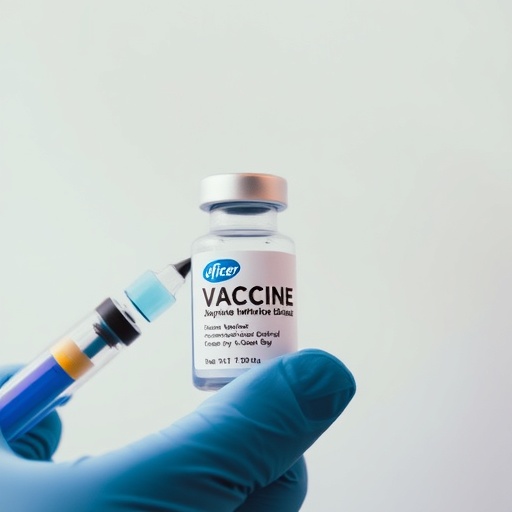
In a groundbreaking advancement at the intersection of immunology and pediatric medicine, recent research scrutinizes the safety and immunogenicity of the Pfizer-BioNTech COVID-19 vaccine, BNT162b2, specifically in adolescents diagnosed with juvenile immune-mediated inflammatory diseases (IMIDs). This study emerges as a pivotal piece in the puzzle of understanding how this vulnerable subgroup responds to vaccination amidst a global health crisis. By transitioning from previous reliance on extrapolated data to direct evidence, it marks a crucial step forward in personalized medicine and vaccine strategy optimization for young patients burdened by chronic inflammatory conditions.
Juvenile IMIDs, encompassing a suite of disorders characterized by dysregulated immune responses leading to chronic inflammation, pose unique challenges in the context of vaccination due to their intricate immunopathology and often concomitant immunosuppressive treatments. Historically, vaccine trials have either excluded or sparsely represented these patients, leaving a significant gap in robust clinical data. This void has often compelled clinicians to make decisions based on assumptions extrapolated from healthy populations, potentially exposing adolescents with IMIDs to unforeseen risks or suboptimal vaccine efficacy profiles.
The study under discussion systematically evaluates the immunogenic landscape post-BNT162b2 vaccination in this demographic by monitoring key immunological markers and clinical parameters. By integrating comprehensive immunophenotyping with safety assessments, the researchers provide nuanced insights into vaccine-induced immune activation, tolerability, and any potential exacerbation of underlying inflammatory disease activity. Such multidimensional scrutiny is indispensable to dissect the delicate equilibrium between eliciting protective immunity and avoiding immune dysregulation in these patients.
A salient feature of this research is its emphasis on real-world applicability. Rather than solely focusing on serological antibody titers, it extends the analysis to include assessments of cell-mediated immunity, which is instrumental in long-term protection and viral clearance. The data illustrate that adolescents with juvenile IMIDs not only mount robust humoral responses comparable to their healthy peers but also develop sustained T-cell responses, underscoring the vaccine’s comprehensive immunogenicity.
Moreover, the safety profile delineated in the study is reassuring. Adverse events reported were predominantly mild to moderate and transient, echoing patterns observed in the general adolescent population. Importantly, the incidence of disease flare-ups post-vaccination was minimal and did not significantly deviate from baseline disease activity rates, alleviating concerns surrounding vaccine-induced disease exacerbation. This finding holds monumental clinical significance, enabling healthcare providers to advocate confidently for vaccination within this sensitive cohort.
Delving into the mechanistic underpinnings, the researchers suggest that the mRNA vaccine’s ability to elicit a balanced immune response without skewing towards deleterious pro-inflammatory pathways is central to its safety in IMID patients. The lack of excessive interferon or cytokine storms, often implicated in autoimmune disease aggravation, indicates a favorable immunomodulatory environment post-vaccination. This aspect not only fortifies the vaccine’s candidacy but also provides a framework for future vaccine designs tailored for immunocompromised or hyperimmune-prone populations.
In a broader epidemiological context, the study’s outcomes have far-reaching implications. Adolescents with juvenile IMIDs represent a subgroup inherently at risk for severe COVID-19 complications due to both their underlying pathology and therapeutic regimens such as corticosteroids or biologics. Ensuring effective and safe immunization in this segment is paramount to mitigating disease burden and curtailing transmission chains in the community. The availability of concrete evidence now empowers public health strategies to be more inclusive and targeted.
The research also propels a paradigm shift in clinical trial design for vaccines. It underscores the imperative to incorporate diverse patient populations, especially those with chronic immune-mediated diseases, during early trial phases rather than relegating them to post-marketing surveillance. Such inclusivity not only accelerates data accumulation but also fosters equitable healthcare delivery by addressing the needs of all demographic strata proactively.
Beyond immediate clinical and public health ramifications, the study catalyzes further scientific inquiries into the interplay between mRNA vaccine platforms and immune-mediated diseases. It opens avenues to dissect molecular signatures predictive of vaccine responsiveness or adverse effects, potentially leading to biomarker-driven vaccination schedules personalized at an individual level. This could revolutionize vaccine administration protocols, especially in pediatric immunology.
The methodology harnessed by the investigators deserves commendation for its rigor and comprehensiveness. Longitudinal sampling, coupled with advanced flow cytometry, cytokine profiling, and multiplex serological assays, ensures high fidelity in capturing the dynamic immune changes post-vaccination. This robust approach strengthens the validity of conclusions drawn and adds granularity to our understanding of immune kinetics in juvenile IMID patients.
Furthermore, patient-centric outcomes were integrated into the evaluation framework, encompassing quality-of-life metrics and patient-reported symptom diaries. This holistic approach acknowledges that vaccine success transcends immunogenicity alone and must encompass lived experiences and disease management perspectives, particularly vital in chronic pediatric conditions where psychosocial factors significantly influence adherence and wellbeing.
The multidisciplinary collaboration evident in this study, bridging pediatrics, immunology, rheumatology, and infectious diseases, reflects the complexity and necessity of comprehensive care models in pandemic contexts. Such collaborative frameworks ensure that emerging evidence is rapidly translated into clinical guidelines and practice, fostering an adaptive healthcare system responsive to evolving challenges and scientific advancements.
As the global vaccination campaign continues, findings such as these are instrumental in shoring up vaccine confidence among patients, families, and healthcare professionals. Transparent communication about vaccine safety and efficacy in special populations mitigates misinformation and vaccine hesitancy, which remain formidable barriers to achieving herd immunity and pandemic control.
This study also raises pertinent considerations for ongoing surveillance and booster strategies in juvenile IMID cohorts. Given the interplay between immunosuppressive therapies and antibody waning, tailored booster regimens may be necessary to sustain protective immunity. Continued research will be vital to delineate optimal timing and formulations to enhance durability without compromising safety.
In conclusion, this compelling body of evidence marks a seminal advancement in pediatric vaccinology amidst a pandemic landscape that has disproportionately impacted vulnerable groups. By providing direct evidence of the BNT162b2 vaccine’s safety and durability of immunogenic responses in adolescents with juvenile immune-mediated inflammatory diseases, it lays a robust foundation for inclusive vaccine policies and personalized healthcare interventions. The resonance of these findings extends beyond COVID-19, heralding an era where precision immunization strategies are embedded in managing chronic immune-mediated conditions worldwide.
Cite Scienmag News
Kristina Jarvis. (April 18, 2026). Pfizer Vaccine Safe, Effective in Juvenile Inflammatory Disease. Scienmag. https://scienmag.com/pfizer-vaccine-safe-effective-in-juvenile-inflammatory-disease/
Kristina Jarvis. "Pfizer Vaccine Safe, Effective in Juvenile Inflammatory Disease." Scienmag, 18 April 2026, https://scienmag.com/pfizer-vaccine-safe-effective-in-juvenile-inflammatory-disease/. Accessed 3 September 2026.
Kristina Jarvis. "Pfizer Vaccine Safe, Effective in Juvenile Inflammatory Disease." Scienmag. April 18, 2026. https://scienmag.com/pfizer-vaccine-safe-effective-in-juvenile-inflammatory-disease/


