


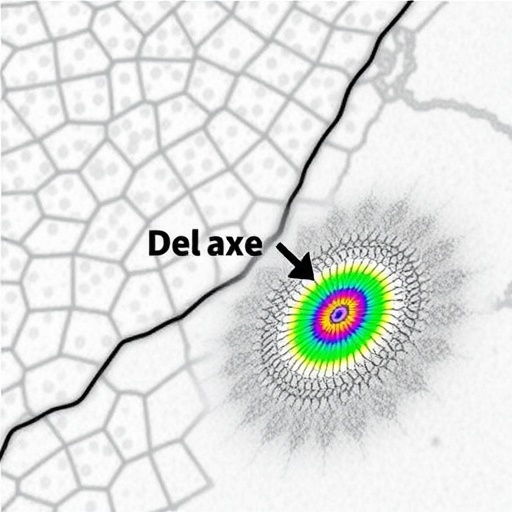
In the rapidly evolving landscape of single-cell biology, the ability to accurately decipher cellular heterogeneity and dynamic processes has become a cornerstone of scientific progress. Traditional visualization and dimensionality reduction techniques like Uniform Manifold Approximation and Projection (UMAP) and t-distributed Stochastic Neighbor Embedding (t-SNE) have profoundly shaped the way researchers interpret complex single-cell data. However, despite their widespread use in revealing clustering structures, these methods often fall short when it comes to preserving the intricate gene-level information that underpins biological processes. Addressing this critical gap, a novel framework called FeatureMAP emerges, promising to revolutionize single-cell data analysis by seamlessly integrating clustering fidelity with feature-level variation.
FeatureMAP, shorthand for feature-preserving manifold approximation and projection, is designed to enhance manifold learning methodologies by embedding pairwise tangent space information within the low-dimensional representation. This augmentation is achieved through a clever integration of UMAP’s powerful topology-preserving properties with Principal Component Analysis (PCA), which excels at capturing variance across features such as gene expression levels. By crafting a hybrid approach, FeatureMAP manages to retain both the macro-view of cellular populations and the micro-level nuances inherent in gene expression data, providing researchers a multidimensional window into cellular identities and states.
At the core of FeatureMAP lie three transformative analytic concepts—gene contribution, gene variation trajectory, and the distinction between core versus transition cellular states. Gene contribution quantifies the influence of individual genes on the overall manifold structure, effectively spotlighting those that govern the formation and definition of specific cellular clusters. Meanwhile, gene variation trajectory follows how the expression of key genes evolves along pseudotemporal or developmental pathways, offering unique insight into the progression and fate decisions of cells. The distinction between core and transition states, derived from detailed topological metrics such as density, curvature, and betweenness centrality, enables the computational identification of stable cellular identities versus those caught in flux or transition.
What truly sets FeatureMAP apart is its capacity to facilitate differential gene variation (DGV) analysis. This analytical strategy leverages the information-rich low-dimensional embeddings to pinpoint regulatory genes that drive the transitions between distinct cellular states, an area of intense interest in understanding processes like development, immune response, and disease progression. By moving beyond static cluster assignments to dynamic gene regulation patterns, FeatureMAP empowers researchers to dissect mechanistic underpinnings of cellular behavior with unprecedented clarity.
The developers of FeatureMAP have subjected their framework to rigorous testing on both synthetic datasets and real-world single-cell RNA sequencing data, including studies on pancreatic development and T cell exhaustion. These applications underscore its utility in tracing developmental trajectories and uncovering crucial regulators involved in cell fate decisions. In the context of pancreatic progenitor differentiation, FeatureMAP’s trajectory analyses revealed subtle gene expression dynamics that were not adequately captured by prior approaches, demonstrating its sensitivity to biologically meaningful variation.
Similarly, when applied to datasets profiling T cell exhaustion—a vital process in chronic infections and cancer—FeatureMAP illuminated a subset of regulatory genes exhibiting dynamic variation which correlate with functional transitions in the immune cells. This capability to elucidate complex immune states opens new avenues for therapeutic target identification and immune modulation strategies. The ability to quantify transitions between states rather than merely classify static groups promises to deepen our understanding of adaptive immune regulation.
From a computational standpoint, FeatureMAP introduces a novel stepwise embedding protocol. By initially embedding the data points through UMAP to conserve global and local neighborhood structure, it then calculates tangent spaces for pairs of points and projects PCA loadings onto these embedded spaces. This preserves feature variation in a manner that aligns with the manifold geometry, maintaining biological interpretability. This approach counters typical manifold learning losses where subtle but critical variance in gene expression may be overshadowed by clustering metrics alone.
Moreover, FeatureMAP’s definition of core and transition states leverages topological data analysis concepts—such as betweenness centrality, which measures the importance of nodes in maintaining connectivity—to identify transitional cells that serve as bridges between well-defined clusters. Density and curvature metrics further refine the classification by quantifying neighborhood compactness and manifold bending, respectively. These metrics together reconstruct a rich topological map, describing how stable cellular identities relate to dynamic cellular intermediates, thus integrating structural and functional cell states in one comprehensive framework.
The implications of FeatureMAP are far-reaching. By furnishing a tool that preserves feature-level variation during low-dimensional visualization, researchers can now generate hypotheses regarding gene function and regulatory networks directly from their manifold embeddings. This contrasts with previous practices where such insights required separate downstream analyses, thereby streamlining workflows and enabling more holistic interpretations of single-cell datasets. Especially in fields like developmental biology, immunology, and cancer research, where dynamic cellular processes are fundamental, FeatureMAP’s capabilities resonate profoundly.
Additionally, by highlighting regulatory genes through differential gene variation analysis, the method bridges the gap between descriptive data visualization and mechanistic insight. This integrative power is expected to accelerate discoveries by clearly indicating candidate genes involved in critical processes, making FeatureMAP a valuable addition to the single-cell computational toolbox. The detailed topological characterization also suggests new strategies for quantifying cellular plasticity, lineage commitment, and phenotypic transitions.
Beyond the immediate biological applications, FeatureMAP is illustrative of larger trends in computational biology embracing hybrid analytic frameworks. The innovative combination of manifold approximation with feature-centric PCA highlights the push toward more interpretable and biologically relevant embeddings, addressing well-known limitations of existing nonlinear dimension reduction techniques. As the scale and complexity of single-cell data continue to grow, such feature-preserving approaches will likely become standard practice, enabling deeper interrogation of cellular ecosystems.
It is also noteworthy that FeatureMAP’s design inherently allows adaptability to diverse single-cell modalities beyond RNA sequencing, such as single-cell ATAC-seq or multi-omics datasets, where preserving feature-level information alongside global structure is equally important. This adaptability promises to make FeatureMAP a versatile tool as the field moves toward comprehensive multi-modal cellular characterization.
As with any emergent technology, the deployment and integration of FeatureMAP into mainstream pipelines require careful benchmarking and community validation. The initial demonstrations, however, clearly establish its superiority in maintaining both clustering and gene-level information compared to standalone techniques like UMAP or t-SNE. Its capability to uncover regulatory gene dynamics especially invites its application in studies seeking to unravel the molecular bases of complex biological transitions.
In summary, FeatureMAP represents a significant advance in single-cell computational methodologies by offering a framework that preserves the delicate balance between structural clustering and gene-level variation in low-dimensional embeddings. Its thoughtful incorporation of topological metrics and differential gene variation analysis paves the way for more insightful and mechanistically informed explorations of cellular heterogeneity and dynamics. As single-cell sciences continue to push the boundaries of biological understanding, innovations like FeatureMAP will be essential in transforming raw data into meaningful discoveries.
Cite Scienmag News
Juliet Wilcox. (April 17, 2026). Preserving Features: Advanced Manifold Analysis of Single Cells. Scienmag. https://scienmag.com/preserving-features-advanced-manifold-analysis-of-single-cells/
Juliet Wilcox. "Preserving Features: Advanced Manifold Analysis of Single Cells." Scienmag, 17 April 2026, https://scienmag.com/preserving-features-advanced-manifold-analysis-of-single-cells/. Accessed 4 September 2026.
Juliet Wilcox. "Preserving Features: Advanced Manifold Analysis of Single Cells." Scienmag. April 17, 2026. https://scienmag.com/preserving-features-advanced-manifold-analysis-of-single-cells/


