


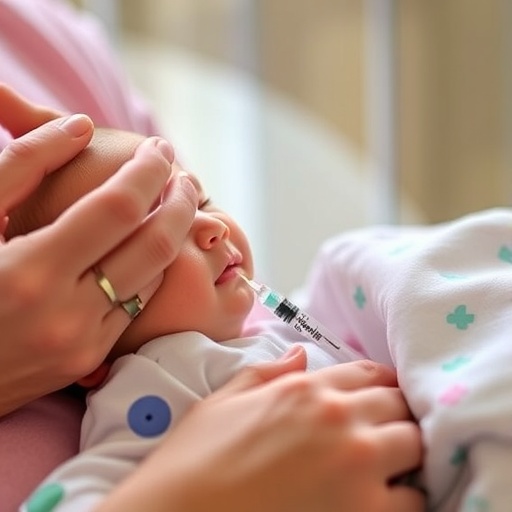
In a groundbreaking presentation at ESCMID Global 2026, researchers from the UK Health Security Agency unveiled compelling evidence that maternal vaccination against respiratory syncytial virus (RSV) dramatically reduces the risk of severe RSV-related illness in infants. This extensive retrospective cohort study marks the largest real-world evaluation of its kind, demonstrating that when pregnant women receive the bivalent Prefusion F RSV vaccine at least two weeks before delivery, their newborns experience an astounding 81.3% reduction in hospitalizations due to RSV-associated lower respiratory tract infections (LRTIs). These findings underscore a paradigm shift in neonatal infectious disease prevention and pave the way for optimized maternal immunization strategies globally.
RSV is a ubiquitous pathogen responsible for significant morbidity and mortality in infants and young children worldwide. It primarily targets the lower respiratory tract, causing ailments such as bronchiolitis and pneumonia. Particularly vulnerable are neonates and infants under six months, in whom RSV infection often necessitates hospital admission and supportive care. Moreover, beyond acute illness, early RSV infection is implicated in long-term pulmonary sequelae including chronic wheezing, asthma development, and recurring respiratory hospitalizations, thereby exerting a lasting burden on child health.
The UK’s national maternal RSV vaccination program, launched on September 1, 2024, offers the bivalent Prefusion F vaccine to pregnant women from 28 weeks’ gestation. The vaccine elicits robust maternal antibody responses targeting both RSV A and B subtypes by focusing on the prefusion conformation of the RSV F protein—an antigenic structure known to induce potent neutralizing immunity. Passive transplacental transfer of these antibodies confers direct protection to the infant, filling a critical gap as vaccines for newborns themselves remain elusive due to their immature immune systems.
To rigorously assess this program’s effectiveness, researchers analyzed data from 289,399 infants born between September 2, 2024 and March 24, 2025, covering approximately 90% of births in England during that interval. By linking national NHS maternity records, immunization registries, hospital admission data, and laboratory test results, this comprehensive cohort enabled precise estimation of vaccine impact on RSV-associated hospitalizations. Within this population, 4,594 cases of RSV-related hospitalization were documented, providing robust statistical power for vaccine efficacy analysis.
Comparative evaluation revealed striking disparities based on maternal vaccination status. Infants born to unvaccinated mothers, constituting 55% of the cohort, accounted for an overwhelming 87.2% of RSV hospital admissions. Conversely, those whose mothers received vaccination at least 14 days prior to delivery exhibited substantially lower hospitalization rates, reflecting a vaccine effectiveness exceeding 80%. This dramatic protective effect validates maternal immunization as a critical intervention to shield the most vulnerable infants during their initial months of life.
Timing emerged as a pivotal factor influencing the degree of neonatal protection conveyed. The study demonstrated a direct correlation between the interval from vaccination to delivery and vaccine effectiveness. When maternal immunization occurred at least four weeks before birth, effectiveness approached an impressive 85%, highlighting the importance of early administration within the recommended gestational window. This aligns with the biological premise that adequate time is necessary for optimal antibody titers to develop in the mother and be efficiently transferred across the placenta.
Interestingly, while full protection required a minimum of two weeks for maturation of the maternal immune response, even infants delivered 10 to 13 days post-vaccination benefitted from about a 50% reduction in hospital admissions compared with their unprotected counterparts. No significant risk reduction was noted if vaccination occurred less than ten days before birth. These nuanced findings emphasize that while early third-trimester vaccination remains optimal, some degree of neonatal immunity can be conferred even when administration occurs later in gestation, informing clinical decision-making in real-world settings.
Of particular note, the study also evaluated vaccine performance in preterm infants, a subgroup notoriously susceptible to severe RSV manifestations due to immature lungs and immune defenses. When the interval between vaccination and birth was maintained at a minimum of 14 days, vaccine effectiveness in preterm neonates reached nearly 70%. This is a promising advance given the high RSV-associated morbidity and mortality burden in preterm populations, supporting current global recommendations by the World Health Organization to vaccinate pregnant women early in the third trimester for maximal protective benefit.
Lead epidemiologist Matt Wilson remarked on the significance of these results, underscoring the robust nature of this large-scale real-world evidence which definitively demonstrates maternal RSV vaccination’s role in mitigating infant hospitalization risk. He highlighted ongoing efforts to analyze population-wide impact and durability of vaccine-derived protection extending beyond the neonatal period, including integration with monoclonal antibody prophylaxis in very preterm infants, to further refine pediatric RSV prevention strategies.
From a global health perspective, these findings have far-reaching implications. RSV remains a leading cause of infant mortality especially in low- and middle-income countries where access to intensive supportive care is limited. Wider implementation of maternal RSV vaccination programs could substantially decrease RSV-related infant deaths and hospital burdens in resource-constrained settings, representing a pivotal advancement in reducing worldwide child mortality and promoting respiratory health equity.
Technically, the bivalent Prefusion F vaccine utilizes stabilized prefusion conformations of the RSV fusion glycoprotein, eliciting high-affinity neutralizing antibodies that block viral entry into epithelial cells. Passive immunity transferred transplacentally protects infants by neutralizing RSV upon exposure, preventing viral replication and subsequent inflammatory lung injury. This mechanism circumvents the challenges of directly vaccinating neonates with immature adaptive immunity, positioning maternal immunization as a vital preventative measure.
The UKHSA study sets a new benchmark for vaccine effectiveness assessments using integrated national healthcare databases and real-world data analytics, establishing a framework for evaluating maternal immunizations against other neonatal pathogens. It further exemplifies the synergy of robust epidemiologic surveillance, innovative vaccine technology, and targeted public health interventions in safeguarding infant health with lasting population health benefits globally.
In conclusion, maternal vaccination against RSV represents a transformative intervention to dramatically reduce severe RSV disease and hospitalizations in young infants. The robust 81.3% vaccine effectiveness evidenced in this large national cohort underscores the critical importance of timely immunization during pregnancy to confer optimal passive protection. This study’s insights will guide clinical guidelines, inform public health policy, and catalyze broader global adoption of maternal RSV vaccines, offering newfound hope in the fight against a longstanding cause of infant respiratory morbidity and mortality.
News Publication Date: Saturday, 18 April 2026
Web References:
References:
- Wilson, M., Whitaker, H., Walker, J., et al. (2026). Maternal RSV vaccination and reduced risk of hospitalisation for babies in England – 2024/45. Oral presentation. ESCMID Global 2026.
- Munro, A. P. S., Martinón-Torres, F., Drysdale, S.B. et al. (2023). The disease burden of respiratory syncytial virus in Infants. Current Opinion in Infectious Diseases. 36(5):379-384.
- European Lung Foundation (ELF). (n.d.). Acute lower respiratory infections.
- World Health Organization. (n.d.). Global Influenza Programme: Respiratory Syncytial Virus Surveillance.
- World Health Organization. (2025). WHO outlines recommendations to protect infants against RSV – respiratory syncytial virus.
- World Health Organization. (2025). Respiratory syncytial virus (RSV). https://www.who.int/news-room/fact-sheets/detail/respiratory-syncytial-virus-(rsv)
Cite Scienmag News
Harold Sullivan. (April 17, 2026). Major UKHSA Study Finds Maternal RSV Vaccination Reduces Infant Hospitalization Risk by More Than 80%. Scienmag. https://scienmag.com/major-ukhsa-study-finds-maternal-rsv-vaccination-reduces-infant-hospitalization-risk-by-more-than-80/
Harold Sullivan. "Major UKHSA Study Finds Maternal RSV Vaccination Reduces Infant Hospitalization Risk by More Than 80%." Scienmag, 17 April 2026, https://scienmag.com/major-ukhsa-study-finds-maternal-rsv-vaccination-reduces-infant-hospitalization-risk-by-more-than-80/. Accessed 4 September 2026.
Harold Sullivan. "Major UKHSA Study Finds Maternal RSV Vaccination Reduces Infant Hospitalization Risk by More Than 80%." Scienmag. April 17, 2026. https://scienmag.com/major-ukhsa-study-finds-maternal-rsv-vaccination-reduces-infant-hospitalization-risk-by-more-than-80/


