


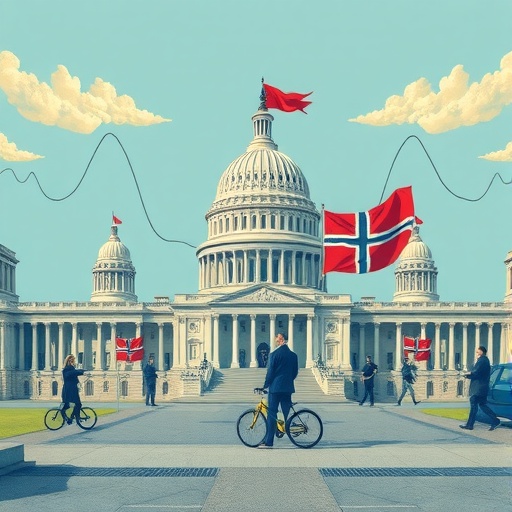
As commercial prediction markets (PMs) soar to unprecedented heights, their rapid expansion brings with it profound social, political, and economic risks that warrant urgent regulatory oversight. Once lauded as revolutionary instruments of collective intelligence, prediction markets have evolved far beyond niche academic or institutional tools, morphing into widespread platforms where millions engage with real money and real-world stakes. The shift from specialized forecasting mechanisms to gamified, mass-audience environments marks a critical inflection point with implications that ripple across democratic processes, public health, and market integrity.
The landscape of prediction markets experienced a pivotal transformation following a landmark 2024 U.S. court decision, which cleared the way for legally permitting event-based political contracts on commercial platforms. This ruling empowered platforms like Polymarket and Kalshi to institutionalize political event wagering on an expansive scale. Unlike earlier academic platforms that primarily attracted expert participation for research and policy insights, these commercial operators chased broader market capture through aggressive engagement strategies that resemble gambling rather than scientific forecasting. By late 2025, these markets managed weekly transaction volumes surpassing $2 billion, with top-tier political and cultural events drawing bets in the hundreds of millions, underscoring their new economic magnitude.
Embedded within this rapid commercialization lies a spectrum of risks that have galvanized scholars Nizan Packin and Sharon Rabinovitz to advocate for immediate, evidence-driven regulation. A central concern is how prediction markets potentially serve as vectors for democratic manipulation. The openness of these platforms allows foreign actors to legally cast bets on election outcomes, effectively participating in a digital political marketplace with minimal accountability. Markets with low liquidity are particularly vulnerable, as modest wagers can disproportionately swing probability odds and craft misleading narratives of electoral consensus. Such distortions wield material influence over voter perceptions, media framing, and campaign strategies, threatening the authenticity of democratic discourse.
Furthermore, the blurred regulatory jurisdiction surrounding prediction markets creates fertile ground for exploitative behaviors. Platforms operate in a legal gray zone, balancing elements of gambling law and financial regulation, earning them the label of “regulatory entrepreneurs,” cleverly exploiting ambiguities to expand without stringent oversight. This structural regulatory failure enables insider trading fueled by nonpublic government intelligence, granting those with privileged information the means to profit from sensitive developments. The possibility that these financial incentives could extend to attempts at manipulating real-world political outcomes adds a disquieting dimension to the unregulated growth of PMs.
From a socio-behavioral perspective, prediction markets increasingly resemble gambling ecosystems, an aspect starkly at odds with their purported identity as forecasting tools. Their interface and incentive designs often incorporate features known to exacerbate addictive behaviors, raising public health alarms. The platforms’ dependence on user engagement metrics and monetization pressures drives the integration of psychologically compelling, reward-based mechanics that can trap vulnerable individuals into cycles of compulsive betting. Unlike regulated gambling environments, these PMs operate without comparable consumer protections or harm mitigation strategies, amplifying risks to mental health and financial stability among users.
In confronting these multifaceted challenges, Packin and Rabinovitz emphasize the imperative for a robust scientific and regulatory response. The scientific community, integral to the inception and maturation of prediction markets, bears ethical responsibility for delineating their operational boundaries and guiding policy frameworks. Without proactive stewardship and transparent governance mechanisms, PMs risk evolving into disruptive forces that undermine behavioral health and democratic integrity. Comprehensive, evidence-based regulatory action could preserve their utility as sophisticated forecasting platforms, steering their evolution toward societal benefit rather than systemic hazard.
A significant barrier to advancing effective oversight is the chronic underinvestment in addiction science relevant to these emerging platforms. Sharon Rabinovitz draws attention to a pervasive structural stigma and implicit moral judgment surrounding behavioral addictions, which have historically constrained the funding landscape for critical research. While traditional gambling’s public health impacts are well documented, regulatory science has lagged in adequately addressing these concerns, and prediction markets remain an even more neglected area despite their rapid normalization and expansion. The disproportionate influence of powerful financial interests exacerbates this neglect, shaping regulatory environments to favor industry growth over consumer protection.
The regulatory void not only hampers public health safeguards but also fosters an uneven playing field across jurisdictions. Disparate legislation and enforcement strategies create pockets of regulatory arbitrage, enabling operators to exploit less restrictive regimes while exposing users to heightened risks. This fragmentation complicates the cultivation of uniform standards essential for maintaining market integrity and protecting democratic processes from distortion. Without coordinated international frameworks, prediction markets risk becoming hotbeds of unchecked speculation and manipulation, with cross-border consequences for elections, public opinion, and financial markets.
Technological advancements further complicate the PM landscape. The proliferation of automated trading algorithms and artificial intelligence tools on these platforms amplifies trading volumes and complexity. While such technologies can enhance market efficiency and information aggregation, they also raise concerns about algorithmic manipulation, reduced human oversight, and systemic vulnerabilities. Algorithms can execute rapid trades based on subtle market shifts, potentially distorting probabilities and exacerbating volatility. The absence of transparency around these automated mechanisms compounds challenges for regulators seeking to monitor, audit, and enforce compliance.
Empirical evidence about the societal impacts of commercial prediction markets remains nascent. The scale and novelty of these platforms mean that longitudinal data on behavioral addiction rates, political influence operations, and economic disruption are limited. This dearth of rigorous research obstructs policymakers from crafting grounded interventions. Packin and Rabinovitz call for intensified public investment in independent scientific inquiry to illuminate these dynamics, enabling tailored regulatory policies that address real harms without stifling innovation. Such research should prioritize interdisciplinary approaches integrating behavioral science, economics, law, and technology studies.
In parallel, consumer education must evolve to enhance user literacy regarding the unique risks embedded in prediction markets. Many participants may perceive PMs as benign entertainment or benign forecasting tools, unaware of their gambling-like mechanics and potential for financial loss or addiction. Clear disclosures, risk warnings, and accessible support services should be integral to platform design. Equipping users with nuanced understanding empowers informed decision-making and mitigates inadvertent harms.
Looking ahead, the trajectory of prediction markets depends heavily on how stakeholders respond to these emerging concerns. If harnessed responsibly, with rigorous safeguards and transparent governance, PMs can fulfill their promise as innovative tools reflecting collective intelligence and informing decision-making across societal domains. Conversely, unchecked growth risks entrenching systemic vulnerabilities that threaten democratic processes, public health, and market stability alike. The current moment presents a crucial opportunity to recalibrate the balance between innovation and oversight before these markets become entrenched in harmful modalities.
Ultimately, the evolution of commercial prediction markets exemplifies the complex interplay between technology, regulation, and societal values. It underscores the necessity for anticipatory policy frameworks that can adapt to rapid innovation without sacrificing accountability or ethical standards. As Packin and Rabinovitz articulate, the responsibility extends beyond industry actors to encompass the broader scientific community, regulators, and civil society, all of whom must collaborate to ensure that the promise of prediction markets is realized safely and equitably.
Cite Scienmag News
Phoebe Ingram. (April 16, 2026). Unregulated Prediction Markets Threaten Political Stability and Public Health. Scienmag. https://scienmag.com/unregulated-prediction-markets-threaten-political-stability-and-public-health/
Phoebe Ingram. "Unregulated Prediction Markets Threaten Political Stability and Public Health." Scienmag, 16 April 2026, https://scienmag.com/unregulated-prediction-markets-threaten-political-stability-and-public-health/. Accessed 4 September 2026.
Phoebe Ingram. "Unregulated Prediction Markets Threaten Political Stability and Public Health." Scienmag. April 16, 2026. https://scienmag.com/unregulated-prediction-markets-threaten-political-stability-and-public-health/


