

Friday, July 17, 2026
Science
No Result
View All Result
  • Login
  • HOME
  • SCIENCE NEWS
  • CONTACT US
  • HOME
  • SCIENCE NEWS
  • CONTACT US
No Result
View All Result
Scienmag
No Result
View All Result
Home Science News Social Science

Disrupted cerebellar-thalamocortical connections across risk stages in first-episode psychosis

July 17, 2026
in Social Science
Reading Time: 2 mins read
0
Disrupted cerebellar-thalamocortical connections across risk stages in first-episode psychosis

Disrupted cerebellar-thalamocortical connections across risk stages in first-episode psychosis

65
SHARES
587
VIEWS
Share on FacebookShare on Twitter
ADVERTISEMENT

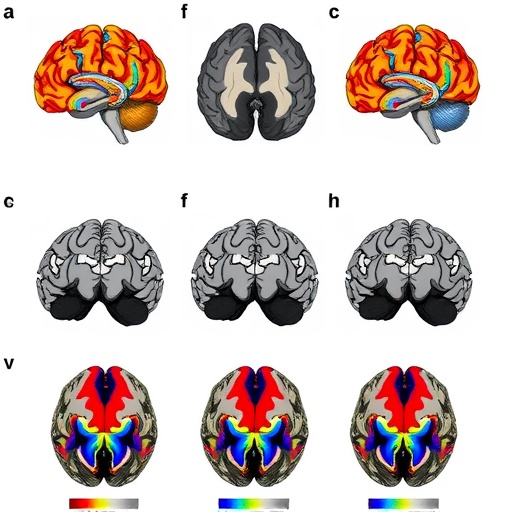
A new study is turning the spotlight onto a little-discussed brain circuit: the cerebellum’s role in the cerebellar–thalamo–cortical “triple network” that helps coordinate perception, cognition, and action. Reported as part of ongoing research into psychosis risk, the work by Ha, Park, and colleagues compares how this network behaves across different stages, including first-episode psychosis.

The researchers modeled functional connectivity patterns to test whether the cerebellum’s communication with thalamic and cortical hubs changes as clinical risk evolves. Instead of treating psychosis as a single on/off state, the study frames it as a network phenomenon—one that may begin shifting before symptoms fully emerge.

Using brain-imaging–based connectivity analysis, the team examined disruption signatures within the triple network, focusing on how information flow might be weakened, misrouted, or temporally destabilized. In healthy brains, these pathways support smooth sensory integration and adaptive prediction; when communication breaks down, the brain can struggle to reconcile internal expectations with incoming signals.

Their findings point to disrupted cerebellar interactions that vary by risk status, suggesting that network alterations may not appear only after diagnosis. The cerebellum appears to be an early contributor to aberrant circuit dynamics, potentially because it fine-tunes timing and coordination across widespread networks.

A key insight is that the cerebellum does not act alone. The study’s network-level approach highlights how cerebellar outputs converge onto thalamic relays and then propagate to cortical processing regions. When that chain is altered, downstream computations—such as attention allocation, error monitoring, and context updating—may become less reliable.

Importantly, the results also extend to first-episode psychosis, where the disrupted connectivity patterns align with the idea that early-stage psychosis involves measurable circuit dysfunction. This supports the broader hypothesis that psychosis risk tracks neurobiological network trajectories rather than purely clinical categories.

The authors emphasize that computational “triple network” modeling can reveal subtle systems-level changes that traditional single-region analyses may miss. Such approaches could help refine risk stratification and motivate interventions aimed at stabilizing connectivity before full symptom onset.

From a viral science news perspective, the takeaway is clear: a brain structure best known for movement and timing may also help orchestrate the neural rhythms behind psychosis vulnerability. If validated in larger cohorts, cerebellar–thalamo–cortical circuit markers could become a new frontier for early diagnosis and mechanism-driven treatments.

Subject of Research: Psychosis risk and first-episode psychosis; cerebellar–thalamo–cortical network dysfunction.

Article Title: Disrupted cerebellar interactions in the cerebellar-thalamo-cortical triple network model across risk states and first-episode psychosis.

Article References: Ha, M., Park, I., Park, H. et al. Disrupted cerebellar interactions in the cerebellar-thalamo-cortical triple network model across risk states and first-episode psychosis. Schizophrenia (2026). https://doi.org/10.1038/s41537-026-00783-6

Image Credits: AI Generated

Tags: brain imaging studies of psychosisbrain network disruptions in psychosis riskCerebellar-thalamocortical connectivity in first-episode psychosiscerebellum-thalamus-cortex communicationcerebellum's role in perception and cognitionearly biomarkers of psychosisEarly interventionfunctional brain connectivity analysis in psychosisnetwork-based understanding of psychosis developmentneural circuit alterations across psychosis stagesneurobiological mechanisms of perception and actiontriple network model in psychiatric disorders
Share26Tweet16
Previous Post

Noble Metal-Modified Zinc Oxide Nanoflakes Show Enhanced Gas Sensing Properties

Next Post

Soft Robotic Suit Improves Sit-to-Stand and Walking Efficiency in Older Adults

Related Posts

University of Toronto Professor Elected Fellow of the British Academy
Social Science

University of Toronto Professor Elected Fellow of the British Academy

July 17, 2026
Smartphone Social-Experience Tests Predict Relapse Risk in First-Episode Psychosis
Social Science

Smartphone Social-Experience Tests Predict Relapse Risk in First-Episode Psychosis

July 17, 2026
Work-Family Conflicts: Flexible Jobs Determine Who Adjusts
Social Science

Work-Family Conflicts: Flexible Jobs Determine Who Adjusts

July 17, 2026
Republican push fuels rapid rise of antivaccine laws in US states
Social Science

Republican push fuels rapid rise of antivaccine laws in US states

July 17, 2026
Social Media Use Linked to ADHD Symptoms in Adolescents, Study Finds
Social Science

Social Media Use Linked to ADHD Symptoms in Adolescents, Study Finds

July 17, 2026
Invisible Gaps in Urban AI Security Threaten City Systems
Social Science

Invisible Gaps in Urban AI Security Threaten City Systems

July 17, 2026
Next Post
Soft Robotic Suit Improves Sit-to-Stand and Walking Efficiency in Older Adults

Soft Robotic Suit Improves Sit-to-Stand and Walking Efficiency in Older Adults

  • Mothers who receive childcare support from maternal grandparents show more

    Mothers who receive childcare support from maternal grandparents show more parental warmth, finds NTU Singapore study

    27656 shares
    Share 11059 Tweet 6912
  • University of Seville Breaks 120-Year-Old Mystery, Revises a Key Einstein Concept

    1061 shares
    Share 424 Tweet 265
  • Bee body mass, pathogens and local climate influence heat tolerance

    682 shares
    Share 273 Tweet 171
  • Researchers record first-ever images and data of a shark experiencing a boat strike

    546 shares
    Share 218 Tweet 137
  • Groundbreaking Clinical Trial Reveals Lubiprostone Enhances Kidney Function

    531 shares
    Share 212 Tweet 133
Science

Embark on a thrilling journey of discovery with Scienmag.com—your ultimate source for cutting-edge breakthroughs. Immerse yourself in a world where curiosity knows no limits and tomorrow’s possibilities become today’s reality!

RECENT NEWS

  • Asteroid impact may have reshaped tuna evolution alongside dinosaur extinction
  • SIRT6 and Its Modulators: New Roles in Kidney Disease Research
  • Journal of Nuclear Medicine Releases Ahead-of-Print Update for July 17, 2026
  • Researchers Enhance Hydrogen Production with Single-Element Dual-Site Substitution

Categories

  • Agriculture
  • Anthropology
  • Archaeology
  • Athmospheric
  • Biology
  • Biotechnology
  • Blog
  • Bussines
  • Cancer
  • Chemistry
  • Climate
  • Earth Science
  • Editorial Policy
  • Marine
  • Mathematics
  • Medicine
  • Pediatry
  • Policy
  • Psychology & Psychiatry
  • Science Education
  • Social Science
  • Space
  • Technology and Engineering

Subscribe to Blog via Email

Enter your email address to subscribe to this blog and receive notifications of new posts by email.

Join 5,146 other subscribers

© 2025 Scienmag - Science Magazine

Welcome Back!

Login to your account below

Forgotten Password?

Retrieve your password

Please enter your username or email address to reset your password.

Log In
No Result
View All Result
  • HOME
  • SCIENCE NEWS
  • CONTACT US

© 2025 Scienmag - Science Magazine

Discover more from Science

Subscribe now to keep reading and get access to the full archive.

Continue reading
