

Friday, August 28, 2026
Science
No Result
View All Result
  • Login
  • HOME
  • SCIENCE NEWS
  • CONTACT US
  • HOME
  • SCIENCE NEWS
  • CONTACT US
No Result
View All Result
Scienmag
No Result
View All Result
Home Science News Medicine

Soft Robotic Suit Improves Sit-to-Stand and Walking Efficiency in Older Adults

July 17, 2026
in Medicine
Arden W.
By Arden W. Clinical Medicine & Diagnostics
Reading Time: 2 mins read
0
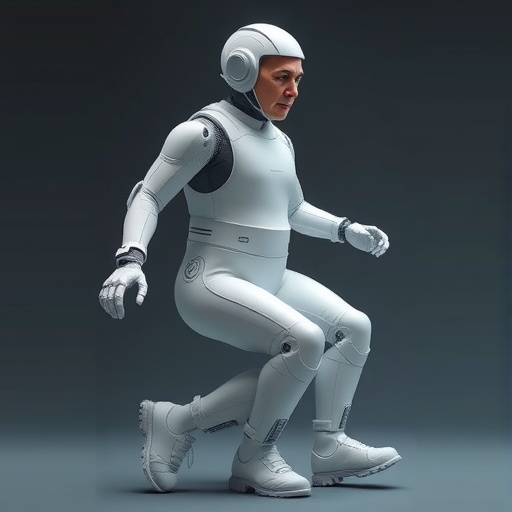
Soft Robotic Suit Improves Sit-to-Stand and Walking Efficiency in Older Adults

Soft Robotic Suit Improves Sit-to-Stand and Walking Efficiency in Older Adults

65
SHARES
587
VIEWS
Share on FacebookShare on Twitter
ADVERTISEMENT

Older adults often lose mobility not only because of slower walking, but because everyday movements like standing up become disproportionately difficult. In a new study published in Nature Communications, researchers report that a wearable “soft robotic suit” can make sit-to-stand transitions smoother and improve subsequent walking efficiency—two linked abilities that strongly influence independence.

The team focused on the moment when a person shifts from sitting to upright posture, a task that requires precise coordination of joints, balance control, and timely muscle activation. Small delays or inefficiencies during this phase can force compensatory strategies, increasing fatigue and reducing stability during the first steps of walking.

Unlike rigid exoskeletons, the soft robotic suit uses compliant materials designed to interact comfortably with the body. By delivering targeted assistance through soft, wearable actuation, the system aims to support lower-limb mechanics during the transition—effectively reducing the biomechanical “cost” of standing up.

To evaluate performance, participants’ movement timing and gait-related measures were tracked before and after using the suit. The analysis emphasized not just whether people could stand and walk, but how efficiently they did it, including the quality of the transition and the stability of early walking patterns.

The researchers found that the suit enhanced sit-to-stand transitions in older adults, indicating improved coordination and reduced disruption in movement flow. Importantly, these gains carried over into walking: participants showed better walking efficiency, suggesting that optimizing the hardest part of the sequence can improve what comes next.

This is a notable result because early gait after rising is often where balance control is most vulnerable. A more efficient transition likely helps preserve posture and alignment at the start of locomotion, lowering the likelihood of corrective steps.

The study also underscores a broader design principle for mobility aids: assisting a single critical subtask can propagate benefits through the whole behavioral chain. Rather than targeting walking alone, the suit’s assistance at stand-up may set up the nervous system and musculoskeletal system for a more stable, economical gait.

With an emphasis on comfort and practical usability, soft robotic wearables could become an adaptable tool for rehabilitation and daily support. If further testing confirms long-term benefits and real-world durability, such systems may help older adults stay mobile without relying on heavier, more restrictive hardware.

Subject of Research: Mobility enhancement in older adults using a soft robotic suit
Article Title: Enhancing sit-to-stand transitions and walking efficiency in older adults with a soft robotic suit
Article References: Zhang, X., Tricomi, E., Stefanakis, M. et al. Enhancing sit-to-stand transitions and walking efficiency in older adults with a soft robotic suit. Nat Commun 17, 6540 (2026). https://doi.org/10.1038/s41467-026-75528-1
DOI: https://doi.org/10.1038/s41467-026-75528-1
Image Credits: AI Generated

Article Title: Soft Robotic Suit Improves Sit-to-Stand and Walking Efficiency in Older Adults

Article References: Zhang, X., Tricomi, E., Stefanakis, M., Gierden, N., Buchner, T., Mišković, L., Bauer, J. M., Werner, C., Becker, C., & Masia, L. (2026). Enhancing sit-to-stand transitions and walking efficiency in older adults with a soft robotic suit. Nature Communications, 17(1), Article 6540. https://doi.org/10.1038/s41467-026-75528-1

Image Credits: AI Generated

DOI: 10.1038/s41467-026-75528-1

Keywords: balance control and stability in aging populations, biomechanical assistance with compliant materials, biomechanics of sit-to-stand transition in older adults, enhancing independence through robotic mobility aids, improving gait smoothness and stability, muscle activation during sit-to-stand with soft assistive devices, reducing muscular effort in elderly gait, soft exosuit to improve walking efficiency, soft robotic suit for elderly mobility, targeted lower-limb support for older adults, wearable assistive technology for sit-to-stand, wearable robotics for fall prevention

Cite Scienmag News

Arden W. (July 17, 2026). Soft Robotic Suit Improves Sit-to-Stand and Walking Efficiency in Older Adults. Scienmag. https://scienmag.com/soft-robotic-suit-improves-sit-to-stand-and-walking-efficiency-in-older-adults/


Arden W. "Soft Robotic Suit Improves Sit-to-Stand and Walking Efficiency in Older Adults." Scienmag, 17 July 2026, https://scienmag.com/soft-robotic-suit-improves-sit-to-stand-and-walking-efficiency-in-older-adults/. Accessed 28 August 2026.

Arden W. "Soft Robotic Suit Improves Sit-to-Stand and Walking Efficiency in Older Adults." Scienmag. July 17, 2026. https://scienmag.com/soft-robotic-suit-improves-sit-to-stand-and-walking-efficiency-in-older-adults/

Tags: balance control and stability in aging populationsbiomechanical assistance with compliant materialsbiomechanics of sit-to-stand transition in older adultsenhancing independence through robotic mobility aidsimproving gait smoothness and stabilitymuscle activation during sit-to-stand with soft assistive devicesreducing muscular effort in elderly gaitsoft exosuit to improve walking efficiencysoft robotic suit for elderly mobilitytargeted lower-limb support for older adultswearable assistive technology for sit-to-standwearable robotics for fall prevention
Share26Tweet16
Previous Post

Disrupted cerebellar-thalamocortical connections across risk stages in first-episode psychosis

Next Post

164 Schools Across 44 States Receive Grants to Improve Student Health

Related Posts

Functional genomics maps broad, convergent asciminib resistance mechanisms in BCR::ABL1
Medicine

Functional genomics maps broad, convergent asciminib resistance mechanisms in BCR::ABL1

August 28, 2026
Leaked mitochondrial DNA triggers cGAS-STING signaling, accelerating ovarian aging in oocytes
Medicine

Leaked mitochondrial DNA triggers cGAS-STING signaling, accelerating ovarian aging in oocytes

August 28, 2026
Atlas maps 2.4 million cardiac cells across 209 people, healthy and diseased
Medicine

Atlas maps 2.4 million cardiac cells across 209 people, healthy and diseased

August 28, 2026
Dengue Burden Among Children Across Eight Endemic Asian and Latin American Countries
Medicine

Dengue Burden Among Children Across Eight Endemic Asian and Latin American Countries

August 28, 2026
Supporting Behavior Change in a New Era of Obesity Care
Medicine

Supporting Behavior Change in a New Era of Obesity Care

August 28, 2026
Urinary Incontinence Linked to Self-Reported Hearing Loss in Two National Aging Studies
Medicine

Urinary Incontinence Linked to Self-Reported Hearing Loss in Two National Aging Studies

August 28, 2026
Next Post
164 Schools Across 44 States Receive Grants to Improve Student Health

164 Schools Across 44 States Receive Grants to Improve Student Health

  • Mothers who receive childcare support from maternal grandparents show more optimized

    Mothers who receive childcare support from maternal grandparents show more parental warmth, finds NTU Singapore study

    27656 shares
    Share 11059 Tweet 6912
  • University of Seville Breaks 120-Year-Old Mystery, Revises a Key Einstein Concept

    1061 shares
    Share 424 Tweet 265
  • Bee body mass, pathogens and local climate influence heat tolerance

    682 shares
    Share 273 Tweet 171
  • Researchers record first-ever images and data of a shark experiencing a boat strike

    546 shares
    Share 218 Tweet 137
  • Groundbreaking Clinical Trial Reveals Lubiprostone Enhances Kidney Function

    531 shares
    Share 212 Tweet 133
Science

Embark on a thrilling journey of discovery with Scienmag.com—your ultimate source for cutting-edge breakthroughs. Immerse yourself in a world where curiosity knows no limits and tomorrow’s possibilities become today’s reality!

RECENT NEWS

  • India’s New Pearl Millet Hybrid Targets Drought-Prone Farming Regions
  • Dengue Burden Among Children Across Eight Endemic Asian and Latin American Countries
  • Peyer’s patch M cells sustain epithelial group 3 innate lymphoid cells, IL-22
  • Ultrahigh-Ratio Drawing During Spinning Produces Strong, Thermally Conductive Graphene Fibres

Categories

  • Agriculture
  • Anthropology
  • Archaeology
  • Athmospheric
  • Biology
  • Biotechnology
  • Blog
  • Bussines
  • Cancer
  • Chemistry
  • Climate
  • Earth Science
  • Editorial Policy
  • Marine
  • Mathematics
  • Medicine
  • Pediatry
  • Policy
  • Psychology & Psychiatry
  • Science Education
  • Social Science
  • Space
  • Technology and Engineering

Subscribe to Blog via Email

Enter your email address to subscribe to this blog and receive notifications of new posts by email.

Join 5,150 other subscribers

© 2025 Scienmag - Science Magazine

Welcome Back!

Login to your account below

Forgotten Password?

Retrieve your password

Please enter your username or email address to reset your password.

Log In
No Result
View All Result
  • HOME
  • SCIENCE NEWS
  • CONTACT US

© 2025 Scienmag - Science Magazine

Discover more from Science

Subscribe now to keep reading and get access to the full archive.

Continue reading