


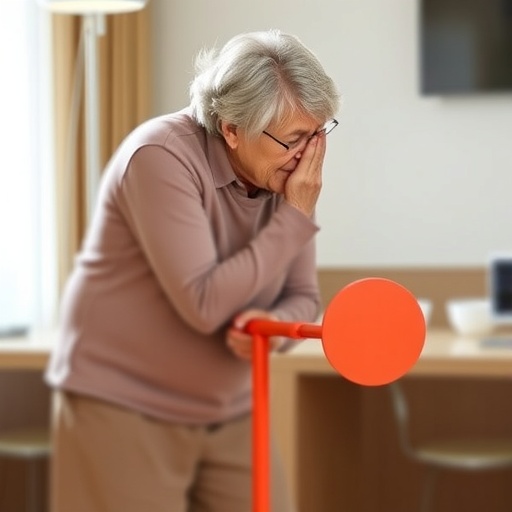
A study spanning England and China has identified a statistically significant association between urinary incontinence and the later emergence of self-reported hearing loss in adults aged 50 and older. The finding, reported by researchers Hao Li, Meng Ge and Xiaowen Zhang, links two conditions that are often treated separately in clinical practice but commonly appear together as people age. The researchers emphasize that urinary incontinence should not yet be considered a cause of hearing loss. Instead, their results suggest that continence problems could serve as an additional signal prompting clinicians to consider hearing evaluation, particularly during broader geriatric assessments. The analysis drew on two national longitudinal studies and followed participants who did not report hearing loss at the beginning of observation.
The researchers used data from the English Longitudinal Study of Ageing, or ELSA, collected between 2004 and 2023, and the China Health and Retirement Longitudinal Study, known as CHARLS, collected between 2013 and 2020. Their analysis included 5,720 ELSA participants and 987 CHARLS participants, all at least 50 years old and free of hearing loss at baseline. Participants reported whether they experienced urinary incontinence and whether they developed hearing difficulties during subsequent assessments. Because both exposure and outcome were tracked over time, the study could examine the temporal relationship between the two conditions more effectively than a one-time survey, although it remained an observational analysis.
In the English cohort, participants who reported urinary incontinence had an 18.2 percent higher estimated hazard of subsequently reporting hearing loss than those without incontinence after statistical adjustment. The hazard ratio was 1.182, with a 95 percent confidence interval from 1.041 to 1.342 and a P value of 0.010. In epidemiological studies, a hazard ratio above 1 indicates a higher rate at which an event occurs in one group relative to another during the observation period. The confidence interval in this case remained above 1, supporting a statistically detectable association in the ELSA data. The size of the association was modest, however, and does not indicate that most people with urinary incontinence will develop hearing loss.
The Chinese cohort showed an association in the same direction, but the estimate was larger and less precise. CHARLS participants with urinary incontinence had an estimated 52.3 percent higher hazard of self-reported hearing loss, corresponding to a hazard ratio of 1.523. The 95 percent confidence interval ranged from 1.001 to 2.317, with a P value of 0.049. The broad interval reflects the smaller sample and suggests substantial uncertainty around the precise magnitude of the relationship. Replication of the direction of the finding across two culturally distinct populations strengthens the signal, but the different estimates also show why the result requires confirmation in larger and independently collected cohorts.
The study does not establish a biological mechanism connecting bladder control with auditory decline. Several pathways could potentially contribute to the observed pattern. Urinary incontinence and hearing loss both become more common with age and may reflect shared vulnerability involving the nervous system, blood vessels, muscles or general physical function. Conditions such as diabetes, cardiovascular disease and reduced mobility can affect multiple organ systems at once. In addition, people with hearing difficulties may have greater difficulty communicating symptoms during medical visits, while people managing incontinence may experience social isolation, sleep disruption or reduced activity. These possibilities are hypotheses rather than conclusions from the analysis, because the available data cannot determine whether one condition directly produces the other.
The investigators adjusted their models for multiple participant characteristics and used multivariable Cox proportional-hazards models to estimate the relationship. Cox models are commonly used for longitudinal data because they account for both whether an event occurs and how long participants remain under observation before the event is reported or the study ends. The researchers also conducted analyses stratified by age and sex. In CHARLS, exploratory results suggested that the association could be stronger among participants younger than 70, whose hazard ratio was 3.490, and among women, whose hazard ratio was 1.666. These subgroup results had wide confidence intervals and should be viewed as preliminary rather than definitive evidence that age or sex changes the relationship.
To explore whether urinary incontinence could contribute to risk prediction, the team also applied feature-importance analysis and built predictive nomograms. Feature-importance methods rank variables according to how much they contribute to a prediction model, although such rankings do not prove causation. In both cohorts, urinary incontinence consistently appeared as a relevant associated feature for self-reported hearing loss. The nomograms combined several predictors into graphical tools that estimate an individual’s probability of reporting hearing loss. The researchers reported good calibration, meaning that predicted probabilities generally agreed with observed outcomes, as well as positive net benefits in decision-curve analysis. Decision-curve analysis evaluates whether using a model could offer more clinical benefit than treating everyone or no one across a range of risk thresholds.
The study’s reliance on self-reported conditions is an important limitation. Self-reported hearing loss can reflect actual auditory impairment, but responses may also be influenced by awareness, communication difficulties, stigma and access to hearing tests. Objective measures such as pure-tone audiometry would provide a more standardized assessment of hearing sensitivity. Similarly, urinary incontinence can vary widely in frequency, severity and cause, yet a simple self-report may not distinguish stress incontinence, urge incontinence, overflow incontinence or mixed symptoms. The researchers also note that the analysis was retrospective and observational. Even after adjustment for measured factors, unmeasured confounding could explain part of the association, and the results may not generalize to populations outside the two national studies.
The authors propose that questions about urinary incontinence could eventually help clinicians identify older adults who might benefit from prioritized hearing assessment, especially where routine audiological screening is difficult to deliver. Any such approach would need prospective validation, objective hearing measurements and testing in additional healthcare systems before it could become standard practice. For now, the result offers a potentially useful connection between two widespread age-related health concerns rather than a new diagnostic rule. As populations age, recognizing interactions among sensory, neurological and functional conditions may help healthcare teams move beyond isolated disease checklists and toward more integrated assessments of older adults’ health.
Cite Scienmag News
Beatrice Stafford. (August 28, 2026). Urinary Incontinence Linked to Self-Reported Hearing Loss in Two National Aging Studies. Scienmag. https://scienmag.com/urinary-incontinence-linked-to-self-reported-hearing-loss-in-two-national-aging-studies/
Beatrice Stafford. "Urinary Incontinence Linked to Self-Reported Hearing Loss in Two National Aging Studies." Scienmag, 28 August 2026, https://scienmag.com/urinary-incontinence-linked-to-self-reported-hearing-loss-in-two-national-aging-studies/. Accessed 3 September 2026.
Beatrice Stafford. "Urinary Incontinence Linked to Self-Reported Hearing Loss in Two National Aging Studies." Scienmag. August 28, 2026. https://scienmag.com/urinary-incontinence-linked-to-self-reported-hearing-loss-in-two-national-aging-studies/


