


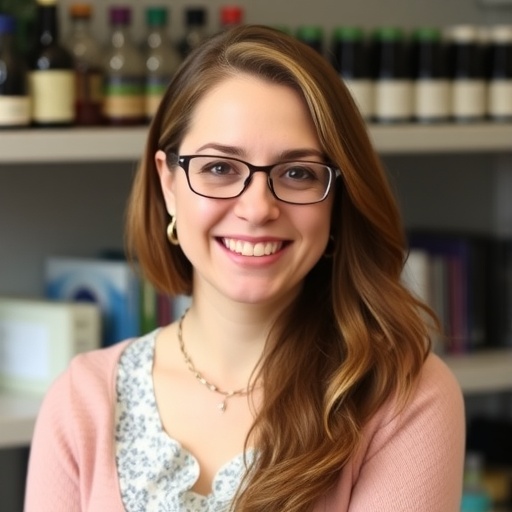
Alexandra Z. Worden, a Senior Scientist at the Bay Paul Center of the Marine Biological Laboratory and a Professor in the Department of the Geophysical Sciences at the University of Chicago, has recently been honored with a prestigious Guggenheim Fellowship. This award recognizes her pioneering contributions to the field of ocean biogeochemistry and will support her continuing quest to unravel the complex microbial processes that govern carbon cycling in marine ecosystems. Worden’s research promises to illuminate the intricate interactions between photosynthetic algae and microbial communities as algal biomass sinks to the seafloor, a crucial yet underexplored pathway in the global carbon cycle.
The ocean’s biological carbon pump is a critical component of Earth’s climate regulation system. It functions by transporting carbon dioxide fixed by photosynthetic marine algae from the surface waters into the deep ocean, effectively sequestering carbon and mitigating atmospheric greenhouse gas concentrations. Despite its recognized significance, many of the microbial mechanisms that contribute to this carbon flux remain enigmatic. Worden’s work centers on deciphering how sinking algal organic matter is transformed by microbial activity in the deep ocean, fundamentally shaping the efficiency and fate of carbon sequestration. Her research addresses vital gaps in understanding the microbial community dynamics and biochemical processes that influence this planetary-scale carbon sink.
Awarded annually, the Guggenheim Fellowship supports scholars and artists who have demonstrated exceptional capacity for productive scholarship and creative ability. Worden’s selection as one of 223 fellows across 55 disciplines underscores the interdisciplinary and transformative nature of her work. The fellowship will allow her to expand her innovative approach to studying marine microorganisms by integrating advanced molecular techniques, ecological modeling, and oceanographic data. Her objectives include revealing the metabolic pathways through which deep-sea microbes process photosynthetically derived carbon, and how shifts in these pathways could impact marine ecosystem function under changing climate conditions.
The urgency of Worden’s research is magnified by the increasing recognition of the ocean biota’s role in carbon sequestration under the pressures of global warming. Changes in ocean temperature, nutrient availability, and stratification are expected to alter primary productivity and the subsequent export of organic carbon to the deep sea. Worden emphasizes the need for detailed molecular-level investigations of microbial transformations in the dark ocean to anticipate ecosystem responses to these environmental perturbations. Her focus on the biochemical and cellular mechanisms in deep-sea microbes aims to provide predictive insights on how carbon cycling may evolve in a warming world.
Worden’s scientific journey started with a strong commitment to foundational ecosystem research. During her undergraduate studies, she recognized a concerning trend where environmental technologies and engineering applications were being implemented in natural settings that lacked fundamental ecological characterization. This realization motivated her to prioritize deep, mechanistic understanding of marine ecosystems before pursuing applied solutions. Her philosophy centers on the idea that effective environmental stewardship must be rooted in rigorous basic science that captures the complexity of organismal interactions and biogeochemical cycles.
A hallmark of Worden’s laboratory is its innovative use and development of cutting-edge visualization techniques to study marine microorganisms in situ. By coupling microscopy, molecular probes, and imaging technologies, her team is able to ‘see’ interactions at cellular and community levels directly within environmental samples. This capability has been groundbreaking in elucidating how microscopic algae and bacteria coexist, compete, and cooperate in natural settings, providing unprecedented insights into microbial ecology. Worden’s commitment to advancing methodological frontiers has enabled new perspectives on microbial roles in ocean carbon cycling that were previously inaccessible.
The support provided by the Guggenheim Fellowship will propel Worden’s investigations beyond surface waters, enabling a holistic ecosystem-scale perspective that bridges the photic zone with the dark ocean. This integrative approach is essential given that the fate of surface-produced organic carbon ultimately determines its long-term storage in the ocean interior. By focusing on the continuum from surface algal communities to deep-sea microbial assemblages, Worden seeks to construct comprehensive models of carbon flow and transformation, linking cellular processes with global biogeochemical cycles.
Her research intersects multiple scientific disciplines, including microbial ecology, oceanography, molecular biology, and geochemistry, reflecting the inherently interdisciplinary nature of studying Earth system processes. Worden’s work exemplifies how merging detailed molecular data with ecosystem-level observations can unlock new understanding in marine sciences. Such integration is critical for advancing predictive frameworks related to ocean health and climate mitigation, especially under rapidly changing environmental regimes.
The broader implications of Worden’s work extend to informing climate policy and marine resource management. Accurate models of ocean carbon sequestration inform global carbon budgets and climate projections, guiding international efforts to mitigate climate change. Additionally, understanding microbial-mediated transformations of carbon in the ocean has implications for biodiversity conservation and the resilience of marine food webs, which depend on these primary and secondary producers.
Worden’s recognition by the Guggenheim Foundation highlights the importance of investing in innovative and intellectually adventurous research. The fellowship encourages scholars to pursue transformative questions with the potential for broad societal impact. Worden’s research agenda embodies this ethos by tackling a complex environmental challenge—how microscopic life in the ocean interior controls a major global climate process—and advancing knowledge that could shape future scientific and policy directions.
In summary, Alexandra Z. Worden’s Guggenheim Fellowship stands as both an acknowledgment of her past pioneering contributions and an endorsement of her ambitious future research program. Through sophisticated molecular and ecological investigations, she aims to decipher the microbial mechanisms underpinning oceanic carbon sequestration, from surface photosynthesis through deep-sea microbial processing. Her work not only advances fundamental marine biogeochemistry but also addresses urgent questions about the ocean’s role in regulating Earth’s climate under anthropogenic stress.
As interest intensifies in the biological carbon pump’s potential to buffer atmospheric carbon dioxide, Worden’s research offers critical insights into the molecular transformations that dictate the efficiency and stability of this process. By elucidating the activities of microbes inhabiting the ocean’s depths and their responses to shifting carbon fluxes, her findings will enhance understanding of how marine ecosystems contribute to climate regulation. This knowledge is indispensable for developing predictive models and adaptive strategies in an era defined by rapid environmental change.
Worden’s scientific vision exemplifies the power of combining technological innovation with ecological inquiry to reveal the hidden intricacies of life in the ocean—an environment vital to Earth’s past, present, and future climate equilibrium. Her work continues to inspire new directions in marine science that blend foundational discovery with practical relevance, marking a significant step forward in our quest to comprehend and protect the planet’s oceans.
News Publication Date: Not specified
Web References: Not provided
References: Not provided
Cite Scienmag News
Violet Maxwell. (April 15, 2026). MBL Scientist Alexandra Z. Worden Awarded Prestigious Guggenheim Fellowship. Scienmag. https://scienmag.com/mbl-scientist-alexandra-z-worden-awarded-prestigious-guggenheim-fellowship/
Violet Maxwell. "MBL Scientist Alexandra Z. Worden Awarded Prestigious Guggenheim Fellowship." Scienmag, 15 April 2026, https://scienmag.com/mbl-scientist-alexandra-z-worden-awarded-prestigious-guggenheim-fellowship/. Accessed 4 September 2026.
Violet Maxwell. "MBL Scientist Alexandra Z. Worden Awarded Prestigious Guggenheim Fellowship." Scienmag. April 15, 2026. https://scienmag.com/mbl-scientist-alexandra-z-worden-awarded-prestigious-guggenheim-fellowship/


