


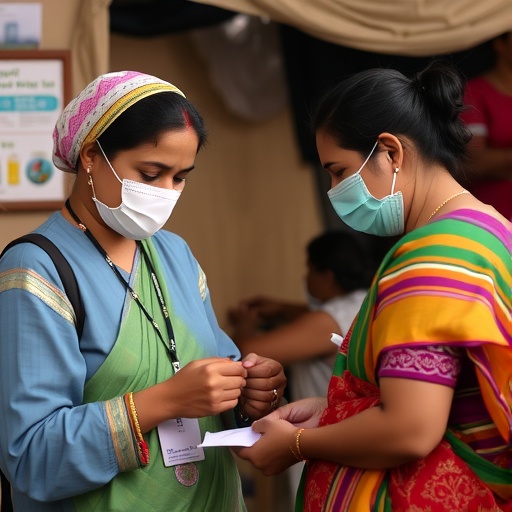
In a groundbreaking study published in JAMA Network Open, researchers have unveiled compelling evidence supporting the feasibility and efficacy of community-based point-of-care testing for hepatitis C virus (HCV) RNA among American Indian and Alaska Native populations. This innovative testing approach not only facilitated rapid diagnosis but also enabled an unprecedented rate of same-day initiation of treatment, signaling a pivotal advance in the global fight against hepatitis C.
Hepatitis C, a bloodborne viral infection, remains a significant public health challenge worldwide, disproportionately impacting marginalized communities with limited access to healthcare infrastructure. Traditional diagnostic pathways for HCV often involve time-consuming laboratory testing followed by delayed treatment initiation, resulting in loss to follow-up and ongoing transmission. The present study circumvents these obstacles by integrating point-of-care RNA testing directly into community settings, thereby expediting diagnosis and therapeutic intervention.
The technical cornerstone of the program lies in the deployment of sensitive nucleic acid amplification tests capable of detecting HCV RNA on-site, eschewing the conventional reliance on centralized laboratories. This technological innovation enables clinicians to confirm active infection within hours, significantly truncating the diagnostic timeline. Subsequent to a validated positive result, healthcare providers can immediately engage patients in tailored antiviral therapy protocols, leveraging state-of-the-art direct-acting antiviral agents renowned for their high cure rates and minimal side effects.
The study cohort, composed exclusively of American Indian and Alaska Native individuals, underscores the critical need for culturally congruent healthcare delivery models that respect and integrate tribal sovereignty and community dynamics. The success observed in these populations highlights the potential scalability of such approaches across diverse demographic groups disproportionately burdened by HCV. Implementation within tribal health services yielded remarkable patient adherence and trust, vital components often compromised in traditional clinical encounters.
Beyond diagnostic expediency, the program’s integrated treatment framework addresses multifaceted barriers to care, including geographic isolation, socioeconomic constraints, and healthcare system mistrust. By co-locating testing and treatment resources, the intervention curtails attrition inherent in multi-step referral processes. The resultant increase in same-day treatment rates translates to a reduction in community viral reservoirs, thereby diminishing transmission vector potential and advancing public health objectives toward HCV elimination.
Molecularly, the precise detection of HCV RNA signifies active viremia, differentiating it from serological markers that merely indicate previous exposure. This specificity is paramount in guiding clinical decision-making and optimizing therapeutic resource allocation. Additionally, real-time molecular diagnostics offer the advantage of monitoring treatment efficacy, enabling dynamic adjustments and early identification of potential resistance patterns.
The study’s methodology incorporated rigorous quality assurance measures, ensuring the fidelity and reproducibility of point-of-care testing outcomes. The validation of assay sensitivity and specificity in community settings serves as a blueprint for future implementations, laying the groundwork for widespread adoption. Furthermore, the integration of electronic health records within tribal health systems facilitated seamless documentation, patient follow-up, and data analytics, bolstering the intervention’s sustainability.
From a public health perspective, the evidence presented invigorates the strategic framework for HCV elimination, aligning with World Health Organization targets to drastically reduce incidence and mortality by 2030. The research elucidates that community-anchored, molecular diagnostic-driven care models are not only viable but also transformative in surmounting entrenched healthcare disparities.
In essence, the convergence of cutting-edge molecular diagnostics, culturally-tailored outreach, and immediate therapeutic intervention epitomizes a paradigm shift in infectious disease management. This model embodies the principles of personalized medicine extended to public health, where precision diagnostics are democratized and harmonized with community-centric values.
Looking ahead, the replication of this program across various underserved communities could catalyze a global recalibration of HCV management protocols. Investments in portable molecular platforms, healthcare workforce training, and tribal partnerships will be essential to scaling this success. Additionally, longitudinal studies are warranted to assess the long-term impact on disease prevalence, reinfection rates, and overall community health resilience.
This study also raises intriguing possibilities for the application of point-of-care RNA diagnostics in other infectious diseases with similar barriers to timely diagnosis and treatment. The ripple effects encompass not only hepatitis C management but broader infectious disease control paradigms emphasizing immediacy, accessibility, and cultural competence.
In conclusion, the integration of community-based, point-of-care HCV RNA testing with same-day treatment among American Indian and Alaska Native populations heralds a new epoch in combating a historically elusive viral adversary. By eliminating delays and bridging systemic gaps, this initiative exemplifies the transformative power of innovative diagnostic and therapeutic strategies in advancing health equity and infectious disease eradication.
News Publication Date: Not provided
Web References: Not provided
References: doi:10.1001/jamanetworkopen.2026.7242
Cite Scienmag News
Kristina Jarvis. (April 15, 2026). Rapid Hepatitis C Testing at the Point of Care in Tribal Communities. Scienmag. https://scienmag.com/rapid-hepatitis-c-testing-at-the-point-of-care-in-tribal-communities/
Kristina Jarvis. "Rapid Hepatitis C Testing at the Point of Care in Tribal Communities." Scienmag, 15 April 2026, https://scienmag.com/rapid-hepatitis-c-testing-at-the-point-of-care-in-tribal-communities/. Accessed 4 September 2026.
Kristina Jarvis. "Rapid Hepatitis C Testing at the Point of Care in Tribal Communities." Scienmag. April 15, 2026. https://scienmag.com/rapid-hepatitis-c-testing-at-the-point-of-care-in-tribal-communities/


