


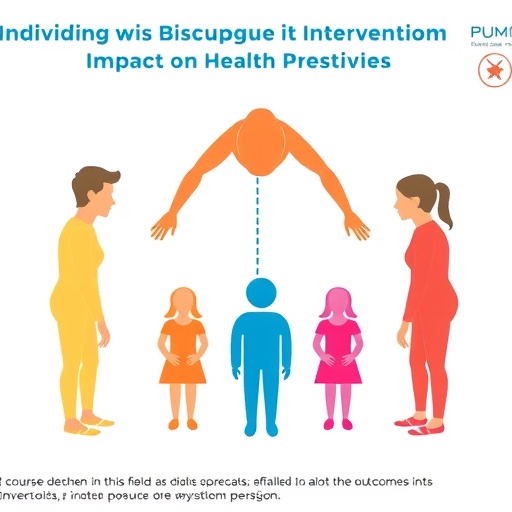
In the evolving landscape of health and wellness, the debate between individual and group-based interventions for enhancing physical activity and overall well-being has intensified. A groundbreaking systematic review and meta-analysis published in Nature Human Behaviour by Kritz et al. (2026) provides an unprecedented synthesis of evidence comparing these two modalities, offering fresh insights into their relative effectiveness across multiple domains. This comprehensive study delves into the intricacies of physical, functional, psychosocial, and health outcomes, illuminating pathways to optimize intervention strategies.
The premise of this investigation roots in the recognition that promoting sustained physical activity remains a global health priority but how best to achieve it continues to challenge intervention designers. While individual-focused programs offer tailored approaches potentially accounting for unique motivational and behavioral factors, group-based interventions harness social dynamics and collective reinforcement. Until now, fragmented and heterogeneous findings made it difficult to discern clear advantages. By amalgamating data from a large spectrum of trials and employing rigorous meta-analytic techniques, the authors dissect the nuanced differences and contextual efficiencies between these approaches.
Central to the analysis is an extensive sample drawn from diverse populations, varying in age, baseline activity levels, and health status. This heterogeneity bolsters the external validity of findings, yet necessitates sophisticated statistical modeling to adjust for confounders and effect modifiers. Mixed-effects meta-regressions help isolate the intrinsic impact of the intervention type on outcome measures such as physical activity levels, functional capacity, psychosocial well-being, and broader metrics of health including cardiovascular parameters and mental health indices.
One compelling aspect of the results reveals that group-based interventions exhibit notably greater efficacy in boosting psychosocial outcomes, including social connectedness, self-efficacy, and mood regulation. This resonates with established social cognitive theories emphasizing the role of communal support and group cohesion in facilitating behavioral change. The presence of peers not only creates motivation but also accountability, fostering an environment conducive to sustained engagement. Such psychosocial enhancements have cascading effects, indirectly amplifying improvements in functional and health outcomes.
Conversely, individual interventions demonstrate superior adaptability and customization potential, which translates into modest yet statistically significant gains in physical activity volume and functional capacity. Tailored exercise prescriptions better match the unique physiological and psychological needs of participants, enabling incremental progression and minimizing dropout rates. By finely tuning intensity, modality, and progression, individual formats can effectively address barriers such as physical limitations or personal preferences that group programs may overlook.
Interestingly, the analysis underscores that neither approach holds an absolute supremacy across all outcome domains. Instead, the interplay between intervention format and target outcome emerges as a critical consideration. For instance, when the primary goal is enhancing objective fitness parameters or managing chronic conditions, individualized regimens may be preferable. In contrast, when ameliorating mental health and fostering lifestyle adherence, group modalities outperform. This nuanced understanding advocates for a hybridized model, blending individual attention with group dynamics to synergize benefits.
Demographic variables further modulate intervention efficacy, as older adults and individuals with lower baseline activity may disproportionately benefit from group engagement due to reduced isolation and heightened motivational support. In contrast, younger, more autonomous individuals often thrive under individualized protocols that provide flexibility and privacy. This stratification highlights the imperative to personalize intervention delivery modes in alignment with participant characteristics, maximizing therapeutic yield.
Moreover, technological integration appears as a promising adjunct in both domains. Digital platforms enabling remote group exercise sessions or personalized feedback through wearables can transcend traditional barriers such as geographic constraints or scheduling conflicts. The study references emerging trends where blended interventions incorporate virtual communities for social motivation alongside individualized monitoring, potentially revolutionizing scalability and access.
The methodological rigour of the meta-analysis entails robust sensitivity analyses, publication bias assessments, and subgroup stratifications, conferring confidence in the validity of conclusions. Furthermore, the authors meticulously evaluate intervention adherence and attrition, acknowledging these factors’ pivotal influence on real-world effectiveness. Group-based programs tend to report higher adherence, attributed to social accountability, whereas individualized interventions face challenges related to motivation lapses absent external reinforcement.
Another salient theme concerns cost-effectiveness and resource allocation. Group interventions often demand communal settings, facilitators, and scheduling logistics, which may constrain accessibility and scalability despite their psychosocial advantages. Conversely, individualized programs, especially those augmented by digital tools, present opportunities for tailored yet cost-effective delivery but may sacrifice the critical interpersonal connectivity driving sustained behavior change.
The ramifications of this synthesis extend beyond exercise science into public health policymaking and clinical practice. Designing community programs or rehabilitative services necessitates evidence-based frameworks balancing efficacy, participant preferences, resource availability, and targeted health outcomes. This research thereby bridges the often-disparate domains of behavioral science, epidemiology, and health services research, offering actionable intelligence to optimize intervention strategies.
In conclusion, the systematic evaluation by Kritz and colleagues fundamentally reshapes prevailing assumptions about physical activity interventions. By elucidating the strengths and limitations inherent in individual versus group-based formats across multiple dimensions of health, this study advocates for a tailored, outcome-driven approach. Future innovation lies in harnessing hybrid models underpinned by technological advances and personalized medicine principles, aiming to synergize the motivational power of social contexts with the precision of individualized care.
As the global population grapples with escalating chronic disease burdens and sedentary lifestyles, these insights provide an indispensable compass for stakeholders ranging from clinicians to policymakers. Prioritizing adaptable interventions that leverage social mechanisms and individualized customization promises amplified impact. Ultimately, fostering sustainable physical activity and holistic well-being will depend on nuanced strategies informed by comprehensive syntheses such as this one — a landmark contribution charting the future of behavioural health interventions.
—
Cite Scienmag News
Glenn Wilkins. (April 15, 2026). Individual vs Group Interventions: Impact on Health Outcomes. Scienmag. https://scienmag.com/individual-vs-group-interventions-impact-on-health-outcomes/
Glenn Wilkins. "Individual vs Group Interventions: Impact on Health Outcomes." Scienmag, 15 April 2026, https://scienmag.com/individual-vs-group-interventions-impact-on-health-outcomes/. Accessed 4 September 2026.
Glenn Wilkins. "Individual vs Group Interventions: Impact on Health Outcomes." Scienmag. April 15, 2026. https://scienmag.com/individual-vs-group-interventions-impact-on-health-outcomes/


