


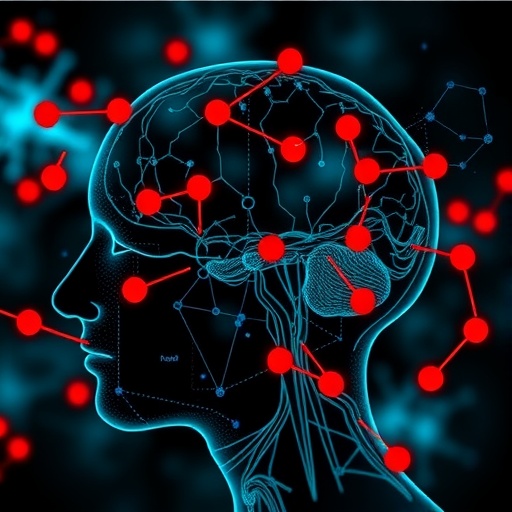
In a groundbreaking advancement poised to reshape our understanding of schizophrenia, an international team of scientists has successfully replicated and extended the analysis of blood protein correlation networks linked to the neuroimmunological underpinnings of this complex mental disorder. Published in Translational Psychiatry, this 2026 study by Jeffries et al. delves deep into the proteomic landscape of schizophrenia, unveiling intricate molecular interactions that could revolutionize diagnostic and therapeutic strategies.
Schizophrenia, a multifaceted psychiatric condition marked by distorted thinking, perception, and emotional responsiveness, has long eluded definitive biochemical characterization. While previous research hinted at immune dysregulation playing a pivotal role, the heterogeneity of findings and lack of replication have hindered clinical translation. Through meticulous replication using innovative protein network analysis, the present work firmly establishes a set of blood protein correlations that contribute to the neuroimmunological profile of schizophrenia, reinforcing and expanding upon earlier discoveries.
At the core of this study lies the use of correlation network methodologies — a sophisticated statistical framework that captures multivariate associations among proteins rather than isolated expression levels. By mapping out how specific proteins co-vary in patient blood samples, Jeffries and colleagues offer a dynamic view of biological interplay, reflecting systemic immune disruptions intrinsic to schizophrenia’s pathology. This lends a higher dimensional perspective on disease biomarkers that transcends traditional single-molecule analysis.
The replication process is particularly notable considering the notorious complexity and variability in schizophrenia cohorts. The researchers employed large, independent datasets from diverse populations, applying rigorous quality controls and normalization techniques to ensure data reliability. Their success in reproducing the previously reported protein correlation signatures underscores the robustness of these molecular networks and suggests they are conserved pathological features rather than artifacts or population-specific quirks.
Beyond mere confirmation, the study embarks on expanding the previously characterized protein networks by integrating additional proteomic data. This extension revealed novel associations, highlighting hitherto unrecognized proteins and pathways involved in immune modulation and neuroinflammation. Intriguingly, several newly implicated proteins are linked with microglial activation and blood-brain barrier integrity, central elements in schizophrenia’s neuroimmune disruption hypothesis.
One of the pivotal insights from the research is the delineation of distinct subnetworks within the broader protein correlation structure, each corresponding to particular immune functions. For example, subnetworks enriched with cytokines and chemokines map closely to inflammatory signaling cascades, while others encompass proteins related to complement activation and oxidative stress. Such modular characterization opens avenues for targeted biomarker panel development and precision therapies aimed at specific immune pathways.
Further, the study explores temporal variability in these protein networks by analyzing samples collected at different stages of illness and treatment phases. Their findings suggest that certain correlation patterns intensify during acute psychotic episodes and may normalize upon antipsychotic intervention. This dynamic profiling of immunoproteomic networks offers promise for monitoring disease progression and therapeutic response with greater fidelity than conventional methods.
Technological advances in mass spectrometry and multiplex immunoassays prove instrumental in the study, enabling the quantification of a broad spectrum of proteins with high sensitivity and accuracy. The researchers leveraged these innovations to capture subtle fluctuations in low-abundance immune mediators, which past studies might have overlooked. This comprehensive proteomic profiling is crucial for unveiling the complex immune signatures specific to schizophrenia.
Importantly, the study also discusses the implications of blood–brain axis perturbations revealed through these correlation networks. The interplay between peripheral immune proteins and central nervous system pathophysiology is emphasized, supporting a model wherein systemic inflammation and neuroimmune crosstalk contribute synergistically to symptom manifestation and disease progression. This bi-directional communication path challenges the classical neuron-centric view and highlights the potential of blood-based markers to reflect CNS immune states.
By marrying replication rigor with novel extension, Jeffries et al.’s research provides a valuable resource for the scientific community, enhancing reproducibility standards and setting a benchmark for future neuroimmunological investigations in psychiatric disorders. The study’s methodological transparency and data-sharing commitment ensure accessibility for continued validation and exploration by researchers worldwide.
Clinicians and psychiatrists stand to benefit immensely from these insights, as precise molecular biomarkers derived from blood tests could drastically improve early diagnosis accuracy and personalized treatment plans. Such biomarkers may also help stratify patients based on immune profile subtypes, facilitating tailored immunomodulatory interventions that complement existing antipsychotic regimens.
Moreover, the elucidated protein networks may guide pharmaceutical development by identifying novel therapeutic targets within immune pathways or signaling nodes pivotal in disease pathology. By modulating these networks, new classes of drugs could potentially alleviate symptoms or alter disease trajectories more effectively than current strategies focused solely on neurotransmitter regulation.
From a broader perspective, this work accentuates the growing recognition of neuroimmunology as a critical frontier in psychiatric research, bridging neurology, immunology, and psychiatry. The interplay between immune dysfunction and mental health disorders continues to be an exciting area that holds promise for unraveling etiological mysteries and overcoming long-standing challenges in psychiatric care.
In summary, the replication and extension of blood protein correlation networks in schizophrenia proposed by Jeffries and colleagues heralds a transformative chapter in understanding the disease’s neuroimmune architecture. By validating prior findings and pushing the envelope with new proteomic insights, the study illuminates pathways that could catalyze innovation in diagnosis, prognostication, and therapeutic development, promising a future where schizophrenia management is more scientific, precise, and personalized than ever before.
Cite Scienmag News
Glenn Wilkins. (April 14, 2026). Blood Protein Networks Reveal Schizophrenia’s Neuroimmunology. Scienmag. https://scienmag.com/blood-protein-networks-reveal-schizophrenias-neuroimmunology/
Glenn Wilkins. "Blood Protein Networks Reveal Schizophrenia’s Neuroimmunology." Scienmag, 14 April 2026, https://scienmag.com/blood-protein-networks-reveal-schizophrenias-neuroimmunology/. Accessed 4 September 2026.
Glenn Wilkins. "Blood Protein Networks Reveal Schizophrenia’s Neuroimmunology." Scienmag. April 14, 2026. https://scienmag.com/blood-protein-networks-reveal-schizophrenias-neuroimmunology/


