


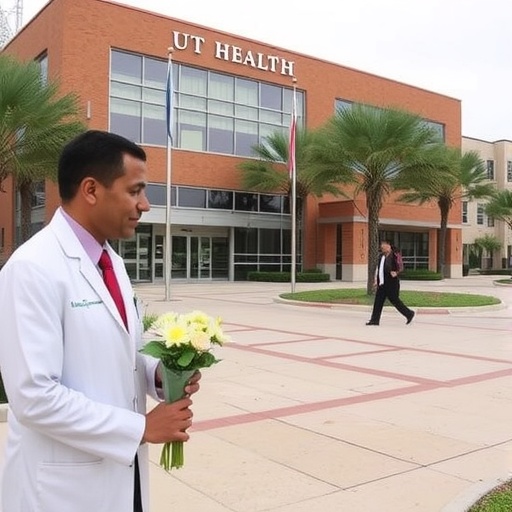
In a groundbreaking advancement poised to reshape cancer care in South Texas, UT Health San Antonio Multispecialty and Research Hospital has successfully enrolled and treated its inaugural participant in a pioneering clinical trial. This milestone heralds a new era where patient-centered cancer treatment is intricately linked with cutting-edge research and academic excellence, headquartered within the region’s sole academic health center. Since opening its doors on December 10, 2024, this hospital has become an epicenter for integrating discovery and healing, offering not just standard care but also frontline innovative therapies.
The clinical trial under discussion is a Phase 2 dose expansion study investigating invikafusp alfa (designated STAR0602), a novel intravenous immunotherapy aimed at halting tumor progression across various advanced solid tumor types. As an immunostimulatory agent, STAR0602 potentiates the patient’s immune system to recognize and eliminate malignant cells more effectively. This trial signifies a considerable stride in cancer therapeutics, merging immune activation with targeted cellular mechanisms to extend treatment modalities beyond conventional chemotherapy and radiation.
Conducted in close collaboration with UT Health San Antonio’s Mays Cancer Center—the only National Cancer Institute-designated cancer center in South Texas—this clinical study stands as the exclusive trial site in Texas. Managed by Marengo Therapeutics, the trial spans roughly 25 clinical institutions across North America and Europe, showcasing a transcontinental effort to refine and validate the therapeutic potential of STAR0602. The hospital and cancer center’s synergistic efforts exemplify an integrated healthcare model where research and clinical practice coalesce seamlessly.
Dr. Virginia Kaklamani, principal investigator and breast cancer program leader at Mays Cancer Center, notes that the study’s primary endpoint is a meticulous assessment of both the efficacy and safety profile of STAR0602. This immunotherapy’s mechanism entails a highly targeted stimulation of cellular immunity, designed to activate cytotoxic lymphocytes specifically against non-hematologic solid tumors. Its innovative approach diverges from traditional therapies by inducing an immunologic memory that may confer sustained anti-tumor activity even following completion of treatment.
This clinical protocol uniquely combines STAR0602 with sacituzumab govitecan (SG), an FDA-approved antibody-drug conjugate effective against certain solid tumors. By employing SG alongside the novel immunotherapy, the trial seeks to enhance the depth and durability of anti-cancer responses. SG operates by delivering cytotoxic agents directly to tumor cells expressing a specific antigen, while STAR0602 aims to empower the immune system’s intrinsic tumor-targeting capabilities, creating a synergistic therapeutic duet.
Implementing this trial demanded unprecedented coordination between inpatient oncology units and outpatient research teams, underscoring the necessity of a multidisciplinary infrastructure. The post-infusion phase mandates intensive monitoring over a 72-hour period to observe immune responses and mitigate potential adverse events, a process that leverages the hospital’s advanced patient care environments and multidisciplinary expertise. This ongoing patient surveillance epitomizes the convergence of clinical vigilance and research acumen vital for pioneering immunotherapies.
Dr. Jessica Treviño Jones, overseeing the clinical care of the trial participant, emphasizes the importance of seamless interdisciplinary collaboration. The synergy between Mays Cancer Center’s oncologists and the hospital’s nursing, pharmacy, and research staff ensures that patients benefit from comprehensive, state-of-the-art care. Spatial designs focusing on patient comfort during prolonged monitoring periods underscore a patient- and family-centered philosophy even in high-intensity research settings.
Previously, the absence of dedicated inpatient cancer care facilities limited the ability of Mays Cancer Center to manage complex oncology protocols requiring hospitalization. The establishment of UT Health San Antonio Multispecialty and Research Hospital has transformed this landscape, enabling complete continuum care—from diagnosis and outpatient therapy to inpatient management—within a single integrated health system. This evolution enhances accessibility to sophisticated cancer treatments for South Texans, reducing the need for travel and disruption.
Lei Zheng, executive director of Mays Cancer Center, highlights that this full-spectrum capability enables inclusion of promising clinical trials like STAR0602, expanding therapeutic options for patients with otherwise limited alternatives. By fostering a culture of translational medicine and collaborative practice, the hospital system stands at the forefront of turning experimental therapies into tangible clinical benefits.
The dual mission of scientific innovation and empathetic patient care drives UT Health San Antonio’s philosophy. As Therica Miller, associate vice president for clinical research administration, articulates, the hospital functions as a dynamic hub where bench research propels clinical breakthroughs and patient experiences inform future scientific inquiries. This bidirectional flow ensures therapies remain patient-centric, continuously refined, and grounded in cutting-edge science.
Patients engaged in clinical trials at Mays Cancer Center also benefit from participation in extensive research protocols evaluating genetic, molecular, and immunologic markers, providing critical data for personalizing treatment and understanding variability in response. This precision medicine approach underlines the hospital’s commitment to individualizing therapy based on mechanistic insights, potentially improving outcomes and minimizing toxicities.
This milestone event not only establishes UT Health San Antonio Multispecialty and Research Hospital as a nexus for innovative oncology care but also reaffirms the role of academic medical centers in driving forward the next generation of cancer therapeutics. Through fostering partnerships with industry leaders such as Marengo Therapeutics and leveraging institutional expertise, they are transforming cancer treatment paradigms while remaining deeply connected to community needs.
For patients with advanced malignancies, this integrated model offers hope rooted in scientific rigor and compassionate care. The trial of STAR0602 exemplifies how precision immunotherapy can be brought from conceptual discovery to bedside application, creating new vistas for managing solid tumors. As research progresses, this synergy between hospital and research center is expected to catalyze further breakthroughs, ushering in an era of more effective, tailored cancer therapies delivered with humanity and expertise.
News Publication Date: April 15, 2026
Web References:
– https://uthealthsahospital.org/
– https://cancer.uthscsa.edu/clinical-trials-and-research
Cite Scienmag News
Nathaniel Bowman. (April 15, 2026). UT Health San Antonio Multispecialty and Research Hospital Enrolls First Participant in Groundbreaking Cancer Clinical Trial. Scienmag. https://scienmag.com/ut-health-san-antonio-multispecialty-and-research-hospital-enrolls-first-participant-in-groundbreaking-cancer-clinical-trial/
Nathaniel Bowman. "UT Health San Antonio Multispecialty and Research Hospital Enrolls First Participant in Groundbreaking Cancer Clinical Trial." Scienmag, 15 April 2026, https://scienmag.com/ut-health-san-antonio-multispecialty-and-research-hospital-enrolls-first-participant-in-groundbreaking-cancer-clinical-trial/. Accessed 4 September 2026.
Nathaniel Bowman. "UT Health San Antonio Multispecialty and Research Hospital Enrolls First Participant in Groundbreaking Cancer Clinical Trial." Scienmag. April 15, 2026. https://scienmag.com/ut-health-san-antonio-multispecialty-and-research-hospital-enrolls-first-participant-in-groundbreaking-cancer-clinical-trial/


