


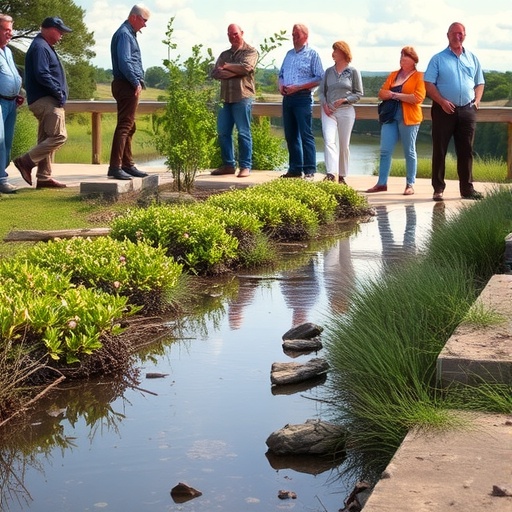
In an era marked by escalating climate crises and intensifying geopolitical conflicts, a groundbreaking study from the University of East London (UEL) has unveiled a compelling intersection between environmental restoration and national security. This pioneering research introduces the concept of “defensive rewilding,” a strategy that leverages ecosystem restoration to fortify borders and impede military advances, all while delivering substantial environmental benefits. This innovative approach reframes natural landscapes not merely as spaces to be preserved but as dynamic, strategic assets in modern defense planning.
Defensive rewilding distinguishes itself from conventional military fortifications by operating on a landscape scale, implementing long-term ecological restoration prior to or during conflict to alter terrain in ways that complicate enemy maneuvers. Unlike temporary defensive measures such as minefields or barriers that offer fleeting tactical advantages, defensive rewilding harnesses the intrinsic physical properties of restored ecosystems—such as wetlands, peatlands, and forests—to create formidable natural obstructions. These environments leverage their hydrological, geological, and biological characteristics to increase mobility costs for adversarial forces, effectively serving as passive defense systems.
The research addresses a mounting “guns versus climate” dilemma, highlighting how heavy military investments often detract from urgent climate action and biodiversity conservation. By advocating for synergy rather than competition between defense objectives and environmental priorities, the study posits that these goals can be mutually reinforcing. The authors demonstrate how restored ecosystems operate as “force multipliers,” enhancing defensive postures while concurrently sequestering carbon, mitigating flood risks, and fostering rich biodiversity.
One of the most illustrative examples underscored is the restoration of wetlands. Hydrologically restored wetlands rehydrate soils, creating waterlogged conditions that notably impede the passage of heavy armored vehicles and mechanized infantry. Their highly porous yet saturated substrates can become treacherous quagmires under the weight of military machinery, effectively transforming vast tracts of land into natural moats. Similarly, reforested areas disrupt line-of-sight and restrict maneuverability, complicating reconnaissance and coordinated troop movements. Rivers, when re-naturalized to maintain or restore their natural meanders and floodplains, serve as dynamic barriers—fluctuating in flow and inundation levels, they impose logistical challenges for crossing operations crucial to offensive actions.
At the heart of defensive rewilding lies the concept of “deterrence by denial.” By increasing the physical and operational costs for any would-be invader through environmental obstructions, the strategy seeks to diminish the probability of hostile incursions. This form of deterrence contrasts with traditional models reliant upon force projection or retaliatory threat; instead, it manipulates the physical battlefield ecology to preclude or delay enemy advances.
The research draws deeply upon historical precedents and recent conflicts to substantiate this approach. For instance, during the First World War, deliberate flooding was employed as a defensive tactic to hinder trench warfare advances. More recently, the ongoing war in Ukraine has vividly illustrated the tactical utility of natural terrain features, where saturated floodplains and swollen rivers have slowed mechanized assaults and shifted operational dynamics on the ground. These examples validate the strategic potential of managing landscapes not only for environmental sustainability but also as integral components of military defense frameworks.
Particularly intriguing is the focus on peatlands, which represent some of the most inhospitable terrain for military vehicles due to their extremely low ground-bearing capacities. These carbon-rich soils, composed of accumulated organic matter, function effectively as natural sponges, retaining water and creating unstable surfaces. Their restoration serves the dual purpose of enhancing national security by deterring maneuver through these regions and addressing climatic imperatives given their outsized role as carbon sinks. Peatlands’ defensive properties are matched by their environmental value, offering long-term sequestration of greenhouse gases critical in climate mitigation efforts.
The research team emphasizes the necessity of balancing defensive rewilding within broader land use policies and governance frameworks. While the ecological modifications offer strategic advantages and environmental gains, their implementation must navigate competing human needs, economic activities, and social considerations. The integration of defensive rewilding into national defense postures demands intersectoral coordination and adaptive management to harmonize military imperatives with sustainable ecosystem stewardship.
Alan Chandler, a Research Impact Leader at UEL and co-author of the study, underscores the paradigm shift this approach heralds. He suggests that nature-based solutions like defensive rewilding prompt us to reconsider the very definition of “infrastructure.” Instead of static, concrete installations vulnerable to degradation and obsolescence, defense infrastructure can be dynamic, cost-effective, and regeneratively maintained through natural processes. This perspective aligns infrastructure development with ecological resilience, fostering sustainability alongside strategic advantage.
Beyond military applications, the restored ecosystems cultivated through defensive rewilding confer multifaceted benefits, reinforcing environmental health and community resilience. These systems enhance carbon capture, alleviate flooding risks by improving soil water retention and recharge, support biodiversity recovery with habitat creation, and contribute ecosystem services vital to agricultural productivity and human well-being. The durability and self-renewing nature of these ecological systems surpass those of conventional militarized fortifications, which often require continuous maintenance and resource inputs.
The publication of this research in The RUSI Journal on April 7, 2026, marks a significant contribution to the discourse on how integrated approaches can address the intertwined challenges of geopolitics and climate change. By positioning defensive rewilding as a viable strategy, the study invites policymakers, military strategists, and environmental scientists to rethink defense planning within an ecological paradigm. It suggests that we can design landscapes that are simultaneously more secure, more sustainable, and more supportive of life.
Sam Jelliman, a sustainability researcher and co-author, succinctly encapsulates the ethos of defensive rewilding: “Rather than seeing defence and climate action as competing priorities, our research shows they can reinforce one another. You can invest in landscapes that are both more resilient environmentally and more secure militarily.” His statement captures not only a strategic innovation but also a hopeful vision for harmonizing human security and planetary health in a world where both are increasingly interdependent.
News Publication Date: 7-Apr-2026
Web References:
Defensive Rewilding: A Nature-Based Solution for National Security
References:
Jelliman, S., Schmidt, B., & Chandler, A. (2026). Defensive Rewilding: A Nature-Based Solution for National Security. The RUSI Journal.
Cite Scienmag News
Margaret Porter. (April 10, 2026). Study Suggests Restored Ecosystems May Enhance Border Defense. Scienmag. https://scienmag.com/study-suggests-restored-ecosystems-may-enhance-border-defense/
Margaret Porter. "Study Suggests Restored Ecosystems May Enhance Border Defense." Scienmag, 10 April 2026, https://scienmag.com/study-suggests-restored-ecosystems-may-enhance-border-defense/. Accessed 4 September 2026.
Margaret Porter. "Study Suggests Restored Ecosystems May Enhance Border Defense." Scienmag. April 10, 2026. https://scienmag.com/study-suggests-restored-ecosystems-may-enhance-border-defense/


