


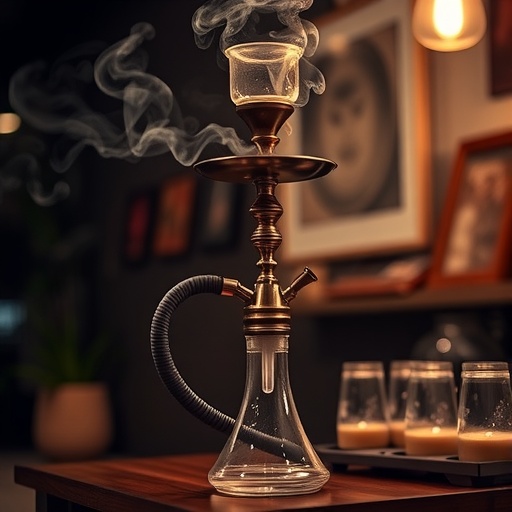
The public health implications of shisha smoking remain an underappreciated concern within the United Kingdom, despite its increasing prevalence. Recently highlighted in a detailed feature published by The BMJ, experts underscore the necessity for heightened awareness and targeted legislative measures to address the unique risks and growing popularity of shisha tobacco consumption. The Tobacco and Vapes Bill, currently progressing through the UK Parliament, presents a potential turning point in regulatory policy, though its current form may be insufficient without culturally sensitive interventions and dedicated community engagement.
Shisha, also known as hookah, narghile, or hubble-bubble, involves smoking a charcoal-heated tobacco mixture through a waterpipe apparatus. The UK hosts nearly a thousand shisha cafes, with London alone boasting more establishments than McDonald’s franchises. This widespread availability has entrenched shisha use particularly among younger demographics and certain ethnic minority communities, making it not just a social activity but a public health priority. Despite this prominence, shisha tobacco has notably escaped the rigorous regulatory frameworks that govern cigarette sales and consumption.
One of the critical regulatory gaps lies in the exclusion of shisha tobacco from flavor bans. Flavored tobacco products are well-known for enhancing the appeal of smoking, particularly among youth, by masking the harshness of tobacco and delivering appealing sensory experiences. The absence of licensing requirements for businesses retailing shisha tobacco further exacerbates this regulatory vacuum, fostering an environment where public health protections are inconsistently applied. Mohammed Jawad, a public health consultant specializing in shisha, points out that this dearth of regulation reflects broader underrecognition of shisha’s health risks.
From a toxicological standpoint, shisha smoking is comparably hazardous to cigarette smoking. Hazel Cheeseman of Action on Smoking and Health emphasizes that shisha delivers significant concentrations of harmful substances, including carbon monoxide, heavy metals, and carcinogens, through prolonged inhalation sessions often lasting an hour or more. The addition of flavors, while increasing attractiveness, may obscure these dangers, contributing to misconceptions about harm. This regulatory disparity thus represents a health inequality, as the legal frameworks governing tobacco effectively permit greater risks in shisha use.
Epidemiological research specific to shisha in the UK remains limited and dated, a shortfall that hampers effective public health interventions. Leena Ali from the University of York highlights that many shisha users, particularly those from Middle Eastern backgrounds where the practice has deep cultural roots, are underrepresented in existing data sets. This lack of representation restricts robust population surveillance and complicates the tailoring of health messages and policies that resonate culturally and socially with affected communities.
The distinct smoking patterns and apparatus characteristics of shisha present unique challenges in assessing its health impact. Unlike cigarettes, shisha use typically involves communal sharing of mouthpieces and long-duration sessions, substantially increasing exposure to toxins. Prolonged inhalation facilitates deeper pulmonary deposition of harmful substances, raising concerns beyond standard cigarette consumption metrics. Jawad cautions against oversimplifying shisha as merely an alternate form of cigarette smoking, emphasizing its distinctive exposure dynamics and risks.
The anticipated introduction of the Tobacco and Vapes Bill promises to harmonize regulations across tobacco products by incorporating flavor bans and licensing schemes applicable to shisha establishments. However, critics caution that the bill does not explicitly prioritize shisha, raising questions about adequate funding and enforcement. Additionally, changes such as raising the legal age for tobacco purchase might inadvertently shift shisha consumption trends into domestic settings where regulatory oversight is even more limited, potentially exacerbating harm.
Implementation delays compound these legislative challenges; with the bill not slated for enforcement until 2027, current public health efforts must fill the gap. Immediate priorities include the development of culturally tailored health communication strategies that respect community nuances while conveying the risks of shisha use. Jawad identifies a conspicuous absence of national anti-smoking campaigns addressing shisha, which fuels misinformation and perpetuates misconceptions about safety.
Community-driven research and interventions represent a promising avenue for advancing public health equity in this domain. Emphasizing health equity frames shisha regulation not as a cultural critique but as a necessary public health measure, enabling more effective engagement with affected populations. Local councils, such as Bradford, are beginning to take proactive steps in conducting granular epidemiological studies to inform targeted educational efforts, highlighting the critical role of localized data in combating shisha-associated harms.
Technically, shisha tobacco combustion generates a complex aerosol containing nicotine, polycyclic aromatic hydrocarbons (PAHs), volatile aldehydes, and particulate matter—all contributors to respiratory and cardiovascular disease burdens. These hazardous constituents stem from both the tobacco and the charcoal used as a heat source, compounding exposure. Inhalation through water-filtered apparatuses paradoxically encourages deeper and prolonged puffing due to perceived smoothness, intensifying the dose of toxins delivered to the lungs.
The intersection of cultural practice and public health policy presents a nuanced challenge. Shisha smoking often holds significant social and cultural value within various communities, necessitating that intervention strategies are sensitive rather than alienating. Empowering community leaders and leveraging culturally congruent communication channels will be essential to dismantling misinformation and encouraging behavior change without stigmatization.
In summation, the rising availability and use of shisha tobacco in the UK necessitate urgent, multifaceted public health responses. Legislative reforms, while vital, must be complemented by research investment, culturally attuned health messaging, and community empowerment. Only through comprehensive recognition of shisha’s distinct health risks and social contexts can effective mitigation of its public health implications be achieved.
Cite Scienmag News
Phoebe Ingram. (April 1, 2026). Shisha Smoking Remains an Underrecognized Public Health Concern. Scienmag. https://scienmag.com/shisha-smoking-remains-an-underrecognized-public-health-concern/
Phoebe Ingram. "Shisha Smoking Remains an Underrecognized Public Health Concern." Scienmag, 1 April 2026, https://scienmag.com/shisha-smoking-remains-an-underrecognized-public-health-concern/. Accessed 4 September 2026.
Phoebe Ingram. "Shisha Smoking Remains an Underrecognized Public Health Concern." Scienmag. April 1, 2026. https://scienmag.com/shisha-smoking-remains-an-underrecognized-public-health-concern/


