


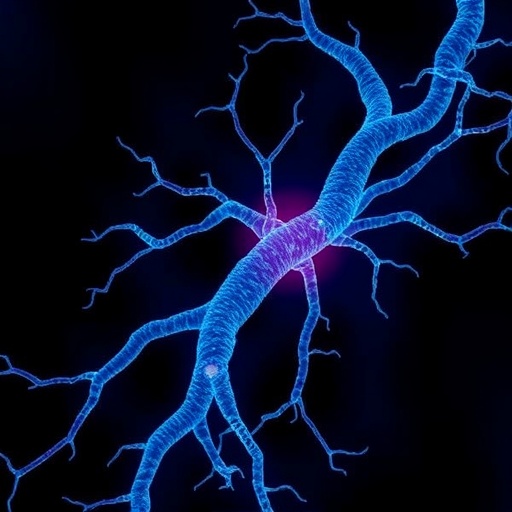
In a groundbreaking study published in Nature, researchers have uncovered a pivotal role of the transcription factor ATF4 in orchestrating the neuronal DNA damage response (DDR), revealing its essential function not in preventing damage but in actively repairing it. This new understanding challenges the long-held notion that ATF4 primarily acts as a cellular stress sentinel and instead positions it as a critical agent of neuronal resilience, especially during early cortical development.
The team investigated embryonic day 11.5 (E11.5) cortical neuronal progenitors (NPs) in mice lacking Atf4 specifically in the developing cortex. They observed a remarkable upregulation of DDR-related genes, which they interpreted as a compensatory but ultimately insufficient reaction to overwhelming DNA double-strand breaks (DSBs). Central to this deficiency is the disrupted phosphorylation of ATM kinase, a fundamental initiator of DSB repair signaling, highlighting the fragile balance neurons maintain to overcome genotoxic stresses during neurogenesis.
Intriguingly, while many accessory DDR factors were upregulated in Atf4-deficient NPs, the researchers speculated that alternative damage sensing pathways, such as ATR kinase—a key regulator of single-strand DNA break repair—might be compensatorily activated. This cross-talk between different DNA repair pathways underscores the complexity and redundancy of the neuronal DNA repair landscape but simultaneously underscores the irreplaceable role of the ATM-dependent DSB repair route modulated by ATF4.
Focusing on genes downregulated upon Atf4 loss, the scientists pinpointed Cirbp, Uba52, Ebf1, and Bcl6, all bearing putative ATF4-binding sites in their promoter regions. Chromatin immunoprecipitation coupled with quantitative PCR (ChIP–qPCR) confirmed ATF4 enrichment at the promoters of Cirbp, Uba52, and Ebf1, solidifying these as direct transcriptional targets. This precision transcriptional control suggests that ATF4’s regulatory scope extends into fine-tuning components vital for efficient DSB repair initiation.
Among these, Cirbp emerges as a critical player that modulates the association of the MRN complex (comprising MRE11, RAD50, and NBS1) and ATM kinase with chromatin, thereby facilitating the earliest steps in DSB repair. The transcription factor EBF1 plays a complementary role by regulating Rad51 expression—a linchpin of homologous recombination repair. Meanwhile, UBA52 is essential for orchestrating the spatiotemporal dynamics of DNA repair proteins at damage sites, interacting intimately with RNF168, a ubiquitin ligase integral to recruiting repair machineries.
The study’s functional assays employing luciferase reporters elegantly demonstrated ATF4’s potent transcriptional activation of Cirbp, Uba52, and Ebf1 promoters. Moreover, quantitative PCR and western blot analyses corroborated a significant downregulation of these genes at both mRNA and protein levels in Atf4-deficient cortical tissue, reinforcing ATF4’s central role in sustaining the DDR transcriptional network during early neural development.
Further mechanistic insights were gleaned from RNA interference experiments where knockdown of Cirbp, Uba52, or Ebf1 in neural stem cells led to heightened DNA damage signals, as evidenced by increased γH2AX foci and comet assays. These results underscore the indispensable nature of these targets in mitigating DNA damage-induced neuronal apoptosis, a process highlighted by enhanced cleaved caspase-3 staining upon gene suppression.
Conversely, overexpression of Atf4 or its direct targets provided a protective effect against aphidicolin-induced replication stress, markedly reducing neuronal apoptosis and DNA damage markers. This rescue experiment articulates the therapeutic potential of modulating ATF4 and its downstream effectors to promote genomic integrity in vulnerable neuronal populations.
Intriguingly, the study also utilized in utero electroporation of Cirbp-targeted shRNA into the developing mouse cortex, further illustrating a consequential reduction in phosphorylated ATM-positive cells and impaired neuronal differentiation. This in vivo evidence aligns well with in vitro data, emphasizing the translational relevance of ATF4-dependent pathways in cortical neurogenesis.
Moreover, subsequent analyses revealed that the delicate balance maintained by ATF4 and its targets influences the expansion and layering of cortical projection neurons, particularly the outer cortical CUX2-expressing neurons critical for higher cognitive functions. Disruption of this axis resulted in aberrant neuronal positioning and diminished cortical thickness, implicating DNA repair capacity as integral to proper brain architecture formation.
Collectively, these findings pivot the scientific conversation towards appreciating the DNA repair adaptations required for neuronal expansion and highlight ATF4 as a master transcriptional regulator facilitating this process. This work not only broadens our molecular understanding of neurodevelopmental DNA repair dynamics but also lays the groundwork for potential interventions in neurological disorders characterized by DNA repair deficiencies.
In conclusion, the elucidation of ATF4’s direct transcriptional control over pivotal DDR genes such as Cirbp, Uba52, and Ebf1 revolutionizes the conceptual framework around neural resilience to DNA damage. As neurons endure the rigors of developmental replication and differentiation, ATF4 ensures their survival by managing an intricate DNA repair program, ultimately securing brain development and function.
Cite Scienmag News
Cassandra Pierce. (April 2, 2026). CUX2 Neuron Growth Demands Enhanced DNA Repair. Scienmag. https://scienmag.com/cux2-neuron-growth-demands-enhanced-dna-repair/
Cassandra Pierce. "CUX2 Neuron Growth Demands Enhanced DNA Repair." Scienmag, 2 April 2026, https://scienmag.com/cux2-neuron-growth-demands-enhanced-dna-repair/. Accessed 4 September 2026.
Cassandra Pierce. "CUX2 Neuron Growth Demands Enhanced DNA Repair." Scienmag. April 2, 2026. https://scienmag.com/cux2-neuron-growth-demands-enhanced-dna-repair/


