


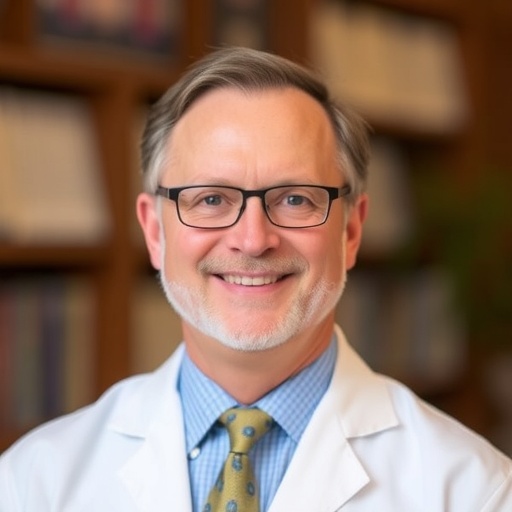
Dartmouth Cancer Center (DCC) has announced a transformative leadership change with the appointment of Roy S. Herbst, MD, PhD, as its sixth director. Herbst’s appointment represents a strategic move to deepen and broaden cancer research, education, and patient care across Dartmouth and Dartmouth Health. As one of only three National Cancer Institute-designated Comprehensive Cancer Centers in New England—and the only such center located outside a major metropolitan area—DCC holds a unique position in delivering cutting-edge oncology services to a broad geographical region encompassing southern New Hampshire and beyond.
The significance of Herbst’s leadership is underlined by the ambitions articulated by Joanne M. Conroy, MD, CEO and president of Dartmouth Health. Conroy highlighted DCC’s status as a cornerstone of Dartmouth Health’s mission to offer exemplary cancer care by harnessing a powerful network of clinicians and researchers. This network is poised for expansion through strategic initiatives under Herbst’s guidance, aiming to elevate the center’s patient care capabilities, increase participation in innovative clinical trials, and strengthen collaborations both regionally and nationally. The goal is audacious yet essential: to push toward a world without cancer through relentless scientific progress and clinical excellence.
Dartmouth President Sian Leah Beilock, PhD, echoed this enthusiasm by emphasizing the critical role DCC plays in addressing cancer care disparities, especially in rural northern New England. Herbst’s dual expertise in innovative research and clinical practice situates him uniquely to steer the center through an era characterized by rapid scientific breakthroughs and evolving treatment paradigms. His leadership is expected to invigorate DCC’s efforts to meet the complex needs of diverse patient populations and to extend the reach of sophisticated oncology services beyond traditional urban centers.
At its core, Dartmouth Cancer Center integrates cancer care, research, and education within a multi-institutional framework that spans Dartmouth’s Geisel School of Medicine and a network of 14 hospitals, clinics, and care teams across Dartmouth Health. This integration facilitates translational research where laboratory discoveries are swiftly converted into clinical protocols, with the dual benefit of offering patients local access to experimental therapies and contributing to global oncological knowledge. Under Herbst’s direction, this translational engine is set to accelerate further, delivering more precise and targeted treatments tailored to individual patient biology.
Before joining Dartmouth, Herbst served as deputy director and chief of medical oncology and hematology at Yale Cancer Center and Smilow Cancer Hospital. His tenure at Yale was marked by leadership in high-impact clinical and translational research programs, fostering robust partnerships between academia and industry, and pioneering novel clinical trial designs that have reshaped lung cancer therapy. These contributions have not only led to broader access to life-saving therapies but have redefined the standard of care in thoracic oncology, underscoring his capacity to translate complex molecular insights into tangible patient benefit.
Herbst’s leadership philosophy is grounded in bold collaboration and innovation. He envisions DCC advancing as a national leader by fostering a culture of inclusive excellence that promotes equitable access to world-class cancer care. The ambition extends beyond treatment to early detection and prevention, areas where biomarker-driven research and personalized medicine hold transformative potential. By leveraging Dartmouth’s multi-disciplinary resources and partnerships, Herbst aspires to create a comprehensive cancer care ecosystem with both local impact and global influence.
Konstantin H. Dragnev, MD, the interim director of DCC, attests to Herbst’s profound understanding of the continuum from basic molecular science to clinical applications. Dragnev points out that Herbst’s prior successes in expanding oncology services and enhancing collaborative research networks will be instrumental in elevating DCC’s national profile. This includes fortifying existing programs and launching innovative initiatives that harness biomarker-guided therapies, thereby personalizing treatment regimens for improved outcomes.
One hallmark of Herbst’s career is his pioneering work as the founding principal investigator of the National Cancer Institute-funded Yale Specialized Program of Research Excellence (SPORE) in Lung Cancer. He has been instrumental in the conceptualization and execution of adaptive trial designs such as the Biomarker-integrated Approaches of Targeted Therapy for Lung Cancer Elimination (BATTLE) study, which revolutionized lung cancer clinical trials by integrating biomarker data for real-time therapeutic matching. Complementing this is his stewardship of the Lung Master Protocol (Lung-MAP), a multi-arm biomarker-driven platform clinical trial that epitomizes precision oncology by aligning patient tumors with optimal investigational therapies.
Herbst’s scientific contributions have translated into the regulatory approval of multiple novel therapeutic agents now entrenched in lung cancer treatment guidelines, significantly altering the prognosis of what was once an almost uniformly fatal disease. His ongoing research endeavors focus on mechanisms of resistance, earlier disease detection, and the development of combination therapies designed to overcome tumor heterogeneity and improve long-term survival.
Beyond his scientific achievements, Herbst is renowned for his commitment to education and mentorship. His prolific scholarship includes over 500 articles that have shaped clinical protocols worldwide. He is also a vocal advocate for tobacco control policies, including regulations targeting e-cigarettes, which he views as critical public health measures in cancer prevention. His policy advocacy has extended to multiple congressional briefings, influencing legislative frameworks related to cancer risk reduction.
Herbst’s academic training is exemplary and multidisciplinary. He attended medical school at Cornell University and earned his PhD in molecular cell biology at The Rockefeller University. He holds master’s degrees in molecular biophysics and biochemistry from Yale and in clinical translational research from Harvard. His clinical training includes fellowships in medical oncology and hematology at Dana-Farber Cancer Institute and Brigham and Women’s Hospital, respectively, institutions at the forefront of cancer care and research specialization.
Internationally recognized for his scientific excellence, Herbst has received prestigious awards including the Paul Bunn Scientific Award from the International Association for the Study of Lung Cancer (IASLC) and the American Association for Cancer Research Distinguished Public Service Award. These honors reflect not only his scientific prowess but also his leadership in shaping cancer science policy. Herbst will officially assume his directorial responsibilities at Dartmouth Cancer Center on July 13, marking the beginning of a new chapter in the institution’s illustrious trajectory.
The Dartmouth Cancer Center community also expressed appreciation for Konstantin H. Dragnev, MD, whose interim leadership has been instrumental in maintaining momentum and stability during this transition. Dragnev’s stewardship has ensured that the center remains on course for continued innovation and excellence as it welcomes its new director.
With Herbst’s appointment, Dartmouth Cancer Center positions itself at the nexus of scientific discovery and compassionate care, reaffirming its dedication to push beyond conventional boundaries in oncology. As the landscape of cancer treatment evolves rapidly—with advances in immunotherapy, genomics, and biomarker-guided therapies—DCC under Herbst’s direction is poised to harness these scientific breakthroughs to improve patient survival and quality of life, while reducing disparities through community-focused initiatives.
This leadership transition heralds a promising era at Dartmouth Cancer Center where translational medicine, empowered by an integrative institutional framework, drives a mission not just of survival but of thriving beyond cancer.
Cite Scienmag News
Nathaniel Bowman. (March 31, 2026). Dartmouth Cancer Center Appoints Internationally Renowned Cancer Research Pioneer Roy Herbst, MD, Ph.D., as New Leader. Scienmag. https://scienmag.com/dartmouth-cancer-center-appoints-internationally-renowned-cancer-research-pioneer-roy-herbst-md-ph-d-as-new-leader/
Nathaniel Bowman. "Dartmouth Cancer Center Appoints Internationally Renowned Cancer Research Pioneer Roy Herbst, MD, Ph.D., as New Leader." Scienmag, 31 March 2026, https://scienmag.com/dartmouth-cancer-center-appoints-internationally-renowned-cancer-research-pioneer-roy-herbst-md-ph-d-as-new-leader/. Accessed 3 September 2026.
Nathaniel Bowman. "Dartmouth Cancer Center Appoints Internationally Renowned Cancer Research Pioneer Roy Herbst, MD, Ph.D., as New Leader." Scienmag. March 31, 2026. https://scienmag.com/dartmouth-cancer-center-appoints-internationally-renowned-cancer-research-pioneer-roy-herbst-md-ph-d-as-new-leader/


