


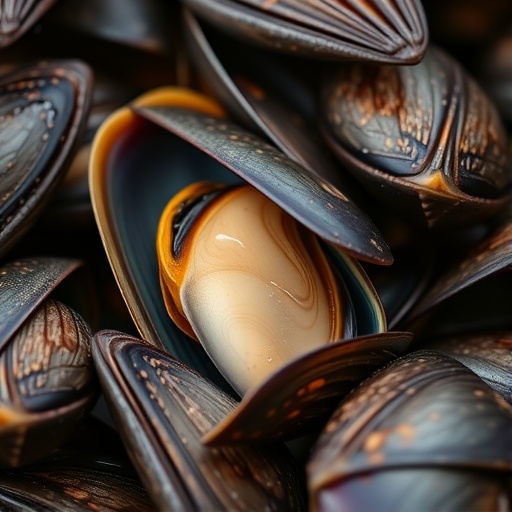
In the relentless ebb and flow of the tides along Washington state’s rugged shores, intertidal mussels endure some of the most drastic temperature fluctuations on Earth. These bivalves, which form densely clustered biofilms on rocky substrates, confront temperatures that can swing wildly within a single day, alternating between the chill of ocean water and the intense solar heat exposure at low tide. New research emerging from the University of Washington’s Friday Harbor Laboratories reveals that the metabolic health of these mussels is deeply influenced not merely by the highs and lows of temperature but profoundly by the speed, timing, and duration of these thermal changes.
Mussels inhabit a uniquely volatile thermal environment, experiencing temperature variations that differ starkly in pattern and intensity throughout the day. This exposure challenges their physiological systems, demanding not just survival but constant metabolic adaptation. The latest study, published in the prestigious Proceedings of the Royal Society B, delves into how the dynamic nature of temperature fluctuations — rather than merely average temperatures — affects the metabolic rates of these intertidal organisms, which serve as a critical proxy for their overall health and resilience.
Traditionally, climate-related research focused predominantly on mean temperature increases as the primary metric for assessing biological impacts. However, this new work highlights a paradigm shift by emphasizing the role of temperature variability itself — the rhythm and pace of warming and cooling episodes — as a critical determinant in shaping physiological responses. The experimental protocol employed by Michael Nishizaki and colleagues involved exposing mussels to carefully controlled temperature regimens, where peak highs and lows remained constant, but the patterns of change differed significantly.
This approach allowed the scientists to disentangle the effects of thermal variability from the effects of steady average temperatures. Strikingly, they found that even when mussels experienced the same mean temperature, their metabolic rates varied distinctly depending on how quickly temperatures rose or dropped, and how long extreme conditions persisted. These findings underscore the complexity of environmental stressors in nature and indicate that traditional predictions based on average warming alone may underestimate or misinterpret organismal responses to climate fluctuations.
Metabolic rate, a central physiological parameter measured during the study, provides insights into energy expenditure and overall biological functioning. As ectothermic animals, mussels’ metabolism directly responds to external temperatures, which regulate enzymatic activities and cellular processes. The study demonstrated that rapid shifts in temperature could trigger metabolic responses that were substantially different from more gradual transitions, even when the total energy input to the system remained the same.
Such discoveries have profound implications for our understanding of ecological resilience. Intertidal mussels are not only ecologically significant due to their role in coastal food chains and habitat formation but also economically important through their harvest as a seafood source. Understanding how these basic environmental factors influence their physiology is crucial for predicting and managing the consequences of ongoing climate variability and change.
The researchers’ utilization of realistic, time-varying temperature profiles marks a significant advance over previous studies that often relied on constant or simplified thermal regimes. By mimicking natural thermal fluctuations within laboratory settings, the team could accurately recreate the complex thermal landscapes that mussels experience, enabling more precise interpretations of their metabolic performance under environmental stress.
Lead author Michael Nishizaki, an assistant professor of biology at the College of the Holy Cross and a mentor within the University of Washington’s Friday Harbor Laboratories’ REU program, emphasizes the necessity of considering temporal temperature dynamics when assessing climate change impacts. His insights suggest that models predicting marine organism health must incorporate metrics that capture the temporal complexity of temperature exposure, including variation frequency, duration, and thermal transition rates.
Sara (Grace) Leuchtenberger, a co-author affiliated with the University of Washington, also contributed to dissecting the nuanced physiological responses observed. Their combined efforts revealed that mussels do not respond in a simplistic linear fashion to temperature changes but exhibit adaptive or stress responses finely tuned to the intricate thermal patterns they experience in situ.
This research opens new avenues for further investigations into the mechanisms that confer thermal tolerance and stress mitigation in marine invertebrates. Researchers hope that deciphering these biological processes will enable the development of robust predictive tools essential for conservation strategies, especially as climate models forecast not only warming but increased frequency of extreme and erratic weather patterns.
The implications extend beyond environmental physiology, offering vital clues about broader ecosystem stability. Intertidal zones, known for their ecological diversity and productivity, may face unprecedented challenges as thermal variability intensifies. Understanding how foundation species like mussels withstand or succumb to these changes offers a window into future coastal ecosystem dynamics and the potential cascading effects on biodiversity and human industries reliant on these habitats.
In summary, this groundbreaking study articulates a compelling narrative: the way temperature changes – its tempo and persistence – is just as critical as the absolute temperature levels in shaping physiological outcomes for intertidal mussels. These insights demand a recalibration of research paradigms around climate impact assessments for marine organisms, emphasizing complexity, realism, and temporal specificity.
This detailed examination of temperature variability thus heralds a new chapter in climate biology, where embracing the intricacies of environmental fluctuation is essential for safeguarding the health and viability of species inhabiting some of the most thermally challenging frontiers on the planet.
Cite Scienmag News
Violet Maxwell. (March 27, 2026). How Temperature Fluctuations Shape Heat Tolerance in Mussels. Scienmag. https://scienmag.com/how-temperature-fluctuations-shape-heat-tolerance-in-mussels/
Violet Maxwell. "How Temperature Fluctuations Shape Heat Tolerance in Mussels." Scienmag, 27 March 2026, https://scienmag.com/how-temperature-fluctuations-shape-heat-tolerance-in-mussels/. Accessed 3 September 2026.
Violet Maxwell. "How Temperature Fluctuations Shape Heat Tolerance in Mussels." Scienmag. March 27, 2026. https://scienmag.com/how-temperature-fluctuations-shape-heat-tolerance-in-mussels/


