

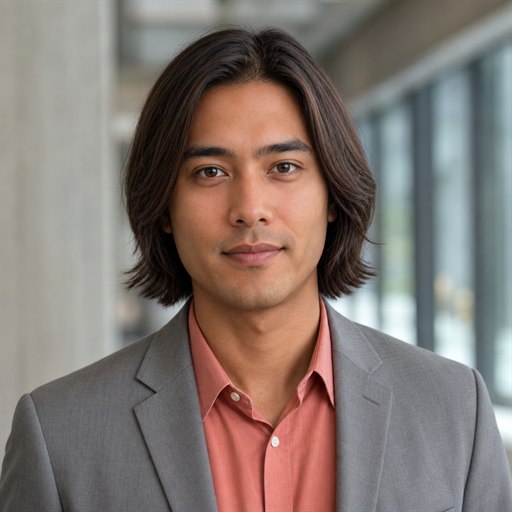
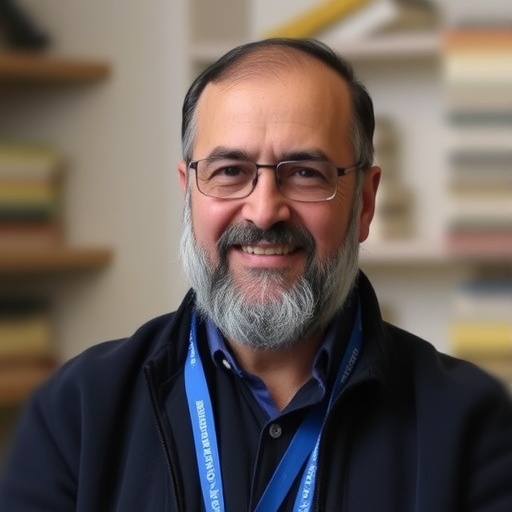
In a landmark announcement on World Water Day at UNESCO Headquarters, Paris, Professor Kaveh Madani, a leading water resources expert and Research Professor at the City College of New York, was named the recipient of the 2026 Stockholm Water Prize. The prize, known as the “Nobel Prize of Water,” represents the highest global honor for extraordinary achievements in water science, governance, and sustainability. This prestigious accolade is scheduled to be officially presented by His Majesty King Carl XVI Gustaf of Sweden during World Water Week in Stockholm in August 2026.
Professor Madani’s award marks a historic milestone; at 44 years old, he is the youngest laureate in the prize’s 35-year history and uniquely the first former United Nations official and former politician to receive this honor. His path to recognition was marked by exceptional resilience and a remarkable journey from academic rigor to political adversity, ultimately shaping his exceptional global leadership in water management science.
Born in Tehran in 1981 to parents working in Iran’s water sector, Madani’s early immersion in a country facing severe hydrological challenges shaped his enduring commitment to water sustainability. He pursued his BSc in Civil Engineering at the University of Tabriz before moving to Sweden to obtain an MSc in Water Resources from Lund University—a country that would later honor him with this prize. Subsequently, he earned a PhD from the University of California, Davis, and post-doctoral experience at University of California, Riverside, further honing his expertise in water system dynamics.
By his early 30s, Madani had established himself as a pioneering researcher at Imperial College London, where he revolutionized conventional water resource management by integrating game theory and decision analysis into system-wide models. His innovative interdisciplinary approaches exposed the flaws in standard cooperative frameworks by accounting for individual incentives and complex human behaviors, fundamentally shifting the way transboundary water governance and policy making are conceived and enacted worldwide.
In 2017, Madani accepted an invitation from the Iranian government to serve as Deputy Vice President and Deputy Head of Iran’s Department of Environment. His tenure was marked by bold reforms aimed at enhancing water governance and public engagement in environmental protection, often leveraging behavioral science and game theoretical insights to design national campaigns. These initiatives placed him at odds with entrenched political interests, which retaliated with a severe smear campaign branding him a “water terrorist,” accusing him incorrectly of espionage and subversion linked to Western intelligence agencies.
Despite his prominent governmental role, Madani faced orchestrated political persecution, including multiple arrests and interrogations by the Iranian Revolutionary Guard Corps. This hostile climate forced him into exile in 2018, ending his direct engagement with his homeland. Nevertheless, Madani continued to advocate for Iran’s water crisis from abroad, eventually ascending to lead the United Nations University Institute for Water, Environment and Health (UNU-INWEH), widely regarded as the United Nations’ global water think tank.
Madani’s scholarship has broken new ground by challenging the assumptions embedded in classical human-water systems modeling. His application of non-cooperative game theory frameworks illuminated why conventional water management approaches often fail in practice: because individuals and states prioritize self-interest, leading to suboptimal outcomes in shared basins. This breakthrough has provided crucial tools for addressing complex hydropolitical conflicts, particularly in regions with fragmented trust and competing interests.
Central to Madani’s influence is his conceptualization of ‘water bankruptcy,’ a paradigm-shifting idea that transcends typical notions of a temporary water crisis. He articulates water bankruptcy as a chronic, systemic failure in water management where river basins and aquifers lose their resilience irrevocably. This framework was recently formalized in a landmark United Nations report that declared the planet had entered an era of global water bankruptcy as of early 2026, fundamentally altering global discourse on water security and sustainability.
This metaphorical financial language—treating water resources in terms analogous to principal and interest—clearly communicates the ecological reality: humanity is exhausting freshwater reserves beyond natural replenishment. Madani’s framing challenges policymakers to pivot from transient crisis management toward long-term bankruptcy management strategies, thereby prompting reassessments of water governance policies worldwide.
Beyond his academic and diplomatic accomplishments, Madani is noted for his exceptional public engagement. With a social media following approaching one million, he has embraced modern communication platforms to democratize scientific knowledge and empower citizen activists. His efforts have equipped a new generation of individuals with the tools to advocate for environmental justice, transparency, and sustainable resource use through accessible storytelling and innovative digital outreach.
During his political career, Madani also emerged as a skilled global diplomat. He served as Iran’s lead environmental diplomat and chaired critical international environmental negotiations. Notably, at COP23 in Bonn, he became the first national delegation leader to publicly call out the insufficient integration of water issues within the Paris Climate Agreement framework. Today, as Director of UNU-INWEH, he continues to champion water’s central role in climate discussions and sustainable development agendas, particularly emphasizing the needs and vulnerabilities of the Global South.
Professor Madani’s journey is emblematic of the complex interplay between science, politics, and human rights. Facing allegations and political exile for advocating scientific truth, he symbolizes the universal struggle to secure water as a fundamental human right and as a critical element of global peace. Amidst ongoing Middle Eastern conflicts, his message resonates with urgency, reminding the world that water scarcity transcends geopolitical divides and demands cooperative solutions.
The official citation from the Stockholm Water Prize Committee highlights Madani’s rare integration of innovative research, policy development, diplomatic engagement, and public outreach accomplished under personal risk and political adversity. His work not only advances the scientific understanding of water systems but also actively shapes global water governance frameworks in a rapidly changing climatic and political environment.
As the world confronts unprecedented water challenges, Professor Kaveh Madani’s scholarship and leadership offer a beacon of hope and a blueprint for sustainable water futures. His career exemplifies how scientific innovation coupled with courageous advocacy can redefine global priorities and inspire collective action towards equitable and resilient water management.
News Publication Date: March 18, 2026
Web References:
– UNU-INWEH: https://unu.edu/inweh
– Stockholm Water Prize: https://stockholmwaterfoundation.org/stockholm-water-prize
– Kaveh Madani’s personal site: https://www.kavehmadani.com/about
– Iran’s expat eco-warrior article: https://thearabweekly.com/kaveh-madani-irans-expat-eco-warrior-who-was-too-many-fronts
– UN Global Water Bankruptcy Report: https://unu.edu/inweh/collection/global-water-bankruptcy
Cite Scienmag News
Russell Cooper. (March 18, 2026). From ‘Water Terrorist’ to Nobel Laureate: Kaveh Madani Awarded 2026 Stockholm Water Prize. Scienmag. https://scienmag.com/from-water-terrorist-to-nobel-laureate-kaveh-madani-awarded-2026-stockholm-water-prize/
Russell Cooper. "From ‘Water Terrorist’ to Nobel Laureate: Kaveh Madani Awarded 2026 Stockholm Water Prize." Scienmag, 18 March 2026, https://scienmag.com/from-water-terrorist-to-nobel-laureate-kaveh-madani-awarded-2026-stockholm-water-prize/. Accessed 3 September 2026.
Russell Cooper. "From ‘Water Terrorist’ to Nobel Laureate: Kaveh Madani Awarded 2026 Stockholm Water Prize." Scienmag. March 18, 2026. https://scienmag.com/from-water-terrorist-to-nobel-laureate-kaveh-madani-awarded-2026-stockholm-water-prize/


