


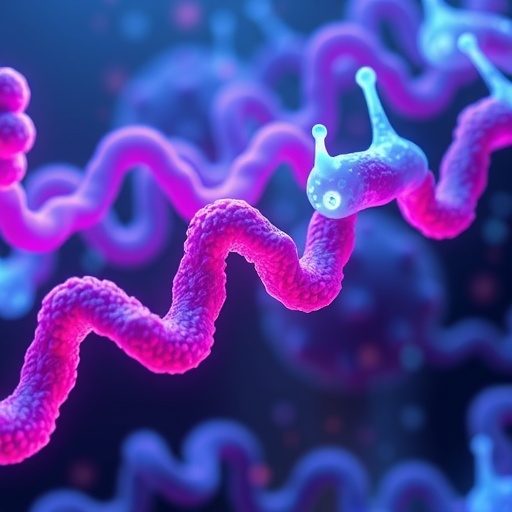
In a groundbreaking leap forward for molecular biology, researchers at Stanford University have unveiled a revolutionary method for decoding proteins with unprecedented precision and scalability. Published recently in Nature Biotechnology, this new technique promises to reshape how scientists visualize proteins — the complex molecules at the heart of all living processes — by utilizing the power and efficiency of modern DNA sequencing technology.
Proteins, composed of strings of amino acids, are fundamental actors within cells, responsible for everything from structural support to signaling and enzymatic functions. Despite their pivotal roles, deciphering the sequence and conformation of proteins has persistently challenged scientists. Unlike DNA, which contains a relatively simple alphabet of four nucleotide bases, proteins are built from 20 distinct amino acids that are both more numerous and significantly smaller, complicating detection and sequencing efforts.
The Stanford research team, led by the distinguished bioengineer H. Tom Soh, approached this challenge by innovating a chemical process that effectively reverse-engineers protein sequences back into DNA sequences. This “reverse translation” allows researchers to take advantage of the highly refined, rapid, and cost-effective DNA sequencing platforms that have transformed genomics. By translating protein information into a DNA-readable format, scientists now have the potential to unlock protein data at scales and sensitivities previously thought unattainable.
A central problem in protein sequencing is the sheer complexity in differentiating among the 20 amino acids. Traditional techniques like mass spectrometry can analyze vast numbers of molecules but are limited in the proportion they effectively detect. As Liwei Zheng, the study’s first author, explains, mass spectrometry typically observes only a minuscule fraction of proteins in a sample. This novel method promises a thousand-fold increase in sensitivity, potentially revealing rare and elusive proteins critical to understanding diseases and biological diversity.
The ingenuity of this new method lies in its use of DNA barcoding to tag individual amino acids along a protein’s peptide chain. Synthetic DNA sequences serve as distinct identifiers for each peptide and, in combination with antibodies, encode protein identity and molecular position. This molecular tagging transforms the protein sequence into a DNA sequence, which can then be decoded using routine high-throughput DNA sequencing technologies, bypassing many traditional hurdles in protein analysis.
Such advancements herald new research possibilities in areas like cellular heterogeneity at the nanoscale. Scientists have long been perplexed by why genetically identical cells can behave differently in health and disease. This technology enables direct observation of protein differences at the single-molecule level, potentially illuminating why varying cellular responses occur within tumors or immune systems.
Importantly, the implications extend to the realm of immunotherapy. Treatments like CAR-T cell therapy, which reprogram immune cells to attack cancer, have shown remarkable success, yet their efficacy varies widely. By precisely analyzing the protein profiles of responsive versus non-responsive immune cells, researchers can uncover the molecular underpinnings of treatment success, paving the way for more effective, personalized cancer therapies.
Currently, this pioneering protein sequencing method is moving beyond the lab bench toward commercialization. The goal is to develop a turnkey instrument where researchers can introduce samples and rapidly obtain comprehensive protein sequence data with minimal manual intervention. Such automation would democratize access to protein sequencing technology and accelerate discoveries across biomedical research domains.
Despite being at an early developmental stage, this technology’s ability to scale and sensitivity distinguishes it markedly from prior sequencing attempts. Once proteins are translated into DNA signals, the rich ecosystem of DNA replication and manipulation tools can be employed—lengthening, copying, and modifying sequences—making protein analysis more adaptable and versatile.
The potential scientific breakthroughs are vast. By finally providing a reliable tool to read proteins at scale and with high resolution, this method may become an essential asset in molecular biology, enabling researchers to delve deeper into the molecules orchestrating life. The future holds promise for unraveling protein structures and functions one cell at a time, a monumental step forward in understanding biology’s most intricate machinery.
The team responsible for this work includes researchers Yujia Sun, Linus Hein, and Michael Eisenstein, among others. Their efforts have also led to a pending patent, underscoring the novel nature of their technological innovation. Supported by generous funding from the Helmsley Charitable Trust and the Wellcome Leap SAVE program, the project utilized advanced mass spectrometry tools, reinforcing the team’s rigorous experimental framework.
By harnessing synthetic biology and cutting-edge DNA sequencing, Stanford’s researchers have ushered in a new frontier in protein science. As this technique matures and integrates into mainstream research, it could catalyze a paradigm shift—providing insights into protein biology that were once beyond reach and propelling forward many fields including cancer research, immunology, and personalized medicine.
Keywords
Protein sequencing, DNA barcoding, bioengineering, molecular biology, protein analysis, synthetic DNA, immunotherapy, single-cell proteomics, mass spectrometry, CAR-T cell therapy, reverse translation, high-throughput sequencing
Cite Scienmag News
Gregory Coleman. (March 18, 2026). Breakthrough in Protein Sequencing Sheds New Light on the Foundations of Life. Scienmag. https://scienmag.com/breakthrough-in-protein-sequencing-sheds-new-light-on-the-foundations-of-life/
Gregory Coleman. "Breakthrough in Protein Sequencing Sheds New Light on the Foundations of Life." Scienmag, 18 March 2026, https://scienmag.com/breakthrough-in-protein-sequencing-sheds-new-light-on-the-foundations-of-life/. Accessed 3 September 2026.
Gregory Coleman. "Breakthrough in Protein Sequencing Sheds New Light on the Foundations of Life." Scienmag. March 18, 2026. https://scienmag.com/breakthrough-in-protein-sequencing-sheds-new-light-on-the-foundations-of-life/


