


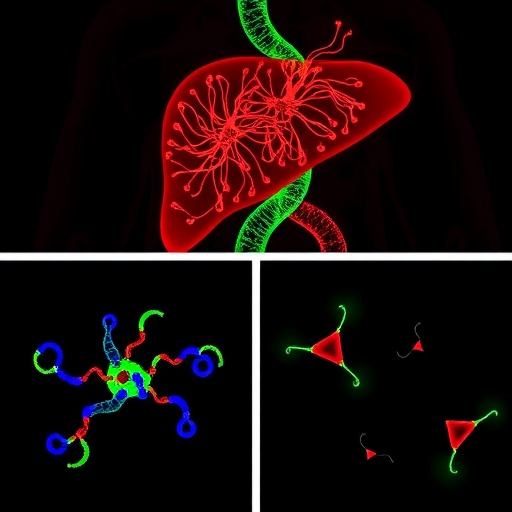
In a groundbreaking study published in the esteemed journal Genes & Immunity, researchers have unveiled the intricate regulatory mechanisms governing the ALKBH5/CIITA axis and its profound impact on hepatocellular carcinoma (HCC) treatment. This discovery sheds light on how the interplay between radiotherapy and immunotherapy can be synergistically enhanced, offering fresh hope for patients afflicted with one of the most lethal liver cancers worldwide. The work, led by Wang, F., Hou, H., Yang, H., and colleagues, provides a compelling molecular framework that could revolutionize current therapeutic strategies.
Hepatocellular carcinoma remains a formidable challenge due to its aggressive nature and limited responsiveness to conventional therapies. The combination of radiotherapy and immunotherapy has emerged as a promising approach, but the underlying factors that dictate treatment efficacy have remained elusive. This study meticulously explores the molecular crosstalk centered around ALKBH5, an RNA demethylase, and CIITA, a key transcriptional activator involved in immune regulation, unveiling how their axis modulates tumor dynamics to influence patient outcomes.
At the heart of this research lies the catalytic activity of ALKBH5, which demethylates N6-methyladenosine (m6A) modifications on RNA molecules, thus regulating their stability and translation efficiency. ALKBH5’s influence on the tumor microenvironment has been a subject of emerging interest, yet its connection with immune signaling pathways had not been fully deciphered until now. The authors demonstrate that ALKBH5 directly modulates the expression of CIITA, which controls the major histocompatibility complex class II (MHC-II) expression, a vital component for antigen presentation and subsequent T-cell activation.
Delving deeper, the researchers elucidated how ALKBH5-mediated m6A demethylation impacts the transcriptional landscape of CIITA, thereby tuning the immune competence of tumor cells. Their findings indicate that heightened ALKBH5 activity leads to an upregulation of CIITA, effectively priming the tumor microenvironment to become more receptive to immune cell infiltration. This molecular axis functions as a pivotal regulator, orchestrating the balance between tumor immune evasion and immune recognition, which is crucial for the success of immunotherapy modalities.
Employing a suite of advanced experimental techniques, including RNA sequencing, epigenetic profiling, and in vivo tumor models, the authors convincingly show that perturbing the ALKBH5/CIITA axis sensitizes HCC tumors to radiotherapy. The DNA damage induced by radiotherapy, which historically has focused on direct cytotoxicity, also modulates immune-related pathways synergistically when combined with ALKBH5-driven enhancement of antigen presentation. This dual modulation substantially amplifies the recruitment and activation of cytotoxic T lymphocytes within the tumor milieu.
This study’s translational potential is underscored by clinical data analysis revealing that patients with elevated ALKBH5 and CIITA expression in tumor biopsies correspond to better therapeutic responses and improved overall survival rates. These biomarkers provide a compelling rationale for stratifying patients who are likely to benefit from combined radiotherapy and immunotherapy regimens, paving the way for personalized medicine in HCC management.
Intriguingly, the regulatory mechanisms delineated extend beyond a unidirectional pathway. Feedback loops involving immune checkpoint molecules and cytokine signaling further enrich the complexity of the ALKBH5/CIITA axis. The authors identify crosstalk between interferon-gamma signaling and the epigenetic modifications mediated by ALKBH5 as critical elements that sustain immune activation post-radiotherapy, highlighting potential targets for novel combinatorial therapies.
In light of the immunosuppressive tumor microenvironment characteristic of HCC, the ability of ALKBH5 to enhance CIITA-driven MHC-II expression represents a major breakthrough. Manipulating this pathway may counteract immune exhaustion and reinvigorate tumor-specific immune responses. Furthermore, the study proposes that ALKBH5 inhibitors or activators could be harnessed to fine-tune antigen presentation processes, thereby maximizing immunotherapeutic efficacy when paired with conventional treatments.
The implications of this research resonate widely across oncology and immunology fields. By bridging RNA epigenetics with immune regulation and radiobiology, this work exemplifies a multidisciplinary approach necessary for overcoming the hurdles in cancer therapy. The prospect of manipulating RNA modifications to remodel tumor immunity introduces an innovative paradigm with far-reaching impact beyond hepatocellular carcinoma, potentially applicable to various solid tumors.
From a therapeutic development perspective, the elucidation of the ALKBH5/CIITA axis offers new avenues for drug discovery. Targeted molecules aimed at modulating this axis could serve as adjuvants to enhance patient responsiveness or overcome resistance mechanisms that frequently undermine radiotherapy and immunotherapy success. Given the dynamic nature of the tumor-immune interface, such interventions could adaptively augment immune surveillance and tumor eradication.
What sets this study apart is its comprehensive integration of molecular biology, immunology, and clinical insights. By dissecting the epitranscriptomic regulation of antigen presentation machinery, the researchers provide a molecular rationale for designing next-generation cancer therapies that synergize external tumor targeting with internal immune system mobilization. This dual-action framework may ultimately translate into more durable remissions and reduced relapse rates.
The authors also address potential challenges and future directions, emphasizing the need for extensive clinical trials to validate the prognostic and therapeutic utility of ALKBH5 and CIITA modulation. Additionally, exploring the interplay of other RNA modification enzymes and immune regulators could unravel further complexity and opportunities to refine combinational regimens tailored to individual tumor profiles.
Another fascinating aspect discussed involves the potential resistance mechanisms that tumors might deploy against ALKBH5/CIITA axis modulation. Tumors often adapt through genetic and epigenetic plasticity, and understanding these escape pathways will be critical to sustaining therapeutic gains. Hence, continuous monitoring and adaptive treatment strategies will be indispensable components moving forward.
Ultimately, this study pioneers a novel conceptual framework that redefines the intersection of epitranscriptomics and cancer immunotherapy. As the oncology community seeks to transcend current therapeutic plateaus, unraveling the ALKBH5/CIITA axis provides a beacon guiding innovative interventions that harness the full potential of immune-mediated tumor clearance.
This landmark discovery heralds a new era, inviting researchers and clinicians alike to rethink the dynamics of cancer treatment. By targeting the molecular rulers of immune competence within tumors, we inch closer to achieving the elusive goal of effective, personalized, and lasting cancer eradication.
Cite Scienmag News
Nathaniel Bowman. (March 10, 2026). ALKBH5/CIITA Axis Enhances Liver Cancer Therapy Synergy. Scienmag. https://scienmag.com/alkbh5-ciita-axis-enhances-liver-cancer-therapy-synergy/
Nathaniel Bowman. "ALKBH5/CIITA Axis Enhances Liver Cancer Therapy Synergy." Scienmag, 10 March 2026, https://scienmag.com/alkbh5-ciita-axis-enhances-liver-cancer-therapy-synergy/. Accessed 3 September 2026.
Nathaniel Bowman. "ALKBH5/CIITA Axis Enhances Liver Cancer Therapy Synergy." Scienmag. March 10, 2026. https://scienmag.com/alkbh5-ciita-axis-enhances-liver-cancer-therapy-synergy/


