


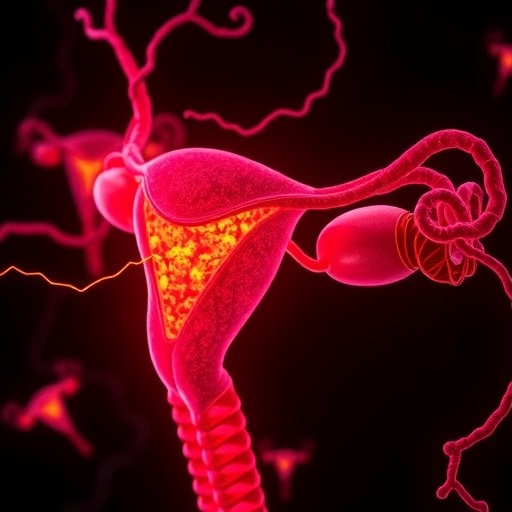
In a groundbreaking study poised to transform our understanding of uterine biology and endometriosis, researchers have unveiled the pivotal role of the transcription factor TCF21 in orchestrating epithelial-to-mesenchymal transition (EMT) and cytoskeletal dynamics. This research, published in Nature Communications, elucidates the molecular mechanisms through which TCF21 influences uterine development and contributes to the pathogenesis of endometriosis, a complex and often debilitating gynecological disorder affecting millions worldwide.
Epithelial-to-mesenchymal transition is a fundamental biological process where epithelial cells, characterized by tight cell-to-cell adhesion and polarity, transform into mesenchymal cells possessing enhanced migratory and invasive properties. EMT is not only critical during embryonic development and tissue remodeling but also plays a sinister role in fibrotic diseases and cancer metastasis. However, its function in uterine physiology and pathology has remained elusive until now.
The research team, led by Zhu, Wu, and Ma, employed advanced genetic manipulation and cell imaging techniques to investigate the role of TCF21 in uterine tissues. Their findings revealed that TCF21 acts as a master regulator, binding to specific promoter regions on DNA to activate the transcriptional program necessary for initiating EMT. This transcription factor fundamentally alters cellular architecture by downregulating epithelial markers such as E-cadherin while upregulating mesenchymal markers including N-cadherin and vimentin.
One of the remarkable discoveries from this study is how TCF21 modulates cytoskeleton reorganization. The cytoskeleton, composed of actin filaments, microtubules, and intermediate filaments, controls cell shape, polarity, and motility. Through comprehensive proteomic and imaging analyses, the researchers demonstrated that TCF21 influences actin polymerization dynamics and focal adhesion turnover. These changes facilitate the morphological plasticity and motility of uterine cells, essential for proper tissue remodeling during uterine development.
The implications for endometriosis are particularly compelling. Endometriosis involves the ectopic growth of endometrial-like tissue outside the uterus, leading to chronic inflammation, pain, and infertility. The aberrant activation of EMT in endometrial cells is postulated to promote their invasiveness and ability to implant ectopically. Zhu and colleagues provided compelling evidence that heightened TCF21 expression correlates with increased EMT markers in endometriotic lesions, suggesting that dysregulated TCF21-driven EMT contributes to disease progression.
Beyond molecular characterization, this study leveraged animal models genetically engineered to overexpress or ablate TCF21 in uterine tissues. Mice with TCF21 overexpression exhibited profound uterine architectural defects reminiscent of EMT-driven remodeling. Conversely, TCF21 knockout models displayed impaired uterine development, highlighting its indispensable role in reproductive tract formation.
These findings open new avenues for therapeutic intervention. Targeting TCF21 or its downstream signaling pathways could potentially modulate EMT activity, offering novel treatment strategies for endometriosis and possibly uterine developmental disorders. Given the limited efficacy and side effects of current endometriosis treatments, such molecularly targeted therapies represent a significant advance.
Technically, the study integrates transcriptomic sequencing, chromatin immunoprecipitation assays, and high-resolution microscopy, providing a multi-layered perspective on TCF21’s function within uterine cells. This methodological rigor ensures that the conclusions drawn are robust and reproducible, setting a new standard for mechanistic studies in reproductive biology.
The researchers also delved into the relationship between TCF21 and known EMT signaling pathways such as TGF-β, Wnt/β-catenin, and Notch. Their data suggested that TCF21 not only acts downstream of these pathways but may also serve as a critical node integrating multiple extracellular signals into a coherent transcriptional response that drives EMT and cytoskeletal reorganization.
From a broader perspective, this work enhances our conceptual framework for how transcription factors coordinate cellular plasticity in adult tissues. It challenges prior assumptions that EMT in the uterus is a secondary or ancillary event by demonstrating TCF21’s central, indispensable role. This paradigm shift could lead to revised models of tissue homeostasis and repair in female reproductive organs.
Importantly, the study also addresses the heterogeneity of endometriotic lesions by examining TCF21 expression across different lesion types and stages. These nuanced observations imply that TCF21-mediated EMT may contribute variably to disease phenotypes, underscoring the necessity for personalized treatment approaches.
The translational potential is further amplified by the identification of pharmacological agents that modulate TCF21 activity. Preliminary drug screening revealed that certain small molecules can attenuate TCF21 expression or its transcriptional activity, thereby suppressing EMT markers in uterine cell cultures. Future work will be crucial to evaluate the safety and efficacy of such agents in clinical settings.
This research not only deepens our understanding of uterine biology but also has profound implications for women’s health globally. Endometriosis remains an understudied and often misdiagnosed condition; insights into its molecular drivers like TCF21 promise to improve diagnostic accuracy and therapeutic outcomes significantly.
The clarity with which this study delineates the molecular crosstalk orchestrated by TCF21 presents a compelling narrative about the intricate interplay between gene regulation, cellular transformation, and organ function. It highlights how a single transcription factor can influence wide-ranging biological processes, from normal development to pathological states.
As the scientific community continues to unravel the complexities of EMT in various organ systems, this study sets a precedent for integrating molecular biology with clinical pathology. It exemplifies the power of interdisciplinary research strategies combining genomics, proteomics, and in vivo modeling to unravel disease mechanisms.
In summary, the elucidation of TCF21’s role in driving epithelial-to-mesenchymal transition and cytoskeleton reorganization in the uterus represents a landmark advance. It provides a mechanistic link between uterine development and the pathophysiology of endometriosis, thereby offering promising targets for future therapeutic intervention and fostering hope for improved reproductive health worldwide.
Cite Scienmag News
Ophelia Keating. (March 5, 2026). TCF21 Drives EMT and Cytoskeleton Changes in Uterus. Scienmag. https://scienmag.com/tcf21-drives-emt-and-cytoskeleton-changes-in-uterus/
Ophelia Keating. "TCF21 Drives EMT and Cytoskeleton Changes in Uterus." Scienmag, 5 March 2026, https://scienmag.com/tcf21-drives-emt-and-cytoskeleton-changes-in-uterus/. Accessed 4 September 2026.
Ophelia Keating. "TCF21 Drives EMT and Cytoskeleton Changes in Uterus." Scienmag. March 5, 2026. https://scienmag.com/tcf21-drives-emt-and-cytoskeleton-changes-in-uterus/


