


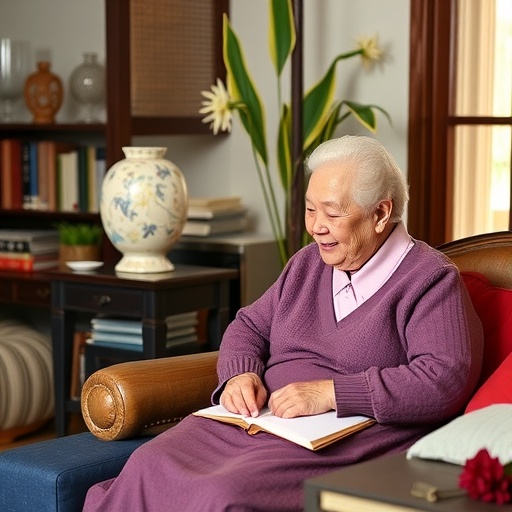
In an era where aging populations are rapidly reshaping global demographics, the quest to improve quality of life for older adults has never been more urgent. A groundbreaking study now brings a fresh perspective to this issue, delving into how environmental quality, functional control, and social design coalesce to influence perceived comfort and psychological well-being amongst older residents in Chinese continuing care retirement communities. This research, published in BMC Geriatrics, unpacks the complex interplay between physical surroundings and psychosocial factors, offering novel insights that could revolutionize eldercare infrastructure and policy.
For decades, the importance of environmental quality has been recognized as a vital determinant in health outcomes, yet its specific role within senior living communities has remained underexplored. The study conducted by Xia, Mari, and Gunasagaran takes a multifaceted approach, scrutinizing aspects such as air quality, lighting, noise levels, and spatial layouts. The findings are compelling: environments with optimized air circulation, ample natural light, and acoustically comfortable spaces significantly enhance not only physical comfort but also the mental state of elderly residents. This underlines the essential need for retirement communities to integrate sustainable and health-promoting design elements.
Equally significant is the dimension of functional control—a term describing residents’ ability to interact with their environment in ways that foster autonomy and empowerment. The authors highlight that when older adults can easily regulate temperature, lighting, and access community amenities without hindrance, their sense of agency dramatically improves. This functional control extends beyond mere convenience; it directly correlates with reduced feelings of helplessness and depression, psychological states that frequently afflict aging populations. Hence, the study advocates for user-centered design principles that prioritize adaptable interfaces and customizable living environments.
Social design emerges as the third critical component in the nexus of well-being among elderly individuals. This concept encompasses community architecture and programming that encourages social interactions and nurtures interpersonal relationships. The researchers observed that social spaces engineered to facilitate informal gatherings, recreational activities, and communal support networks substantially elevate residents’ perceived comfort. These findings resonate with long-standing psychosocial theories which assert that social connectedness mitigates loneliness—a pervasive problem in aging demographics—and strengthens mental resilience, ultimately contributing to holistic wellness.
This triad of determinants—environmental quality, functional control, and social design—interacts in complex and synergistic ways. The study meticulously employs quantitative methodologies, including survey instruments and statistical modeling, to elucidate these interactions within the context of Chinese continuing care retirement communities. The cultural backdrop adds a layer of nuance, as traditional familial roles and community expectations influence how older adults perceive and engage with their living environments. This cultural specificity enriches the generalizability of the findings and provides a framework for tailored interventions across diverse societies.
Perhaps one of the most compelling technical contributions of the research lies in its operationalization of psychological well-being. Rather than utilizing broad-stroke measures, the researchers dissect this construct into dimensions such as emotional stability, life satisfaction, and cognitive engagement. By doing so, they reveal that enhancements in environmental and social parameters yield differential effects across these facets. This nuanced understanding enables care providers to implement targeted strategies that address particular psychological vulnerabilities in aging populations.
Air quality, for example, was found to be strongly linked with emotional stability. Residents exposed to better-ventilated spaces, reduced pollutants, and minimized indoor allergens reported lower levels of anxiety and irritability. From a biological standpoint, improved air circulation can reduce neuroinflammation, a factor implicated in mood disorders. Meanwhile, social design interventions predominantly influenced life satisfaction, as increased opportunities for meaningful social interaction fostered a sense of belonging and purpose, critical for sustained happiness in later life.
Another technical highlight is the identification of functional control as a mediator between environmental quality and psychological outcomes. The authors provide evidence that even in well-designed environments, if residents lack the ability to personalize their surroundings, perceived comfort diminishes. Thus, functional control acts as a psychological lens through which environmental stimuli are interpreted and assimilated. This insight underscores the importance of integrating technology, such as smart home systems, that empower residents with intuitive and accessible control mechanisms.
The implications of this research extend far beyond individual communities. Urban planners, architects, and policy-makers stand at a pivotal crossroads, tasked with addressing the burgeoning demand for elder-friendly infrastructure. This study provides empirical backing for investing in environmentally sustainable materials, ergonomic and adjustable designs, and socially inclusive community spaces. By aligning construction codes and health guidelines with these evidence-based practices, cities can foster age-friendly environments that promote longevity and enhance the quality of life.
Moreover, the study’s focus on Chinese continuing care retirement communities injects a culturally attuned perspective into a predominantly Western discourse. China’s rapid urbanization, coupled with evolving family structures, has led to increased reliance on institutional care. The research offers a blueprint for integrating traditional cultural values, such as collectivism and filial piety, within modern communal living arrangements. Through creating harmonious spaces that respect cultural identity while promoting autonomy, communities can optimize psychological well-being and reduce social isolation.
The methodology also warrants commendation; it combines environmental assessments with comprehensive psychological surveys and ethnographic observations. This mixed-methods approach facilitates a holistic understanding that captures both objective physical conditions and subjective resident experiences. Furthermore, advanced statistical techniques, including structural equation modeling, were employed to delineate causal pathways between environmental factors and health outcomes, adding rigor and credibility to the conclusions drawn.
In conclusion, this study marks a paradigm shift in how continuing care retirement communities are conceptualized and managed. By illuminating the critical roles of environmental quality, functional control, and social design in fostering comfort and psychological well-being, it charts a path forward for eldercare innovation. The intricate balance between physical surroundings and psychosocial context emerges as a foundational pillar supporting aging populations. As nations grapple with demographic transitions, implementing these insights could profoundly enhance the lives of millions of older adults worldwide.
Future research prompted by these findings might explore technological integrations that further augment functional control or investigate the scalability of social design interventions across varied cultural milieus. The cross-disciplinary approach adopted by Xia, Mari, and Gunasagaran serves as a model for addressing multifactorial health challenges. Ultimately, their work underscores the imperative that eldercare environments must evolve—not merely as shelters but as vibrant, empowering spaces that nurture both body and mind.
This comprehensive examination of environmental and social determinants promises to catalyze change, encouraging public and private sectors to rethink aging facilities fundamentally. Innovations inspired by this research could soon result in adaptive living environments where older adults thrive with dignity and psychological vitality. The study firmly establishes that the science of comfort and well-being in elderly care is not just a matter of medical treatment but a sophisticated integration of design, autonomy, and community.
Cite Scienmag News
Ophelia Keating. (April 21, 2026). Key Factors Influencing Comfort in Chinese Elder Care. Scienmag. https://scienmag.com/key-factors-influencing-comfort-in-chinese-elder-care/
Ophelia Keating. "Key Factors Influencing Comfort in Chinese Elder Care." Scienmag, 21 April 2026, https://scienmag.com/key-factors-influencing-comfort-in-chinese-elder-care/. Accessed 3 September 2026.
Ophelia Keating. "Key Factors Influencing Comfort in Chinese Elder Care." Scienmag. April 21, 2026. https://scienmag.com/key-factors-influencing-comfort-in-chinese-elder-care/


