


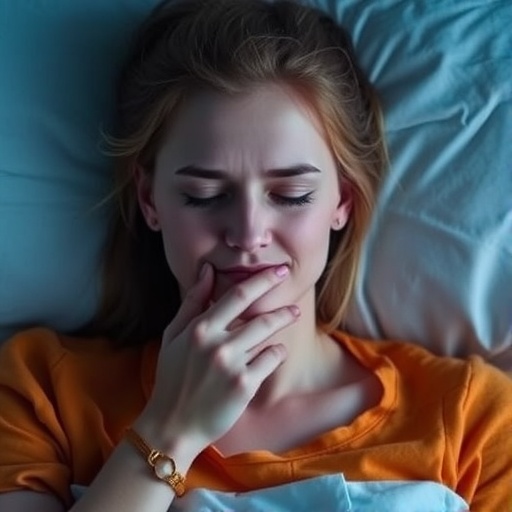
In a groundbreaking revelation published in Nature Communications, researchers have unveiled compelling evidence linking poor sleep quality to impaired immune responses and diminished efficacy of influenza vaccines. This pioneering study sheds light on a critical, yet often overlooked, factor that could influence public health outcomes during flu seasons: the quality and duration of one’s sleep. As influenza continues to pose a global health threat annually, understanding the biological nuances that affect vaccine performance is paramount.
Sleep, a fundamental physiological process, serves numerous restorative functions vital for maintaining homeostasis and overall health. While its influence on cognitive health and metabolic regulation is well documented, this new research emphasizes its indispensable role in immune system modulation. The study provides robust data demonstrating how insufficient or disrupted sleep patterns precipitate measurable alterations in immune competency, particularly in the context of adaptive immunity elicited by vaccination.
The immune system comprises a complex network of cells and molecules orchestrating defense against pathogens. Vaccines, such as those developed for influenza, are designed to prime this defensive machinery by stimulating the production of specific antibodies. However, the mechanism by which sleep interacts with this immune priming has remained poorly understood until now. The investigation employed rigorous clinical methodologies and advanced immunological assays to unpack this dynamic interaction at a cellular and molecular scale.
Key findings indicate that individuals experiencing chronic sleep deprivation manifest significantly reduced production of neutralizing antibodies post-influenza vaccination. Neutralizing antibodies are crucial as they inhibit viral entry into host cells, effectively neutralizing the pathogen’s infectivity. Such a decrease portends a compromised shield against influenza infection, rendering the vaccine less protective. The study’s longitudinal design allowed observation over several weeks, revealing sustained immune deficits correlating strongly with sleep disturbances.
Further biochemical analysis revealed that poor sleep alters cytokine profiles, skewing the immune response towards a pro-inflammatory state that paradoxically impairs effective antibody generation. Cytokines, which are signaling molecules, orchestrate immune cell communication and activation. Dysregulation in this network can precipitate suboptimal immune responses, as evidenced by the attenuated vaccine efficacy documented. This inflammatory milieu may also contribute to heightened susceptibility to not only influenza but a broad spectrum of infections.
The researchers also explored the mechanistic pathways involving T and B lymphocytes, pivotal players in adaptive immunity. T cells provide help to B cells, which ultimately differentiate into antibody-producing plasma cells. Sleep deprivation was associated with diminished T follicular helper cell activity, a subset essential for facilitating robust B cell responses. This mechanistic insight underscores the intricate biological crosstalk that sleep duration influences, cascading into tangible effects on vaccine-mediated protection.
Importantly, the implications of these findings extend beyond influenza vaccination. Similar immune pathways are activated by other vaccines and natural infections, suggesting that sleep hygiene could be a universal modifiable factor to enhance immune resilience. Public health strategies may need to incorporate sleep optimization as a non-pharmacological intervention to potentiate vaccine-induced immunity.
The study involved a diverse cohort spanning various age groups, genders, and baseline health statuses, enhancing the generalizability of outcomes. Controlled sleep manipulation in laboratory settings coupled with real-world observational data strengthen the conclusion that sleep deprivation is causatively linked to impaired immunity. These methodological rigor and the multifaceted approach elevate the study’s credibility and relevance.
Moreover, the findings prompt a reevaluation of current vaccination programs and schedules. Tailoring vaccine administration to ensure patients have adequate pre- and post-vaccination sleep might significantly amplify immunogenicity. This insight heralds a new era in vaccinology, where chronobiology— the science of biological rhythms—intersects with immunology to optimize public health interventions.
The authors also highlight the potential molecular mediators involved, such as alterations in stress hormone levels including cortisol and melatonin. These hormones exhibit circadian patterns that synchronize immune function with sleep-wake cycles. Disruptions to this rhythm, commonly seen in shift workers or individuals experiencing insomnia, may underpin the immunosuppressive effects detailed in the study. Future research avenues are suggested to delve deeper into these hormonal regulatory networks.
In addition to clinical implications, these revelations bear significance for individuals managing chronic diseases or those with heightened vulnerability to infections. For immunocompromised patients or the elderly, who often suffer from sleep disturbances, vaccine efficacy might be notably affected, putting these populations at increased risk during outbreaks. Targeted interventions promoting sleep quality could prove lifesaving.
The scientific community has long acknowledged that environmental and lifestyle factors modulate immune competence, but the quantifiable impact of sleep quality on vaccine outcomes presented here is striking. Beyond confirming anecdotal evidence, this study lays a quantitative foundation that could transform medical advice on vaccine preparation and follow-up care, advocating for integration of sleep assessments and interventions.
Furthermore, the methodology incorporated cutting-edge immunophenotyping techniques and advanced statistical models, facilitating high-resolution analysis of immune cell populations and their functional states. These innovations allowed the researchers to discern even subtle immune disruptions due to sleep deficiency, underscoring the technological advancements now propelling immunological research forward.
In conclusion, this seminal work by Guan, Gu, Gileles-Hillel, et al. elucidates a critical dimension of immune regulation where sleep quality emerges as a formidable determinant of vaccine success. It imparts urgency to addressing sleep health within the broader context of infectious disease prevention and serves as a clarion call for integrating sleep science into immunization protocols worldwide.
As the global community continues to grapple with recurrent influenza epidemics and the challenge of vaccine responsiveness, this research offers a scientifically grounded, actionable insight. Prioritizing sleep hygiene may be as crucial as the immunization itself in safeguarding populations, ultimately harnessing the body’s innate restorative power for optimal immune defense.
Cite Scienmag News
Kristina Jarvis. (April 21, 2026). Poor Sleep Weakens Immunity, Flu Vaccine Effectiveness. Scienmag. https://scienmag.com/poor-sleep-weakens-immunity-flu-vaccine-effectiveness/
Kristina Jarvis. "Poor Sleep Weakens Immunity, Flu Vaccine Effectiveness." Scienmag, 21 April 2026, https://scienmag.com/poor-sleep-weakens-immunity-flu-vaccine-effectiveness/. Accessed 4 September 2026.
Kristina Jarvis. "Poor Sleep Weakens Immunity, Flu Vaccine Effectiveness." Scienmag. April 21, 2026. https://scienmag.com/poor-sleep-weakens-immunity-flu-vaccine-effectiveness/


