


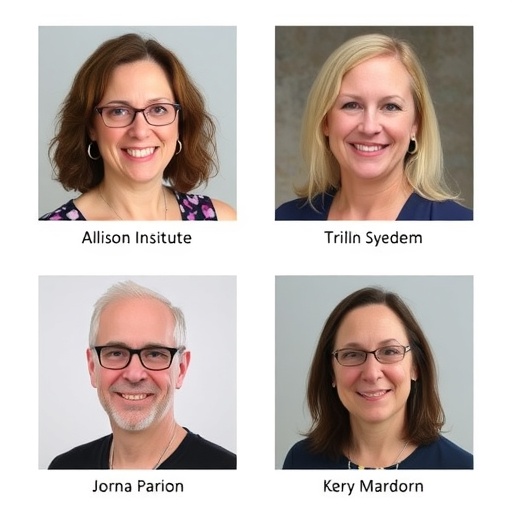
The James P. Allison Institute at The University of Texas MD Anderson Cancer Center has announced a significant expansion of its scientific community with the appointment of four distinguished researchers. These new members — Eric Gardner, Pharm.D., Ph.D., Betty Kim, M.D., Ph.D., Rodrigo Romero, Ph.D., and Hojong Yoon, Ph.D. — are set to enhance the institute’s mission to unravel the complexities of the tumor-immune response and accelerate the development of transformative immunotherapies for cancer patients. Their diverse expertise reflects the multidisciplinary approach embraced by the Allison Institute, which integrates cutting-edge immunobiology with computational and translational sciences.
Since its inception, the Allison Institute has strategically recruited top-tier scientists whose work spans immunotherapy resistance, cancer vaccines, cellular and protein engineering, and tumor evolution. The newly appointed members represent a broad spectrum of research foci that address some of the most pressing challenges in oncology. By leveraging innovative methodologies such as chromatin remodeling analysis, mRNA delivery systems, and molecular glue technologies, these researchers aim to dissect the molecular and cellular underpinnings that govern immune evasion and therapeutic resistance in cancer.
Eric Gardner, joining as an assistant member, comes from Weill Cornell Medicine to lead research in the Thoracic/Head & Neck Medical Oncology division. His work delves into the dynamic processes of tumor evolution and plasticity, particularly in lung cancer, where tumor cells adapt to evade immune surveillance. Gardner’s lab examines how alterations in tumor cell state, through mechanisms like chromatin remodeling and lineage plasticity, contribute to the emergence of immunotherapy resistance. Understanding these adaptive processes is critical to developing strategies that sustain durable immune control over malignancies, a central goal of the Allison Institute’s resistance-focused research efforts.
Betty Kim, a core member and professor of Neurosurgery at MD Anderson, brings a focused expertise on brain tumors, specifically glioblastoma, one of the most aggressive and treatment-resistant cancers. Her laboratory harnesses avant-garde technologies including mRNA-loaded extracellular vesicles and nano-enabled delivery platforms to modulate antitumor immune responses within the central nervous system. Kim’s work sits at the intersection of cancer immunology and neuro-oncology, seeking not just to understand tumor immunodynamics but to pioneer innovative therapeutic avenues that can penetrate the blood-brain barrier and reprogram immune activity in the tumor microenvironment.
Rodrigo Romero, also joining as an assistant member from Memorial Sloan Kettering Cancer Center, investigates tumor lineage plasticity and its impact on disease progression in prostate cancer. His research emphasizes the use of engineered model systems to decode how a constellation of genetic and epigenetic factors — including tumor suppressor gene loss, chromatin modulation, and microenvironmental cues — enables tumor cells to transit between phenotypic states that evade both targeted and immune therapies. Romero’s investigations provide vital insights into the interplay between tumor evolution and immunotherapeutic efficacy, fostering novel approaches that could mitigate resistance in prostate and other cancers.
Hojong Yoon, who joined the Allison Institute in 2025 as an assistant member, is an expert in intracellular signaling pathways that orchestrate immune cell functions within the tumor milieu. Transplanted from the Broad Institute
Cite Scienmag News
Nathaniel Bowman. (March 2, 2026). Allison Institute Welcomes Four New Members in Latest Appointment. Scienmag. https://scienmag.com/allison-institute-welcomes-four-new-members-in-latest-appointment/
Nathaniel Bowman. "Allison Institute Welcomes Four New Members in Latest Appointment." Scienmag, 2 March 2026, https://scienmag.com/allison-institute-welcomes-four-new-members-in-latest-appointment/. Accessed 4 September 2026.
Nathaniel Bowman. "Allison Institute Welcomes Four New Members in Latest Appointment." Scienmag. March 2, 2026. https://scienmag.com/allison-institute-welcomes-four-new-members-in-latest-appointment/


