


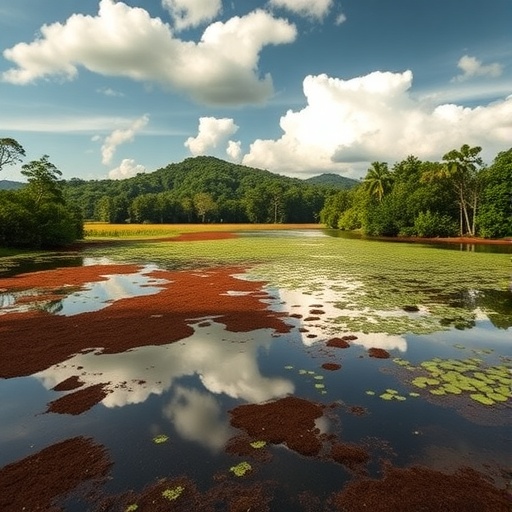
The vast tropical peatlands and swamps are vital components of the Earth’s global carbon cycle, playing a critical role in regulating the planet’s climate. Among these, the Congo Basin holds a unique position due to its immense carbon stores. While these tropical wetlands cover a mere 0.3% of the terrestrial surface, they account for about one-third of the carbon contained within tropical peatlands worldwide, positioning the region as an indispensable carbon reservoir in the global ecosystem.
The Congo Basin’s peatlands, encompassing river systems such as the mighty Congo River and its numerous tributaries, remain one of the least explored carbon sinks on Earth. The remote and inaccessible nature of the area, accessible primarily by boats and traditional dugout canoes, has hampered detailed scientific assessments, until recently. Cutting-edge research led by ETH Zurich has progressively shed light on the complex carbon dynamics residing in this nearly impenetrable landscape, revealing unexpected discoveries regarding carbon cycling and greenhouse gas emissions.
A particularly striking revelation has come from investigations into the blackwater lakes of the Congo Basin, especially Lac Mai Ndombe, Africa’s largest blackwater lake, and its smaller neighbor, Lac Tumba. These lakes are shrouded in waters tinted dark brown like black tea, due to the leaching of organic materials from the surrounding peat-rich swamp forests and lowland rainforests. This coloration indicates a high concentration of dissolved organic carbon, yet the implications for carbon emissions and climate feedbacks have only recently come into focus.
In groundbreaking findings published in Nature Geoscience, researchers demonstrated that these lakes are significant point sources of atmospheric carbon dioxide (CO₂). Contrary to previous assumptions that carbon released would be primarily from recently fixed carbon through contemporary plant matter, radiocarbon dating of dissolved CO₂ revealed that up to 40% of the emitted carbon is millennia old, sourced from peat deposits accumulated over thousands of years. This discovery indicates a previously unrecognized “leak” of ancient carbon from the peat, challenging existing paradigms of peatland carbon stability.
Understanding how this ancient carbon is mobilized and transported from the peat soils to the lake waters remains an intricate puzzle. It is unclear whether the processes involve gradual erosion, microbial decomposition under waterlogged conditions, or episodic events driven by hydrological changes. This mechanistic uncertainty highlights critical gaps in current knowledge regarding the interactions between peatland hydrology, biogeochemistry, and carbon fluxes in these tropical systems.
The release of ancient carbon from peatlands poses profound implications for global climate feedbacks. While tropical peat accumulates carbon over long timespans, its destabilization through drying or drainage could intensify carbon release, accelerating atmospheric CO₂ increases. The study raises pivotal questions about whether the carbon emissions observed represent a new disturbance triggered by anthropogenic environmental changes or a dynamic equilibrium balanced by ongoing peat accumulation.
Climate change introduces further complexities by altering precipitation patterns and water levels in the Congo Basin’s wetlands. The research team observed that water levels strongly modulate greenhouse gas emissions, particularly methane (CH₄), another potent climate forcer. When lake levels are high, anaerobic microorganisms effectively oxidize methane, significantly reducing its escape to the atmosphere. Conversely, during low water stages common in dry seasons, methane destruction is less efficient, leading to higher emissions.
These shifting methane fluxes exemplify the delicate balance governing carbon cycling in tropical peatland lakes, where climatic variability could tip the system towards increased greenhouse gas release. Prolonged droughts, predicted under climate change scenarios for Central Africa, might provoke persistent low lake levels, heightening methane emissions and contributing to feedback loops that exacerbate global warming.
Beyond climate-induced threats, land use changes exacerbate risks to the Congo Basin’s peat systems. The Democratic Republic of Congo’s rapidly growing population foresees vast expansions in agricultural land, often through deforestation. Forest clearance disrupts evapotranspiration processes, reducing atmospheric moisture recycling, precipitation, and ultimately rain-fed water availability. This forest loss can exacerbate drought frequency and severity, compounding peat desiccation and carbon mobilization.
This interplay between deforestation and hydrology underlines the multifunctional role forests play: they are not only carbon sinks but also “green lungs” contributing to regional climate stability by releasing water vapor that sustains rainfall and river systems. The degradation of these complex feedbacks could impair the resilience of tropical peat-carbon reservoirs against climate and human pressures.
The ETH Zurich-led TropSEDs project, funded by the Swiss National Science Foundation and performed in collaboration with scientists from the University of Louvain and local partners in the Democratic Republic of Congo, integrates multidisciplinary expertise to decode these ecological and biogeochemical processes. Their findings underscore the critical importance of considering tropical wetlands and peatlands in global climate models, which have historically underestimated their contributions to carbon exchange dynamics.
By refining the understanding of carbon fluxes from tropical peatlands and their feedbacks to atmospheric greenhouse gas concentrations, this research provides a foundation for more accurate predictions of climate trajectories. It also highlights urgent conservation priorities, as protecting peatlands and maintaining hydrological integrity in the Congo Basin are essential strategies to slow global climate change.
In conclusion, the release of millennial-aged carbon from the Congo Basin’s large blackwater lakes exemplifies an unappreciated vulnerability in Earth’s carbon cycle. The potential for increased greenhouse gas emissions driven by climate variability and human land use transformation calls for intensified research and targeted policies to safeguard these crucial wetlands. The fate of the globe’s climate balance may, in part, hinge on how well we understand and manage the hidden carbon stores beneath the waters of Africa’s largest tropical peatland landscapes.
News Publication Date: 23 February 2026
Web References:
http://dx.doi.org/10.1038/s41561-026-01924-3
Cite Scienmag News
Gideon R. (February 23, 2026). Ancient Carbon Emitted from Peatland Lakes in the Congo Basin. Scienmag. https://scienmag.com/ancient-carbon-emitted-from-peatland-lakes-in-the-congo-basin/
Gideon R. "Ancient Carbon Emitted from Peatland Lakes in the Congo Basin." Scienmag, 23 February 2026, https://scienmag.com/ancient-carbon-emitted-from-peatland-lakes-in-the-congo-basin/. Accessed 29 August 2026.
Gideon R. "Ancient Carbon Emitted from Peatland Lakes in the Congo Basin." Scienmag. February 23, 2026. https://scienmag.com/ancient-carbon-emitted-from-peatland-lakes-in-the-congo-basin/


