


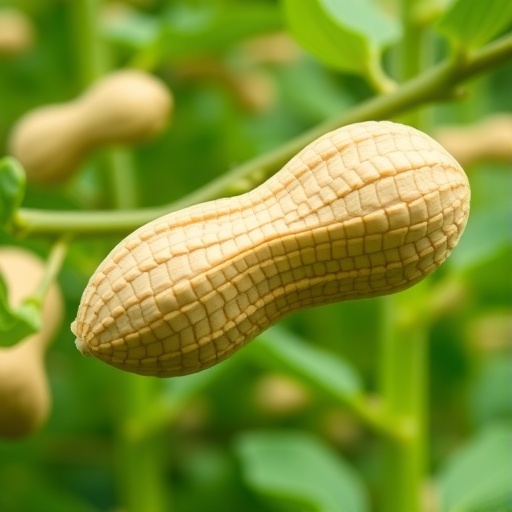
In a breakthrough destined to transform peanut breeding and agricultural genomics, an international consortium of geneticists has unveiled the first-ever complete, gapless genome sequences of six peanut varieties. This milestone achievement not only bridges longstanding gaps in peanut genomic data but also sets the stage for a new era of precision breeding in one of the world’s most crucial legume crops.
The challenge has been formidable. Peanuts possess a notoriously intricate genetic architecture, largely due to their allotetraploid nature—harboring four sets of chromosomes originating from two ancestral species. This complexity is compounded by an abundance of repetitive DNA sequences that thwart conventional sequencing methodologies, leaving previous efforts riddled with gaps and fragmented chromosomal maps. Addressing these hurdles, the team harnessed cutting-edge telomere-to-telomere (T2T) sequencing techniques to meticulously assemble complete genomes that capture every nucleotide from chromosome tip to tip.
This groundbreaking research, published in the prestigious journal Nature Genetics, features contributions from a global network of experts, including Murdoch University’s Centre for Crop and Food Innovation, Peking University Institute of Agricultural Sciences, the Guangxi and Shandong Provincial Academies of Agricultural Sciences, and Zhejiang University. Together, they sequenced two wild progenitors critical to understanding cultivated peanut evolution, alongside four commercially significant cultivated varieties. By establishing high-fidelity reference genomes for two previously unmapped peanut subspecies, the research provides unprecedented genetic clarity.
An expansive population resequencing effort followed, encompassing 521 diverse peanut accessions sourced worldwide. Through this extensive genomic landscape, the scientists identified key genetic variants intricately linked to vital agronomic traits such as seed size and oil content. The identification of these markers transcends academic interest, bearing profound implications for global food security and sustainable agriculture.
Of particular note are two candidate genes uncovered by this analysis. The gene AhWRI1 correlates strongly with variations in oil content, demonstrating a striking differential of approximately six percentage points—between 48% and 54%—across peanut lines harboring distinct alleles. This variation represents a substantial quality and yield parameter that breeders eagerly seek to manipulate.
Equally compelling is the discovery of the AhGSA1 gene, associated with a remarkable increase in seed mass. Peanut varieties with one version of this gene averaged nearly 846 grams per thousand seeds, substantially outperforming those with the alternative allele, which averaged just 491 grams. This more than 70% increase in seed weight could revolutionize yield potentials within breeding programs.
Such genetic variants emerge as powerful molecular markers, streamlining traditional breeding pipelines with genomics-assisted selection. Breeders can now accelerate the cultivation of peanut lines that simultaneously maximize oil yield and seed size, directly addressing consumer demand and agricultural sustainability targets.
Professor Rajeev Varshney, Director of the Centre for Crop and Food Innovation and co-corresponding author of the study, emphasized the transformative impact of these resources. “Peanut genetics have long posed a daunting challenge due to their polyploid complexity,” he explained. “This gap-free genome reference crystallizes our understanding and empowers breeders and geneticists with a precise genomic toolkit to develop superior peanut cultivars rich in yield and nutrition.”
Adding to the functional insights, the study illuminated a noteworthy structural variation between two subspecies, var. hirsuta and var. hypogaea. A large DNA segment ubiquitous in var. hirsuta is largely absent in var. hypogaea. This segment houses genes integral to plant architecture and lipid metabolism and may underlie phenotypic distinctions between these subspecies, offering breeders additional levers to manipulate growth habit and oil profile.
Intriguingly, the researchers uncovered asymmetrical evolutionary dynamics between the two subgenomes fused in the cultivated peanut. Detailed analyses revealed differential rates of sequence repetition, centromere restructuring in opposing directions, and varying frequencies of chromosomal rearrangements. These insights into subgenome divergence clarify the genetic behavior and complexity characteristic of allotetraploid species, informing future breeding strategies by pinpointing reservoirs of genetic diversity.
Prof. Varshney reflected on the evolutionary implications: “While it has been established that cultivated peanuts arose from hybridization events involving two ancestral species, the extent to which their genomes diverged was unexpected. Understanding this biological asymmetry is critical for unlocking the genetic potential hidden within each subgenome.”
From an agricultural sustainability perspective, the timing of these findings is auspicious. Peanuts contribute significantly to global nutrition as a source of protein and edible oil and support environmentally beneficial nitrogen fixation within crop rotations. Professor Peter Davies, Pro Vice Chancellor of Murdoch’s Food Futures Institute, underscored peanuts’ vital role in sustainable agricultural systems and applauded the research team for advancing genomic tools crucial to enhancing food security and crop resilience.
Furthermore, the accomplishment is technically unprecedented. Considering that the first human telomere-to-telomere genome assembly was realized only four years ago, achieving T2T assemblies for six peanut varieties—each with a complex allotetraploid genome—is nothing short of remarkable. Murdoch University Deputy Vice Chancellor for Research and Innovation, Professor Peter Eastwood, affirmed the institution’s pride in spearheading genomics research and anticipates extending this approach to other key cereals and horticultural crops, expanding the horizons of agricultural biotechnology.
This pioneering research not only fills essential knowledge voids in peanut genomics but also paves a path toward enhanced global food production systems. By grounding breeding strategies in complete genomic maps, the agricultural sector gains potent new instruments to confront challenges posed by climate change, growing populations, and nutritional demands. As the world turns toward innovative, sustainable solutions, this genomic milestone shines as a beacon of scientific progress and agricultural promise.
News Publication Date: 24-Apr-2026
Web References: Nature Genetics DOI Link
Cite Scienmag News
Juliet Wilcox. (April 24, 2026). Complete Peanut Genomes Uncover Genes Responsible for Larger Seeds and Enhanced Oil Quality. Scienmag. https://scienmag.com/complete-peanut-genomes-uncover-genes-responsible-for-larger-seeds-and-enhanced-oil-quality/
Juliet Wilcox. "Complete Peanut Genomes Uncover Genes Responsible for Larger Seeds and Enhanced Oil Quality." Scienmag, 24 April 2026, https://scienmag.com/complete-peanut-genomes-uncover-genes-responsible-for-larger-seeds-and-enhanced-oil-quality/. Accessed 4 September 2026.
Juliet Wilcox. "Complete Peanut Genomes Uncover Genes Responsible for Larger Seeds and Enhanced Oil Quality." Scienmag. April 24, 2026. https://scienmag.com/complete-peanut-genomes-uncover-genes-responsible-for-larger-seeds-and-enhanced-oil-quality/


