


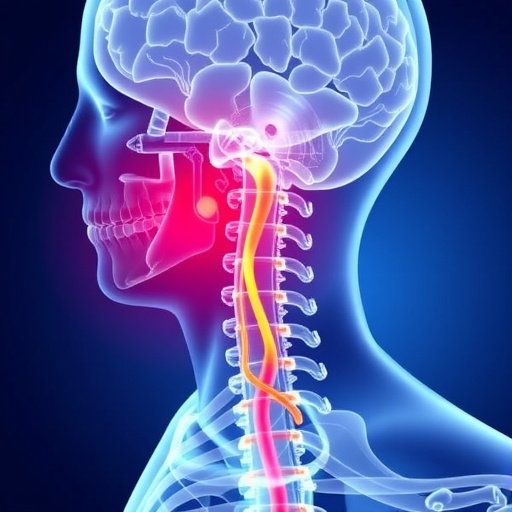
The trigeminovascular system has long been recognized as a critical player in the pathophysiology of headache disorders, particularly migraine. However, recent cutting-edge research by Lars Edvinsson and J.C.A. Edvinsson, published in Nature Reviews Neurology 2026, sheds unprecedented light on the intricate nociceptive mechanisms mediated by calcitonin gene-related peptide (CGRP) within this system. This groundbreaking study unpacks how CGRP, a potent neuropeptide, acts as a pivotal mediator of pain signaling, providing a transformative framework for understanding migraine genesis and potential avenues for innovative therapeutics.
At the heart of this review lies the trigeminovascular system, a complex neurovascular network encompassing trigeminal sensory neurons and their projections that intimately link with meningeal blood vessels. This system serves as a primary conduit for the transmission of nociceptive signals from intracranial blood vessels to the central nervous system. The Edvinssons delve deep into the molecular and cellular crosstalk whereby CGRP contributes to the sensitization of trigeminal nociceptors, a process considered fundamental in the initiation and maintenance of migraine attacks.
CGRP is a 37-amino acid neuropeptide extensively expressed in peripheral and central neurons of the trigeminal ganglion. The peptide’s potent vasodilatory effects have historically been implicated in migraine pathophysiology; however, the current review elucidates that its role extends well beyond vascular regulation. The authors meticulously describe how CGRP exerts direct nociceptive action by promoting neurogenic inflammation, altering ion channel activity, and facilitating the release of other pronociceptive substances, thereby amplifying pain signaling within the trigeminovascular circuitry.
One of the most compelling revelations in the review concerns CGRP receptor dynamics within the trigeminovascular system. CGRP signals through a complex receptor system formed by the calcitonin receptor-like receptor (CLR), receptor activity-modifying protein 1 (RAMP1), and receptor component protein (RCP). The review presents an exhaustive analysis of receptor distribution, signaling pathways, and receptor plasticity, highlighting how these parameters dynamically regulate trigeminal neuron excitability and contribute to the persistence of headache pain.
The Edvinssons also navigate through the emerging evidence pointing to CGRP’s role in central sensitization—the phenomenon where neurons in the central nervous system exhibit heightened responsiveness to stimuli, underpinning chronic pain states. Their synthesis of electrophysiological data showcases how sustained CGRP release sensitizes second-order neurons in the trigeminal nucleus caudalis, through mechanisms involving receptor-mediated activation of protein kinases and modulation of glutamatergic transmission.
Adding another layer of complexity, the review addresses the interplay between CGRP and other neuropeptides, neurotransmitters, and inflammatory mediators within the trigeminovascular milieu. The synergistic actions between CGRP, substance P, nitric oxide, and pro-inflammatory cytokines orchestrate a multifaceted cascade that exacerbates nociceptive signaling. This insight fosters a more holistic understanding of migraine pathophysiology as a neurovascular inflammatory disorder rather than a purely vascular or neurological anomaly.
Interestingly, the authors challenge prevailing assumptions by dissecting the dichotomy between CGRP’s peripheral and central actions. While CGRP released from trigeminal sensory neurons induces vasodilation and mast cell degranulation peripherally, its central release modulates synaptic transmission and neuroplasticity. These dual roles underscore why CGRP-targeted therapies might achieve therapeutic benefits through both peripheral and central mechanisms.
The review also outlines the therapeutic implications arising from the expanding knowledge of CGRP’s nociceptive functions. Pharmacological blockade of CGRP or its receptor has already revolutionized migraine treatment, with monoclonal antibodies and small-molecule antagonists showing robust efficacy in clinical trials. The Edvinssons emphasize the importance of understanding CGRP’s diverse roles to optimize therapeutic strategies, manage side effects, and tackle treatment-resistant cases by potentially targeting downstream signaling pathways or receptor modulators.
Moreover, this synthesis touches upon genetic and epigenetic factors influencing CGRP expression and receptor sensitivity in individual patients. Variations in gene expression profiles among migraineurs could explain differential responses to CGRP-targeting drugs, highlighting a pressing need for personalized medicine approaches guided by molecular phenotyping.
In addition to migraine, evidence discussed in the review suggests a broader involvement of CGRP-mediated nociception in other primary headache disorders and neuropathic pain syndromes implicating the trigeminovascular system. This expands the translational potential of CGRP research beyond migraine, promising novel interventions for a spectrum of debilitating pain conditions.
Finally, the authors call for intensified multidisciplinary research integrating neurobiology, vascular biology, immunology, and clinical neuroscience to fully elucidate CGRP’s multifaceted nociceptive roles. They advocate for advanced imaging and molecular tools to visualize CGRP dynamics in vivo and to dissect temporal, spatial, and cellular specificity of its signaling events during headache episodes.
In conclusion, the Edvinsson duo’s thorough and technically rich review profoundly enriches the scientific community’s understanding of how calcitonin gene-related peptide orchestrates nociceptive processes within the trigeminovascular system. Their insights propel the field towards new frontiers where more precise and effective pain-modifying therapies can be developed, offering much-needed relief to millions battling migraine and related headache disorders worldwide.
Cite Scienmag News
Juliet Wilcox. (April 27, 2026). Calcitonin Gene-Related Peptide Drives Trigeminovascular Pain. Scienmag. https://scienmag.com/calcitonin-gene-related-peptide-drives-trigeminovascular-pain/
Juliet Wilcox. "Calcitonin Gene-Related Peptide Drives Trigeminovascular Pain." Scienmag, 27 April 2026, https://scienmag.com/calcitonin-gene-related-peptide-drives-trigeminovascular-pain/. Accessed 6 September 2026.
Juliet Wilcox. "Calcitonin Gene-Related Peptide Drives Trigeminovascular Pain." Scienmag. April 27, 2026. https://scienmag.com/calcitonin-gene-related-peptide-drives-trigeminovascular-pain/


