


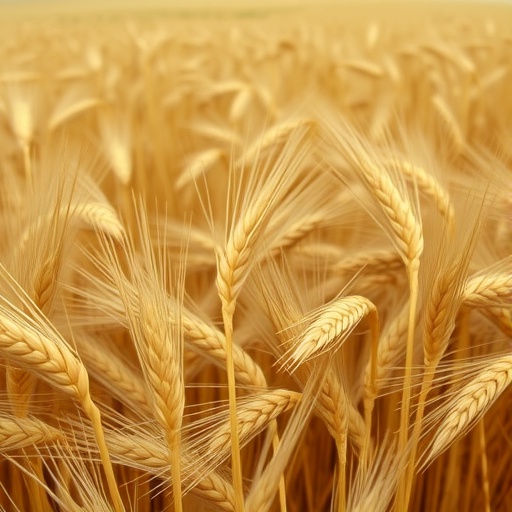
In recent years, the increasing frequency and intensity of extreme climate events have raised significant concerns regarding agricultural productivity, particularly in regions heavily dependent on staple crops. A recent study, conducted by Zeng, Lin, Sassenrath, and colleagues, delves into this pressing issue, focusing on the impact of such climatic anomalies on winter wheat yields in Northern China. Winter wheat, an essential crop for food security and economic stability in this region, is especially vulnerable to climatic extremes which may manifest as droughts, floods, high temperatures, or unseasonal frost events.
The study emphasizes not only the current state of winter wheat yields but also projected future impacts stemming from climate change. By employing advanced climate models and agricultural yield projections, the researchers unveil a troubling forecast: as global temperatures continue to rise, the frequency of detrimental climate events is expected to increase substantially by the year 2050. This alarming trend could lead to decreased yields, undermining food security in a region where millions rely on winter wheat as a staple food source.
One of the key findings of the study indicates that unseasonal frosts during the flowering period of the wheat can severely affect grain development and ultimately reduce yields. The researchers report that Northern China’s climate is becoming increasingly erratic, with frosts occurring later in the season than historically recorded. This change disrupts the typical growing season and poses a significant risk to the cultivation of winter wheat.
On the other hand, the study reveals that extended periods of drought—characterized by insufficient rainfall—during critical growth phases can significantly diminish the crop’s resilience. The model predictions indicate that Northern China may expect longer and more intense drought cycles, which would lead to severe water scarcity during the vital months of wheat development. Such conditions may compel farmers to adapt to new irrigation strategies, increasing their operational costs and complicating farming practices.
The data presented in the study not only outlines the projected decline in yields due to climatic factors but also highlights the socio-economic implications tied to agricultural productivity. Farmers in Northern China already face financial pressures, and further yield reductions could exacerbate poverty levels, drive up food prices, and threaten livelihoods. This multifaceted impact goes beyond agricultural circles, shaking regional markets and, ultimately, national economic stability.
Additionally, the researchers point out that pests and diseases thrive in warmer climates, adding another layer of complexity to the challenges faced by winter wheat farmers. With rising temperatures, pest populations may expand their range and the frequency of infestations could increase. This creates a pressing need for adaptive pest management strategies to mitigate the associated risks.
The implications of these findings extend to policy-makers, who must consider not only agricultural sustainability but also food security strategies that can mitigate the risks posed by climate change. The research calls for urgent interventions to bolster adaptive capacity among farmers, emphasizing the importance of research and development in creating resilient wheat varieties capable of withstanding the growing unpredictability of climatic extremes.
Moreover, the collaboration between meteorologists, agronomists, and economic experts will be crucial in devising integrated approaches to tackle these challenges. This multi-disciplinary perspective is vital for developing innovative farming techniques and improving irrigation management that accounts for changing weather patterns.
The study not only raises awareness but also advocates for immediate action. Results such as these underscore the urgency of investing in resilience-building measures in agriculture. Policies might include promoting sustainable agricultural practices and investing in agricultural research, education, and technology to enable farmers to adapt more effectively.
Future research directions are also an implicit outcome of this study. The findings could serve as a foundation for more granular research focused on microclimates, specific varietal responses to climatic changes, and regional adaptation strategies. As Northern China stands on the brink of potential agricultural crises, such studies could help mobilize essential resources and frameworks needed to combat these challenges effectively.
The researchers’ work is a clarion call for the agricultural sector and highlights the urgent need for collaboration between scientists, policymakers, and farmers alike. Only through a united front can the agricultural community hope to confront the threats posed by extreme climate events, ensuring both current and future generations have access to reliable food sources.
As these findings gain traction, it is anticipated that they will catalyze discussions at forums focused on climate change and agricultural policy. The stakes are high, and as the researchers conclude, it is imperative that immediate steps are taken to safeguard winter wheat yields, thereby protecting both the economy and the food supply in Northern China.
In summary, this research serves as vital evidence of the urgent threat posed by climate extremes to agricultural yield in a key region of the world. With its clear implications for policy, farming practices, and economic stability, the study underscores the necessity for a proactive approach to adapt to and mitigate the impending consequences of climate change.
Zeng, R., Lin, X., Sassenrath, G.F. et al. Current and projected impacts of extreme climate events on winter wheat yield in Northern China.
Commun Earth Environ 7, 100 (2026). https://doi.org/10.1038/s43247-025-02954-2
Cite Scienmag News
Alan Morgan. (January 29, 2026). Climate Change: Winter Wheat Yields at Risk in China. Scienmag. https://scienmag.com/climate-change-winter-wheat-yields-at-risk-in-china/
Alan Morgan. "Climate Change: Winter Wheat Yields at Risk in China." Scienmag, 29 January 2026, https://scienmag.com/climate-change-winter-wheat-yields-at-risk-in-china/. Accessed 4 September 2026.
Alan Morgan. "Climate Change: Winter Wheat Yields at Risk in China." Scienmag. January 29, 2026. https://scienmag.com/climate-change-winter-wheat-yields-at-risk-in-china/


