


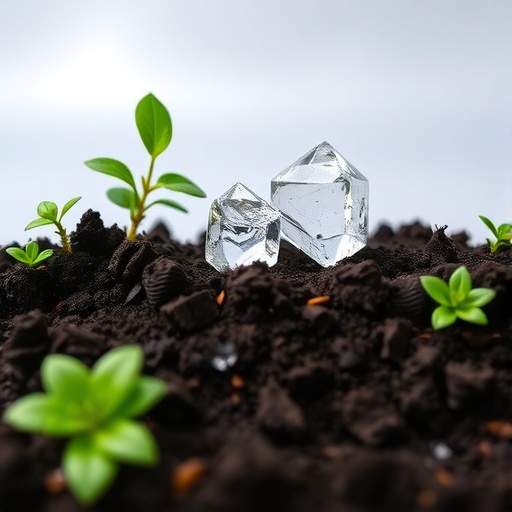
In the rapidly evolving field of environmental science, researchers are continuously uncovering the intricate impacts of anthropogenic materials on ecological systems. A notable study led by Li, S., Xin, H., and Wang, Y., set to be released in Front. Environ. Sci. Eng. in August 2025, delves into the alarming consequences of nanoplastic pollution in the plant-soil ecosystem. This pioneering research elucidates the ways nanoplastics contribute to enhanced greenhouse gas emissions, specifically methane (CH₄) and nitrous oxide (N₂O), thus raising crucial concerns about the broader implications for climate change and environmental health.
Nanoplastics, tiny plastic particles typically less than 100 nanometers in diameter, are an ever-growing contaminant in natural environments, primarily due to the degradation of larger plastic debris. These particles can infiltrate ecosystems, potentially disrupting the delicate balance that governs biological and chemical processes in soils. The researchers focus on the interplay between nanoplastics and the terrestrial ecosystem, revealing how these particles can exacerbate the release of CH₄ and N₂O, significantly potent greenhouse gases that are critical in global warming narratives.
The methodology employed by the research team combines advanced analytical techniques to evaluate the emissions of CH₄ and N₂O in soils contaminated with nanoplastics. Through controlled laboratory experiments, they simulate varying levels of nanoplastic presence, allowing them to measure and analyze the ensuing changes in greenhouse gas output. This structured approach affords a comprehensive understanding of how even minuscule concentrations of nanoplastics can alter microbial and biochemical processes in soil.
One of the fundamental findings of the study is that the presence of nanoplastics in the soil correlates with an increased rate of CH₄ and N₂O emissions. This observation underscores the pivotal role that soil microorganisms play in mediating greenhouse gas emissions. As nanoplastics interact with these microorganisms, they may hinder their functionality or alter their metabolic pathways, leading to increased greenhouse gas production. Such revelations are critical, as they prompt a reevaluation of the role of soil health in climate change mitigation strategies.
Furthermore, the study highlights the juxtaposition between soil health and nanoplastic contamination. It asserts that the contamination of soils by nanoplastics could exacerbate an already precarious situation, particularly in regions heavily reliant on agriculture. The implications for crop production, soil fertility, and overall ecosystem resilience cannot be understated, as these changes could fundamentally alter agricultural yield and sustainability.
The research team also projects the long-term effects of sustained nanoplastic contamination. They signal concerns regarding how persistent exposure to these pollutants could lead to ecological shifts, changing species composition and biodiversity in soil microbial communities. This biodiversity shift may inhibit soils’ capabilities to sequester carbon and regulate nutrient cycles efficiently, further compounding the impacts of climate change.
Additionally, the paper discusses the implications of these findings on policy and regulatory measures concerning plastic waste management. Given the extensive reliance on plastics in modern society, this research serves as a crucial reminder of the hidden costs associated with continued plastic usage. Policymakers must consider the lifecycle of plastics and their eventual breakdown products as they formulate environmental protection strategies.
In a broader context, the study accentuates the urgent need for interdisciplinary approaches to studying environmental pollution. By integrating insights from microbiology, environmental science, and climate policy, researchers can develop holistic strategies addressing the multifaceted nature of pollutants like nanoplastics. This collaboration among various scientific disciplines may yield innovative solutions for mitigating pollution’s impact on climate change.
The profound implications of this research extend even further into public awareness. As communities grapple with the pervasive nature of plastic pollution, understanding the science behind its consequences becomes vital. Enhanced public knowledge can foster grassroots movements towards sustainable practices and greater advocacy for effective waste management policies.
The findings detailed in this upcoming article offer a stark reminder of our interconnectedness with the environment. Each small action, from the plastics we consume to the disposal methods we employ, has far-reaching consequences. It’s imperative that individuals and societies move towards more sustainable habits to preserve ecological balance and combat the increasingly urgent threat of climate change.
As we anticipate the formal publication of this important study, the scientific community stands poised to engage in meaningful dialogue on the findings presented by Li, Xin, and Wang. Researchers, policymakers, and environmental advocates alike are encouraged to utilize this knowledge to catalyze change and develop innovative strategies for reducing plastic pollution’s impact on our planet. The time to act is now; the health of our ecosystems and the stability of our climate depend on it.
There is a pressing need for increased research funding and public engagement to explore the long-term effects of micro and nanoplastics on various environmental components. It is crucial for scientists to continue to unravel the complexities of these contaminants and their interactions with living systems. Only through sustained research efforts can we hope to develop effective remedies and preventive measures to combat pollution.
In conclusion, as this important research surfaces, one thing becomes abundantly clear: the implications of nanoplastic pollution are profound, widespread, and alarming. The scientific community must take heed of these findings, using them to inform and shape ongoing conversations about environmental sustainability, climate action, and the future of our planet. It’s not just about resisting the waves of plastic waste; it’s about envisioning a sustainable future free from its pervasive impacts.
Cite Scienmag News
Violet Maxwell. (January 27, 2026). Nanoplastics Boost CH4 and N2O Emissions in Soil. Scienmag. https://scienmag.com/nanoplastics-boost-ch4-and-n2o-emissions-in-soil/
Violet Maxwell. "Nanoplastics Boost CH4 and N2O Emissions in Soil." Scienmag, 27 January 2026, https://scienmag.com/nanoplastics-boost-ch4-and-n2o-emissions-in-soil/. Accessed 3 September 2026.
Violet Maxwell. "Nanoplastics Boost CH4 and N2O Emissions in Soil." Scienmag. January 27, 2026. https://scienmag.com/nanoplastics-boost-ch4-and-n2o-emissions-in-soil/


